
ChatGPT
How to Scrape ChatGPT: SSE Streams and Citations
Learn how to scrape ChatGPT: capture SSE streams, expand citations, handle Cloudflare, and decide when a managed API is safer than DIY scraping.
Get the real ChatGPT UI responses: sources, shopping cards, brand entities, query fan-out, and citations, so you can see whether ChatGPT names your brand or a rival. All the data the OpenAI API never returns, in markdown, any country, any scale.
4.7 · 53 reviews
cloro runs 100M+ ChatGPT requests a month, and the same key works across many other SEO and GEO (generative engine optimization) engines, so one integration covers the rest of AI search.
We run more than 100 million ChatGPT requests every month, the largest dataset of real ChatGPT UI responses on the market. Here is what we have learned that the OpenAI API will not tell you.
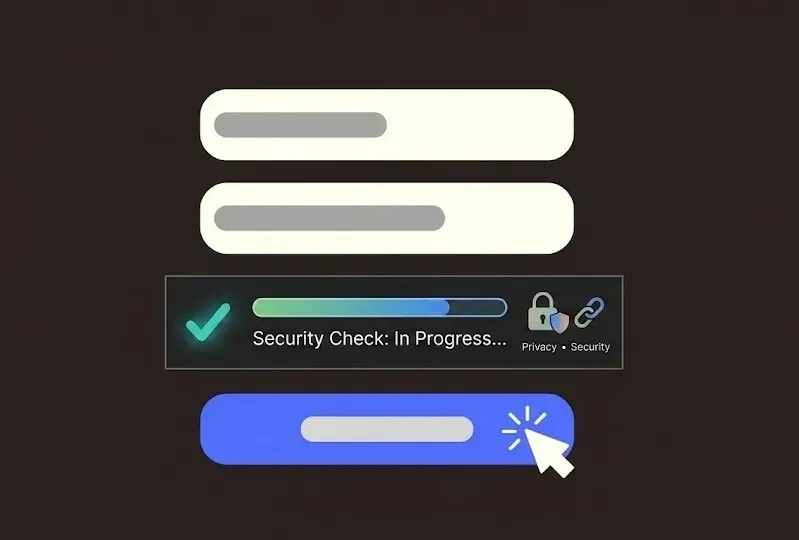
ChatGPT's anti-automation hardens weekly. Rotating proxies and headless browsers buy you about a day before throttles hit. cloro handles the cat-and-mouse so your monitoring keeps running when DIY pipelines break.
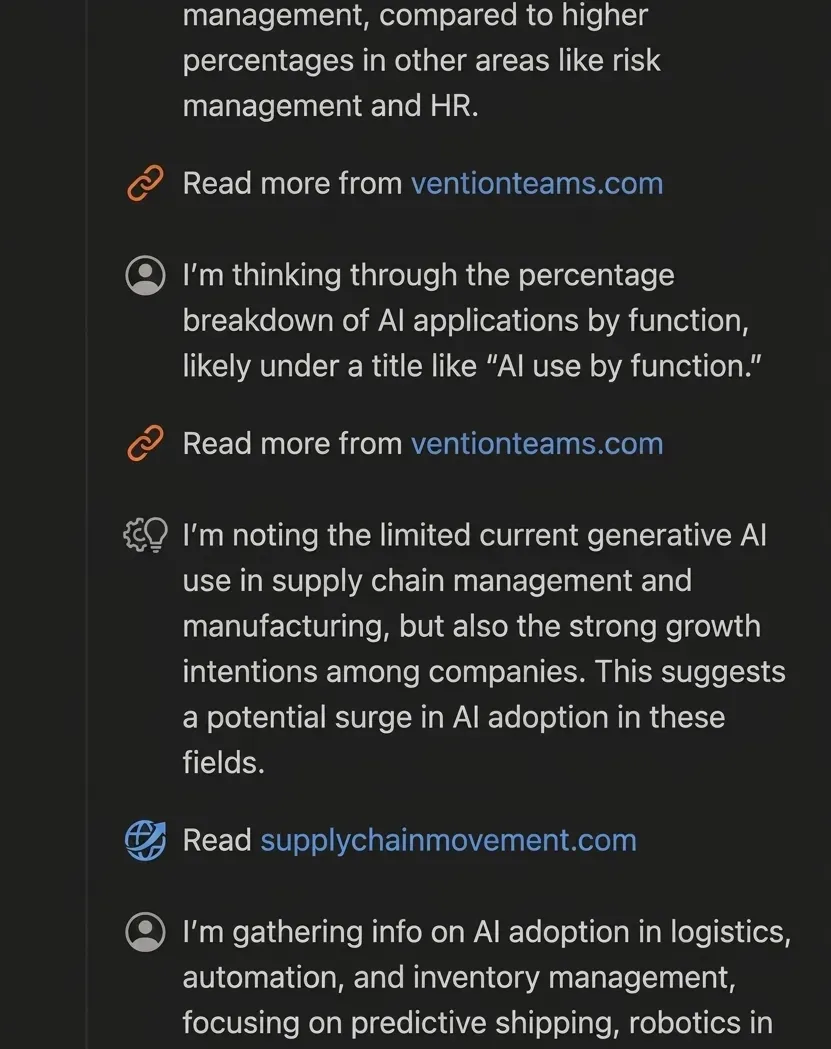
ChatGPT with Web Search re-ranks sources per session, country, and prompt phrasing. A single API call tells you nothing about coverage. cloro runs the same prompt across regions and tracks citation drift over time so you see the real distribution. What is dependable is that it searches at all. Across roughly 2,500 prompts per engine, ChatGPT grounded 98.4% of answers in live sources at 14.1 sources each on 2026-07-05, and 78.9% at 12.7 sources when re-measured on 2026-08-19 (grounding study). Practically, an empty source list from a ChatGPT capture is almost always a parsing fault rather than an ungrounded answer. cloro forces web search by default so you can measure citations, and lets you turn that off with disableWebSearch to see the answer ChatGPT gives on its own.
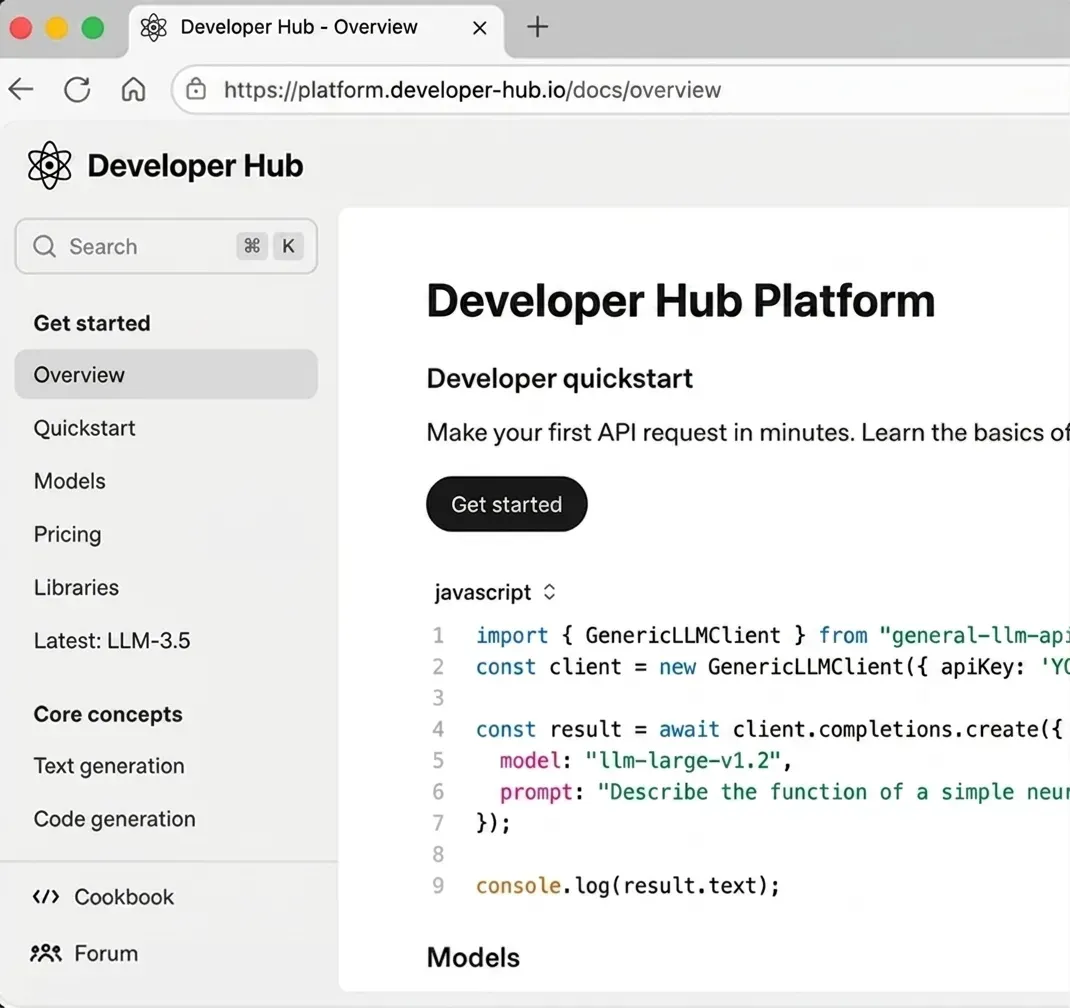
The OpenAI API returns the model output. ChatGPT-the-product wraps it in web search, source citations, shopping cards, and entity panels: the exact surfaces that determine whether your brand gets mentioned. Surfer's analysis found only ~20% overlap between API responses and what users actually see in the ChatGPT UI. cloro captures those surfaces from the rendered product, so your numbers describe the answers people get.
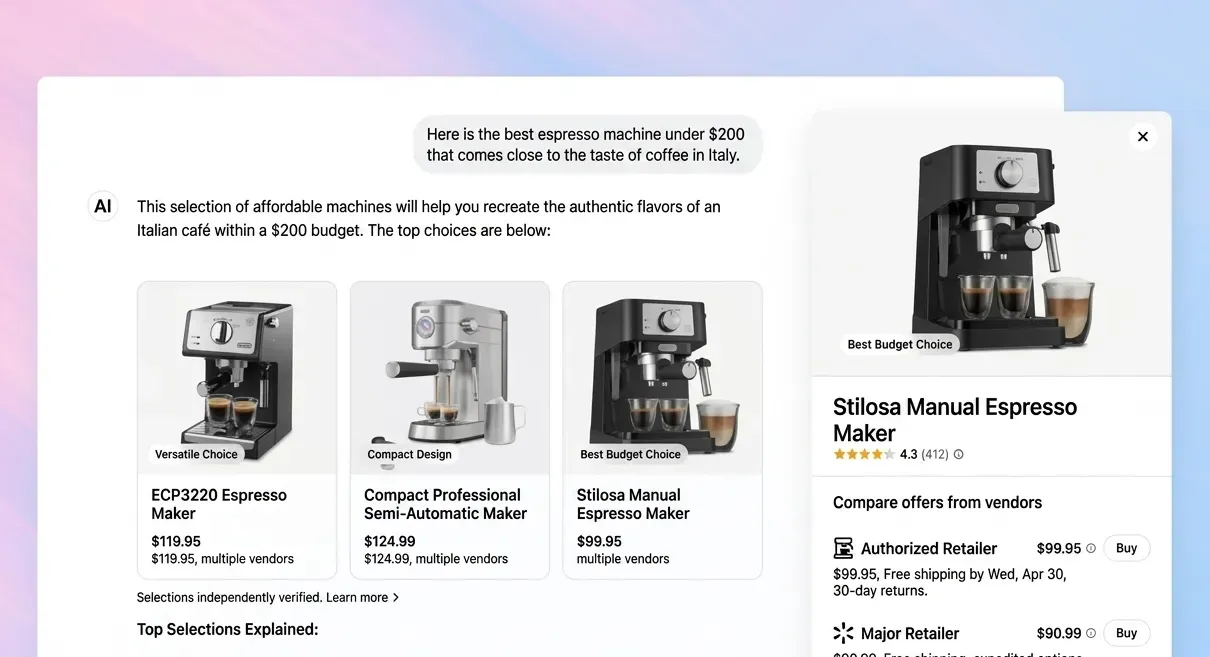
ChatGPT renders far more inline UI than text and citations: shopping cards, inline products, maps, entities, ads, and query fan-outs. None of this lives in any OpenAI endpoint. cloro returns each as structured JSON, so you can count how often a competitor's product card runs next to your answer.
One POST with your prompt and country. cloro runs it through the live ChatGPT UI and hands back JSON: markdown, sources, shopping cards, entities, and query fan-out from one endpoint.
from cloro import Cloro

client = Cloro(api_key="sk_live_your_api_key_here")

response = client.monitor.chatgpt(
    prompt="What do you know about Tesla's latest updates?",
    country="US",
    state="CA",
    include={"markdown": True},
)

print(response["result"]["text"]){
"success": true,
"result": {
"text": "Tesla's recent updates...",
"model": "gpt-5-3",
"sources": [
{
"position": 1,
"url": "https://tesla.com/updates/fsd",
"label": "Tesla FSD Updates",
"description": "Latest Full Self-Driving..."
}
],
"html": "<div class=\"markdown\"><h3>Tesla Recent Updates</h3><p>Tesla's recent updates...</p></div>",
"markdown": "### Tesla Recent Updates\n\nTesla's recent updates include significant improvements...",
"searchQueries": [
"Tesla updates 2024"
],
"shoppingCards": [
{
"position": 1,
"product": {
"name": "Model Y",
"brand": "Tesla",
"price": "$43,990",
"currency": "USD",
"rating": 4.5,
"reviewCount": 2847,
"imageUrl": "https://example.com/tesla-model-y.jpg",
"productUrl": "https://tesla.com/modely",
"description": "All-electric compact SUV..."
}
}
],
"entities": [
{
"name": "Tesla",
"type": "company"
}
]
}
}Break it down by element: SourcesShoppingBrand Mentions
Start free. Price per credit drops as your volume grows — see every tier below.
| Plan | Price / mo | Credits | Per 1k | Concurrency | Seats | Support |
|---|---|---|---|---|---|---|
| Free | $0 | 500 | — | 1 | 1 | Documentation assistant |
| Lite | $30 | 37,500 | $0.80 | 10 | Unlimited | |
| Hobby | $100 | 250,000 | $0.40 | 20 | Unlimited | |
| StarterPopular | $250 | 650,000 | $0.39 | 50 | Unlimited | |
| Growth | $500 | 1,350,000 | $0.37 | 75 | Unlimited | Priority email |
| Business | $1,000 | 2,800,000 | $0.36 | 100 | Unlimited | Priority email |
| Enterprise 2K | $2,000 | 5,871,025 | $0.34 | 135 | Unlimited | Slack |
| Enterprise 3K | $3,000 | 9,306,606 | $0.32 | 175 | Unlimited | Slack |
| Enterprise 4K | $4,000 | 12,756,261 | $0.31 | 215 | Unlimited | Slack |
| Enterprise 5K | $5,000 | 16,391,783 | $0.31 | 255 | Unlimited | Slack |
| Enterprise | $5,000+ | Increased concurrency, overages on credits and credit discounts for annual contracts.Know more | ||||
Because the OpenAI API and ChatGPT-the-product are different surfaces. The API returns model output without the web search results, source citations, shopping cards, or entity panels that determine whether your brand actually shows up to users. cloro extracts what ChatGPT users see, not what the model would say in isolation.
Each request runs against ChatGPT live. Typical response time is 30–45 seconds. There is no caching layer between you and the model, so the citations you see are the citations a real user would see at that moment.
Yes. Pass `country` (any ISO-3166 code) and cloro routes the request through that locale. Citation distributions shift meaningfully between US, EU, and APAC for the same prompt, so country-level monitoring is the only way to see regional brand-visibility gaps. Rolling that per-country signal into a single cross-engine score is what AI visibility tracking covers.
Quite a lot: `shoppingCards` (grouped products with offers), `inlineProducts` (individual product refs with render hints), `entities` (brands and products), `map` (business/place data with ratings and contact info), `ads` (advertiser branding cards), `citationPills` (inline citation metadata), plus the full `searchQueries` query fan-out (returned on every request across both current models). All extracted from the rendered ChatGPT UI; none available through any OpenAI endpoint. Each returns as structured JSON in `result`, so you can aggregate and chart them.
Use the async task API (`POST /v1/async/task` with `taskType: "CHATGPT"`). Submit the task and receive results via webhook. This avoids holding open connections and is the right pattern for thousands of prompts per day. Your concurrency limit on the sync endpoint depends on your plan.
ChatGPT often issues multiple internal search queries to answer a single user prompt. The `searchQueries` array exposes those, so when you ask 'best CRM for startups' you also see the underlying queries ChatGPT ran ('crm comparison 2026', 'startup crm pricing'), which are the keywords your content must rank for to be cited.
Each `result` payload includes `model`, currently either `"gpt-5-3"` or `"gpt-5-3-mini"` depending on which variant ChatGPT served the prompt. Both models behave consistently for monitoring purposes: full source citations, `searchQueries` fan-out, shopping cards, entities, and the rest of the UI surface come back regardless of which one routes.
Direct scraping requires rotating residential proxies, headless browser farms, and a maintenance team to chase ChatGPT's anti-automation updates. Most teams spend $3–8k/month on infra alone before the engineer time. cloro starts at $30/month, with 250k requests included on the $100 Hobby plan and zero infra to run.
Learn how to scrape ChatGPT: capture SSE streams, expand citations, handle Cloudflare, and decide when a managed API is safer than DIY scraping.
Learn how a ChatGPT visibility tracker works, run a free manual baseline, and compare the best tools to monitor your brand mentions in AI search.
We tested 10 LLM visibility tools (also sold as AI visibility trackers and checkers) on real brand-monitoring workflows across ChatGPT, Perplexity, and Gemini. What works, what doesn't.