
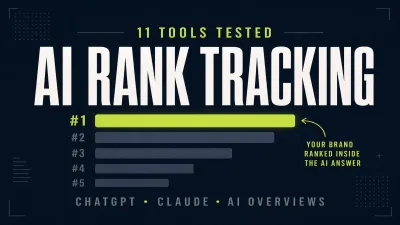
AI Strategy
Best AI Rank Tracking Tools: 11 Tested for 2026
Compare the best AI rank tracking tools for ChatGPT, Claude, Perplexity, and AI Overviews: pricing, engine coverage, and when to build your own.
A rank tracking API for SEO teams that would rather work in JSON than in a dashboard. One call gives you the whole SERP for a query: organic, ads, PAA, related searches, AI Overview. Billing is per call, with no fixed keyword bundle to plan around.
4.7 · 23 reviews
Organic positions are the headline metric, but the modern SERP is layered: sponsored ads above the fold, an AI Overview block consuming the top of mobile results, People Also Ask in the middle, related searches at the bottom. cloro returns all of them in one response, parsed and position-tagged.
Rank-tracking products come in two shapes: hosted dashboards (pre-built UI, opaque scraper underneath, monthly bundle pricing) and APIs (raw structured response, you compose the dashboard, pay-per-call). Teams that need their data in their warehouse and their methodology under their control pick the API. Here's why.

Hosted trackers price by tracked-keywords-per-month, capped regardless of cadence. cloro is pay-per-call — sample at the cadence your question demands, not the cadence the bundle enforces.
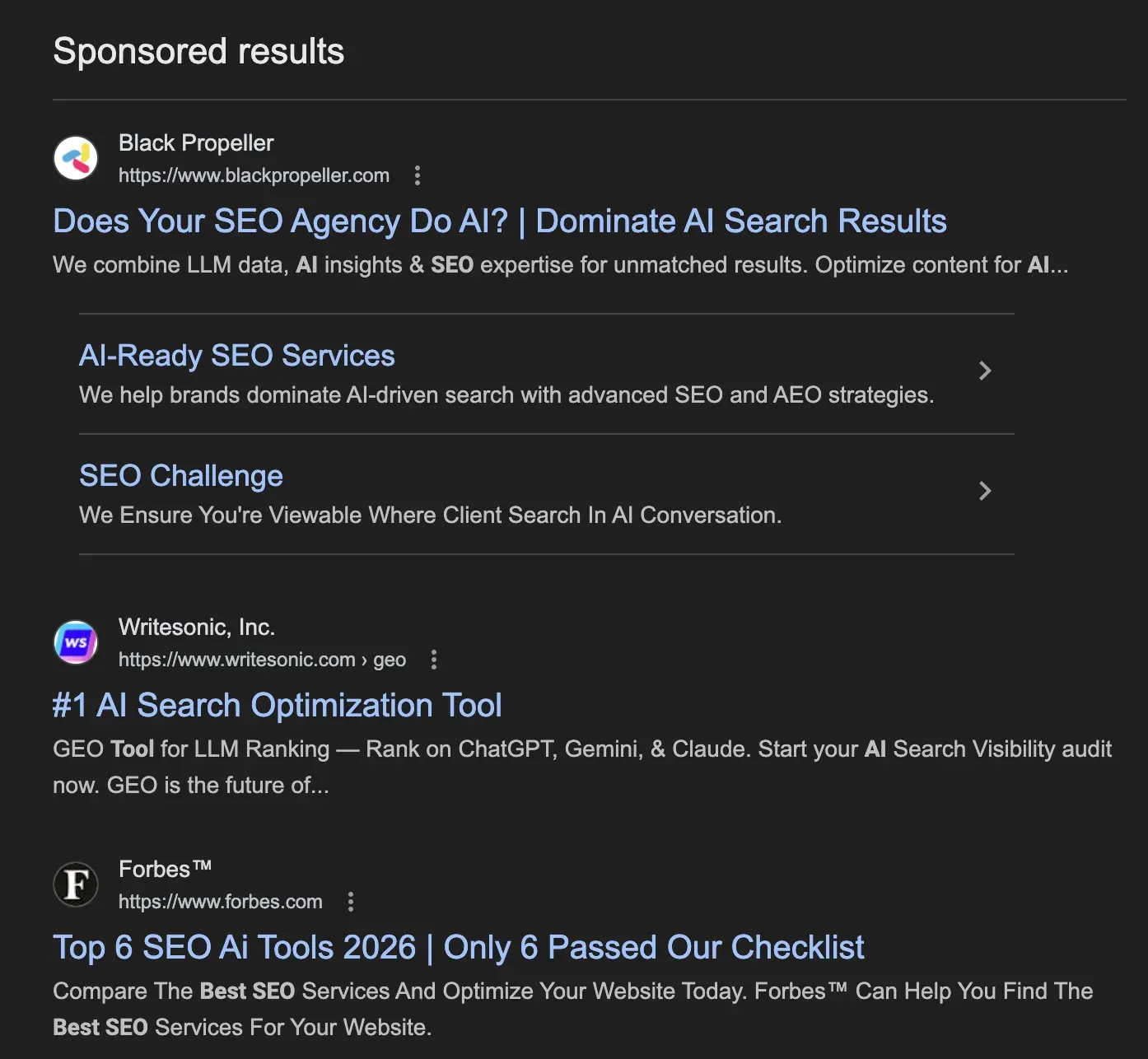
Most rank trackers expose `position` and `URL` and stop. cloro returns the full envelope per call — `ads[]`, `peopleAlsoAsk[]`, `aioverview` with sources, `relatedSearches[]`. Compute AI Overview citation rate, track ad rotation, diff PAA over time — it's already in the response.
In 2026, mobile shoves the AI Overview to position 0, compresses ads, hides PAA below the fold. Hosted trackers default to desktop and surface mobile as an upcharge. cloro takes `device: "mobile"` or `"desktop"` per call at the same price.
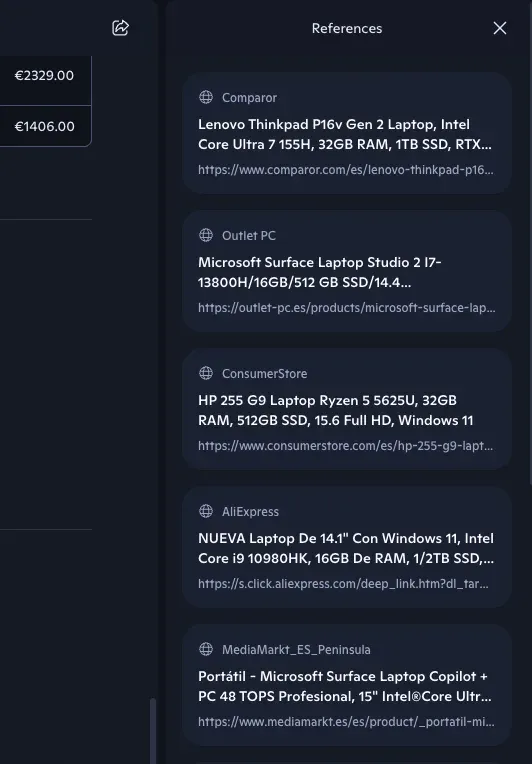
Different rank trackers count "position" differently: rank-1 vs rank-absolute, organic-only vs SERP-feature-included, desktop-primary vs mobile-primary. Switch tools and a competitor appears to "move" even when the SERP did not. cloro returns both rank_group and rank_absolute per result alongside the full SERP envelope, so your reporting math stays the same when you switch tools.
One API call per query × country × device combination. Results land in JSON. Roll up to your warehouse, BigQuery, dbt, or whatever already runs your reporting.
import requests

# Your tracked-keyword set, country list, and device matrix.
keywords = ["best project management software", "asana alternatives", "remote team tools"]
countries = ["US", "GB", "DE"]
devices = ["desktop", "mobile"]

results = []
for query in keywords:
    for country in countries:
        for device in devices:
            response = requests.post(
                "https://api.cloro.dev/v1/monitor/google",
                headers={
                    "Authorization": "Bearer sk_live_your_api_key_here",
                    "Content-Type": "application/json",
                },
                json={"query": query, "country": country, "device": device},
            )
            data = response.json()["result"]
            for r in data["organicResults"]:
                results.append({
                    "query": query,
                    "country": country,
                    "device": device,
                    "position": r["position"],
                    "url": r["link"],
                    "title": r["title"],
                })

# Now you have 1 row per (query, country, device, ranked URL).
# Push to BigQuery, dbt, or your rank-tracker warehouse.
print(f"{len(results)} ranked rows captured"){
"success": true,
"result": {
"organicResults": [],
"peopleAlsoAsk": [],
"relatedSearches": [],
"ads": []
}
} Pick a plan that fits your volume. Price per credit drops as you scale.
Credit cost per request varies by provider. The figures below are for async/batch requests; sync requests add a +2 credit surcharge.
Google News uses the same pricing as Google Search.
A rank tracker is a product (dashboard, alerting, scheduled jobs). A rank tracking API is the data layer underneath. Teams hit the limits of hosted trackers within a year — custom metrics, warehouse export, internal-tool integration — and migrate. cloro returns organic positions, ads, AI Overview, PAA, and related searches in one JSON response per query × country × device.
Yes. Pass `include: {"aioverview": {"markdown": true}}` and the response includes the full AI Overview block — text, markdown, HTML, source URLs with citation positions, embedded sponsored ads, and videos. AI Overview rank-tracking is the same call as organic rank-tracking, with one extra include flag and +2 credits.
3 credits per Google SERP call (n=10), +2 per additional results page, +2 if you enable AI Overview enrichment. The Hobby plan ($100/month) includes 250k credits — comfortable for a daily 500-keyword × 3-country desktop program at n=10, and Growth ($500/month, 1.56M credits) absorbs the same shape across desktop and mobile or with AI Overview enabled on every call. You're not stuck paying for capacity you didn't use, and you don't hit a bundle ceiling during launch weeks.
The API returns the SERP for each call. Diffing is your code, our response. Most teams persist the full `result` envelope per call (organicResults + ads + PAA + aioverview), then compare adjacent runs in their warehouse. Common diffs: organic position change per URL, AI Overview source list churn, sponsored-ad advertiser rotation, PAA question turnover. For SERP-wide change detection beyond rank deltas (AI Overview drift, new advertisers entering the auction, PAA churn), see the dedicated SERP monitoring use case — same `/v1/monitor/google` endpoint, framed around watching every SERP element rather than a single position over time.
For city-level rank tracking, see /local-rank-tracking/ — the same `/v1/monitor/google` endpoint with a `location` parameter accepting any of Google's ~100,000 canonical geotargets. Same auth, same response shape, same per-call pricing.
Use the async endpoint (`POST /v1/monitor/google/async`) which delivers via webhook rather than burning sync concurrency. For a 50k-keyword × 3-country × daily run, async is the right pattern: submit batches, let the webhook handler write to your warehouse as results land. Sync is for ad-hoc queries; async is for the production cadence.
Compare the best AI rank tracking tools for ChatGPT, Claude, Perplexity, and AI Overviews: pricing, engine coverage, and when to build your own.
Learn how a Google rank tracking API works, what SERP data to store, how to schedule checks, and when a SERP API beats rank tracking software.
Compare the best rank tracking software for 2026: Ahrefs, Semrush, AccuRanker, AWR, SE Ranking, Nozzle, and AI visibility trackers for teams.
Per-call billing. Organic positions, sponsored ads, AI Overview, People Also Ask, and related searches all come back in one JSON response, scoped to a query, country, and device. Push the rows into your existing reporting stack and run your usual numbers on them.