
Google
How to scrape Google AI Mode: citation pills + place cards
Scrape Google AI Mode in 2026: extract citation pills, parse place cards and shopping carousels, and intercept the conversational SERP network calls.
Get the real AI Mode UI responses: sources, citations, places, and shopping cards, with desktop / mobile targeting and city-level geo. Markdown out, any country, any scale.
4.7 · 53 reviews
cloro extracts AI Mode's full conversational SERP: the pages Google cites and where your brand lands. The same key gets you ChatGPT, Perplexity, Gemini, AI Overview, and Copilot, so adding an engine is a payload change.
AI Mode is Google's deeper conversational search, combining live web results with an AI-generated answer, plus places and shopping cards rendered inline. None of it lives in any Google API.
AI Mode rides on top of Google's hardest anti-automation defenses, plus an extra detection layer for the conversational rendering path. DIY pipelines fail within a day of any UI rev. cloro absorbs the access fight so AI Mode monitoring keeps running through Google's release cycle.
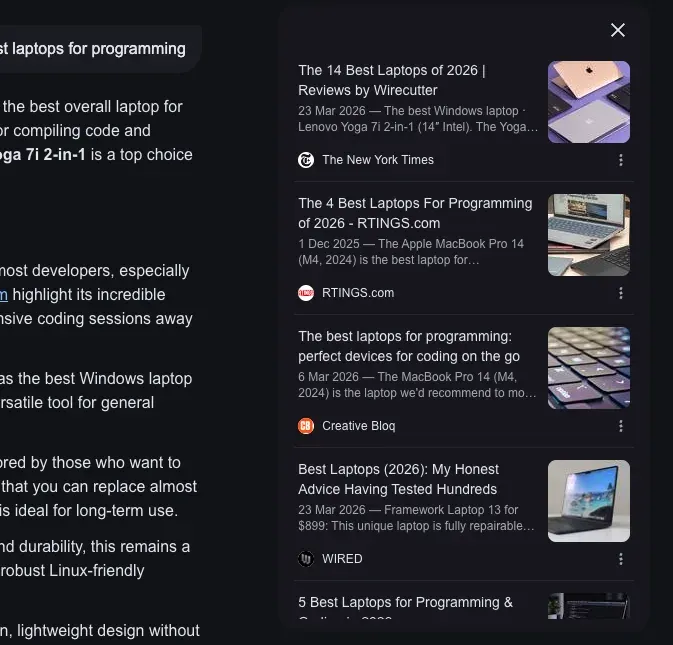
AI Mode's cited sources aren't deterministic. Small prompt phrasing changes shift the citation order. A single sample tells you nothing; you need repeated runs across the dimensions you care about. cloro lets you target each axis per request. The volume of sources is steadier than their order. Across roughly 2,500 prompts per engine, AI Mode grounded 98.2% of answers at 9.9 sources each, and 91.0% at 13.0 sources when re-measured on 2026-08-19, which put it top of the six-engine panel in that study on depth (grounding study). A citation list is the expected payload on essentially every query.
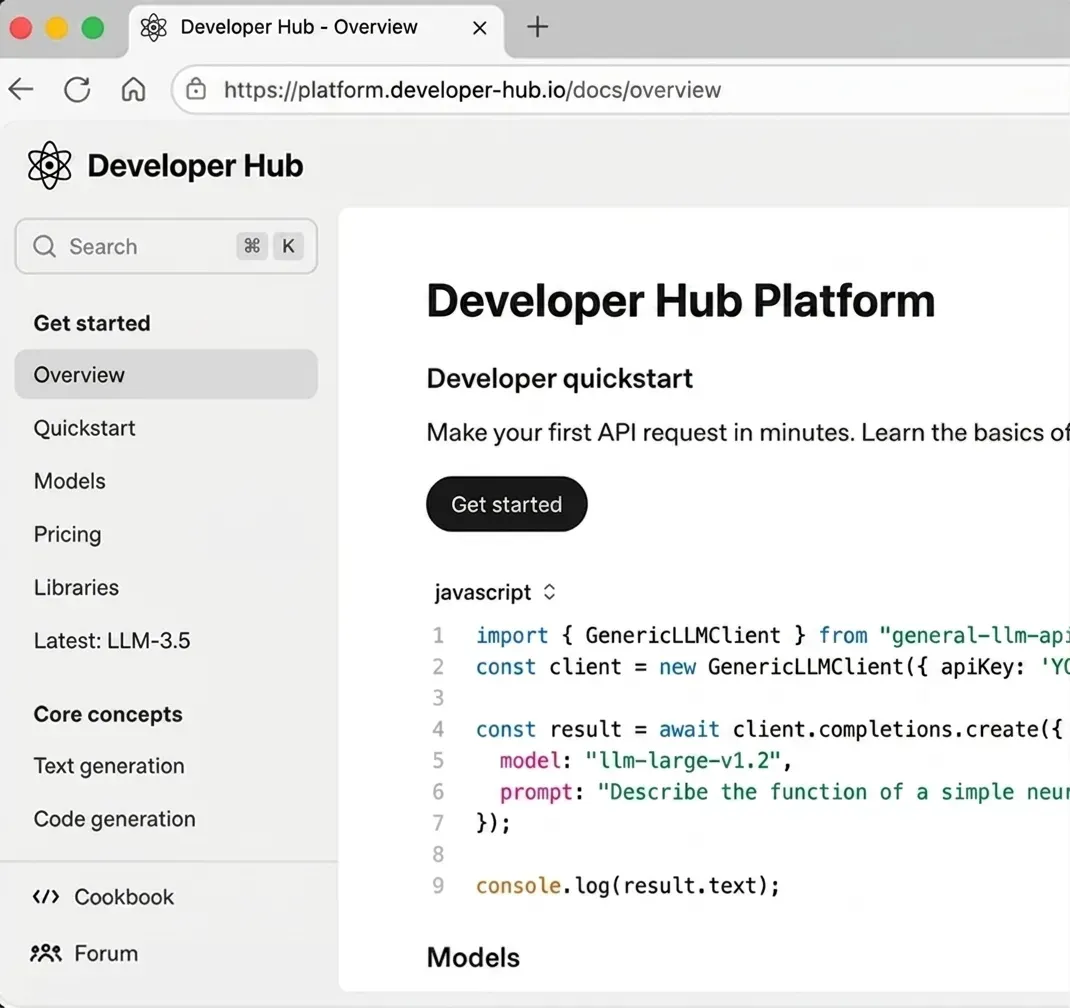
The Google Search API returns SERP rows. Vertex AI returns ungrounded Gemini output. Neither returns the AI Mode answer with its inline places, shopping cards, and live source citations. Surfer's analysis measured ~20% overlap between AI APIs and the rendered UI across LLMs. cloro reads the rendered AI Mode page, so you report what a searcher sees.
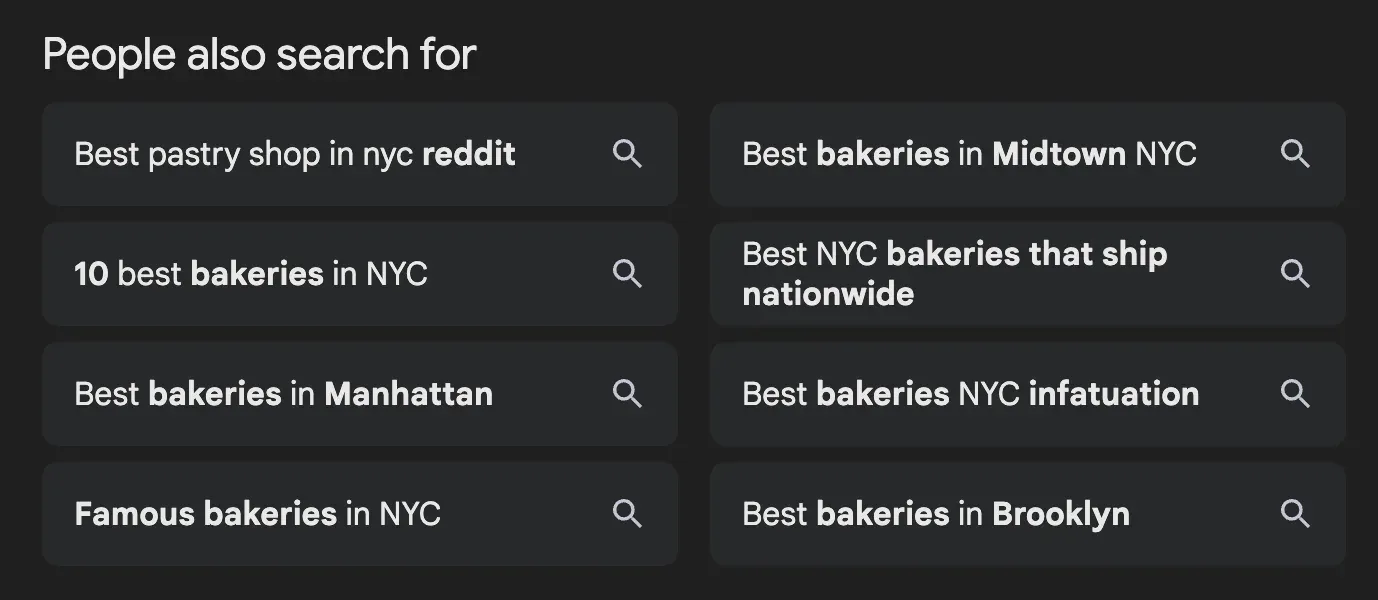
AI Mode auto-detects intent and renders inline place cards and shopping cards for shopping-intent prompts, alongside the cited source list. None of these special objects live in any Google API. cloro returns `places`, `shoppingCards`, and `sources` as structured JSON, so you can check whether your listing or product made the answer.
Send a prompt, cloro runs it in AI Mode, you get JSON back: markdown, sources, places, and shopping cards.
from cloro import Cloro

client = Cloro(api_key="sk_live_your_api_key_here")

response = client.monitor.aimode(
    prompt="What do you know about Tesla's latest updates?",
    country="US",
    include={"markdown": True},
)

print(response["result"]["text"]){
"success": true,
"result": {
"text": "The best espresso machines under $200 include...",
"markdown": "### Best espresso machines under $200\n\nFor home baristas...",
"html": "https://storage.cloro.dev/results/aimode-result-page.html",
"sources": [
{
"position": 1,
"url": "https://wirecutter.com/reviews/best-espresso-machine",
"label": "Wirecutter — Best Espresso Machines",
"description": "After 80 hours of testing, Wirecutter recommends the De'Longhi Stilosa for under-$200..."
}
],
"shoppingCards": [
{
"position": 1,
"product": {
"name": "Stilosa Manual Espresso Maker",
"brand": "De'Longhi",
"price": "$99.95",
"currency": "USD",
"rating": 4.3,
"reviewCount": 412,
"imageUrl": "https://example.com/products/delonghi-stilosa.jpg",
"productUrl": "https://example.com/buy/delonghi-stilosa",
"description": "Compact 15-bar pump espresso maker with manual milk frother"
}
}
]
}
}Start free. Price per credit drops as your volume grows — see every tier below.
| Plan | Price / mo | Credits | Per 1k | Concurrency | Seats | Support |
|---|---|---|---|---|---|---|
| Free | $0 | 500 | — | 1 | 1 | Documentation assistant |
| Lite | $30 | 37,500 | $0.80 | 10 | Unlimited | |
| Hobby | $100 | 250,000 | $0.40 | 20 | Unlimited | |
| StarterPopular | $250 | 650,000 | $0.39 | 50 | Unlimited | |
| Growth | $500 | 1,350,000 | $0.37 | 75 | Unlimited | Priority email |
| Business | $1,000 | 2,800,000 | $0.36 | 100 | Unlimited | Priority email |
| Enterprise 2K | $2,000 | 5,871,025 | $0.34 | 135 | Unlimited | Slack |
| Enterprise 3K | $3,000 | 9,306,606 | $0.32 | 175 | Unlimited | Slack |
| Enterprise 4K | $4,000 | 12,756,261 | $0.31 | 215 | Unlimited | Slack |
| Enterprise 5K | $5,000 | 16,391,783 | $0.31 | 255 | Unlimited | Slack |
| Enterprise | $5,000+ | Increased concurrency, overages on credits and credit discounts for annual contracts.Know more | ||||
AI Overview is the AI snippet at the top of a classic Google SERP: short, source-cited, single-turn. AI Mode is Google's deeper conversational search experience, with longer answers, internal sub-queries, follow-up suggestions, and multi-turn navigation. Different surface, different brand-visibility signal. Pages that get cited in AI Overview don't always get cited in AI Mode.
Yes. Pass `location` (Google's canonical location name, e.g. `"New York,New York,United States"`) or a pre-encoded `uule` string. AI Mode's place cards are highly location-sensitive; for local-intent prompts, country-level routing isn't enough. You need city-level for trustworthy brand-visibility data.
Often, yes. Google ships device-specific behavior on AI Mode: different inline cards, different prompt expansion, different shopping-card density. Pass `device: "mobile"` or `"desktop"` per request to capture the surface a real user on each device would see.
Each request runs against Google AI Mode live. Typical latency is 30–60 seconds end-to-end with no caching layer. Sources reflect the current sub-query expansion against Google's live index.
Yes. Roughly 25–40% citation overlap on the same prompt between US and EU runs in our sampling. Some EU markets get sanitized AI Mode responses or no AI Mode at all under DMA (EU Digital Markets Act) constraints. Pass `country` per request to capture the regional variation.
Yes. The same per-request cost applies regardless of frequency. For high-cadence sampling use `POST /v1/async/task` with `taskType: "AIMODE"` to fan out batches and receive results via webhook. That's the right pattern when you're tracking many prompts across many countries.
Same reason as AI Overview: it's a rendered surface, not a product surface. Vertex AI gives you Gemini without Google's grounding. The Search API gives you SERP rows without the AI conversation. cloro extracts the rendered AI Mode UI directly so what you monitor is what users actually read.
DIY AI Mode scraping requires defeating Google's anti-automation plus the extra detection layer on the conversational rendering path. Realistic in-house cost for sustained monitoring is $5–10k/month before engineer time, with a fragile success rate. cloro's Hobby plan ($100/month) covers the workload with managed reliability.
Scrape Google AI Mode in 2026: extract citation pills, parse place cards and shopping carousels, and intercept the conversational SERP network calls.
We tested 10 LLM visibility tools (also sold as AI visibility trackers and checkers) on real brand-monitoring workflows across ChatGPT, Perplexity, and Gemini. What works, what doesn't.
Compare the best AI search engines for research and developers: ChatGPT, Perplexity, Gemini, Copilot, Brave, You.com, Exa, Tavily, and more.