
Best Rank Tracking Software 2026: 12 Tools Tested

On this page
Rank tracking software used to answer one question: where do we rank in Google? In 2026, that is not enough.
The best tools now track organic positions, local packs, SERP features, AI Overviews, and AI search visibility. A rank of #1 can still sit below ads, maps, and People Also Ask. It can also sit below an AI answer that cites a competitor. Google folds those answers into AI Mode, a Gemini-powered experience built into Search that expands what AI Overviews can do.
This guide compares 12 rank tracking software tools by use case, pricing, accuracy, reporting, and AI coverage. If your question is AI answers rather than blue links — ChatGPT, Claude, AI Overviews — see the dedicated AI rank tracking tools roundup. To build your own workflow instead of buying software, see the Google rank tracking API guide.
Which rank tracking software is best for you?
Each pick is expanded in its numbered section below.
| You need | Best rank tracking software | Why |
|---|---|---|
| Daily updates plus on-demand refresh | AccuRanker | On-demand refresh on every plan, fastest cadence in the group |
| Enterprise scale (100k+ keywords) | STAT Search Analytics | Built for bulk daily tracking and API export at volume |
| City or zip-level local precision | BrightLocal, Nightwatch | Geo-grid heatmaps; 107,000+ locations at zip granularity |
| A full SEO suite around the tracker | Ahrefs, Semrush | Rank data sits next to backlinks, audits, and PPC context |
| Budget pick for a solo site | Mangools SERPWatcher, Wincher | Daily updates from ~$25–30/month |
| White-label ranking reports | SE Ranking, ProRankTracker | Scheduled client reports and agency branding built in |
| AI Overview and ChatGPT visibility | AccuRanker (AccuLLM), SE Ranking | Report rank, mentions, and citations across AI surfaces |
| A raw data feed, not a dashboard | cloro rank tracking API | One call per keyword × location × device returns the SERP as JSON |
What is rank tracking software?
The core job is recording where your site appears in search results for a defined set of keywords, then storing that history so you can see movement over time. Instead of checking positions by hand, the tool queries the SERP from a specific location and device on a schedule. Daily is now the norm, and it logs the exact position for every term.
Modern search rank tracking software reaches past the ten blue links. The tools here report visibility inside local packs, featured snippets, People Also Ask, and AI Overviews. Most now cover assistants like ChatGPT and Perplexity too.
That breadth is the whole point in 2026. A rank of #1 means little when an AI answer above it cites a competitor.
Two factors separate accurate rank tracking software from the rest: location precision and refresh frequency. A national average hides the city-to-city variance that decides most commercial queries. A weekly refresh is already stale against daily movement. We quantify both further down, with our own live-SERP data.
The best daily rank tracking software targets at city or postal-code granularity. It refreshes at least once a day. Automated rank tracking with API access then lets teams pipe those positions straight into their own dashboards.
If you need that data as a programmatic feed rather than a dashboard, cloro’s rank tracker API use case covers the SERP-monitoring API side. The twelve tools below are the buy-rather-than-build options, ranked by who each one fits.
1. Ahrefs - Rank Tracker, best for ranks tied to Ahrefs’ backlink and keyword data
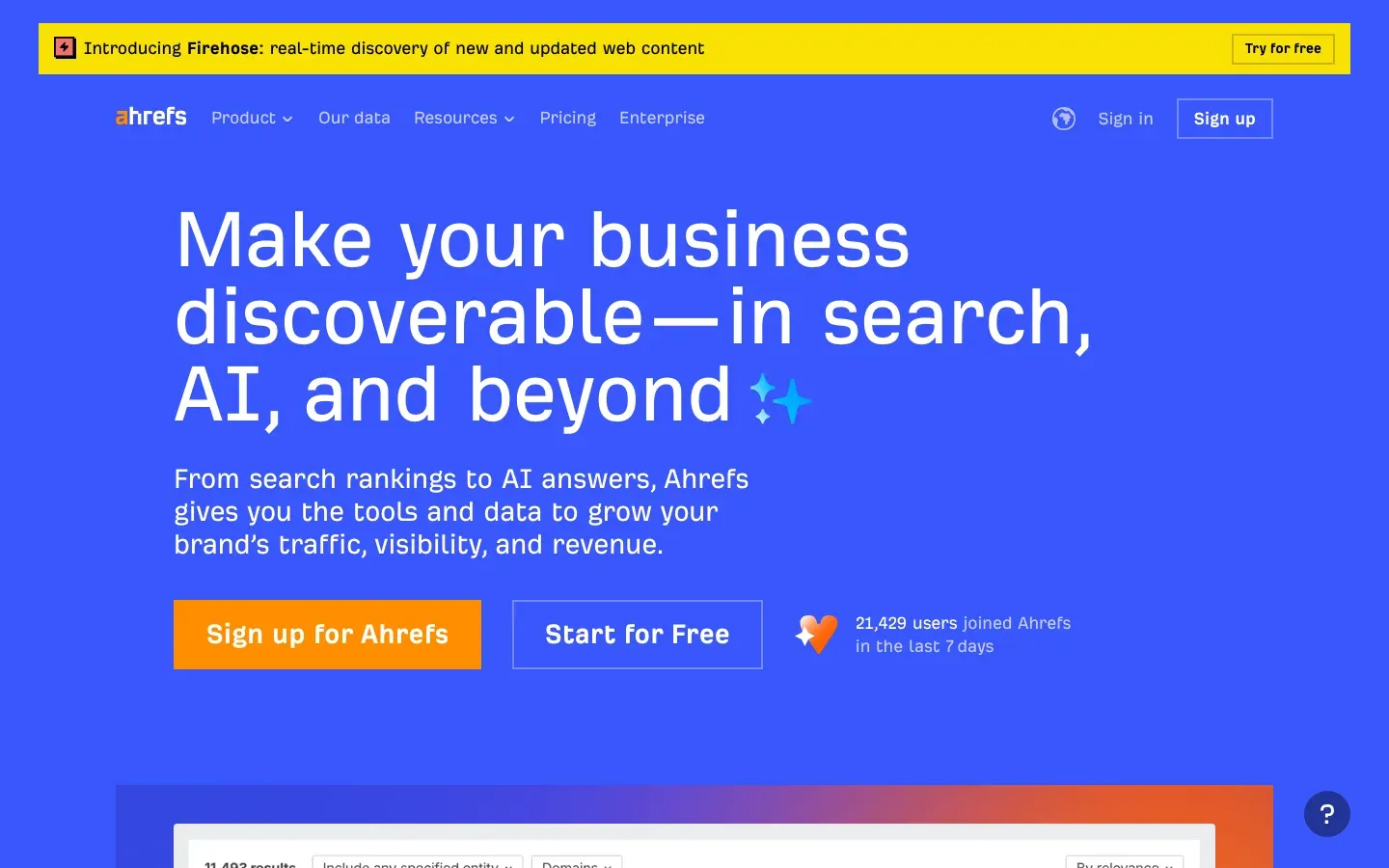
Ahrefs is an all-in-one SEO platform where Rank Tracker is one piece of a much larger data ecosystem. Its main strength is context. When a keyword drops from position 3 to 7, you can pull up the SERP history, inspect the backlink profiles of the pages that overtook you, and read their content in one place.
The interface is clean and the visualizations are mature, so trends are easy to spot. You can segment by country, city, and device. Higher-tier plans add a Looker Studio connector and API access. That API suits developers wiring up custom automation, often paired with a dedicated SERP service.
Key Details & Limitations
- Ideal Use Case- SEO agencies and in-house teams who need a complete suite, not just standalone rank tracking software.
- Pricing & Access- Ahrefs runs a premium subscription across Lite, Standard, Advanced, and Enterprise plans. Daily Rank Tracker updates are available on every paid plan, including Lite. What scales with tier is the per-day keyword allowance, not the refresh rate.
- Unique Offering- It connects rank fluctuations directly to Ahrefs’ backlink and keyword databases, giving richer context than most standalone rank tracking software.
- Website- https://ahrefs.com
2. Semrush - Position Tracking, best for ranks alongside PPC and content performance
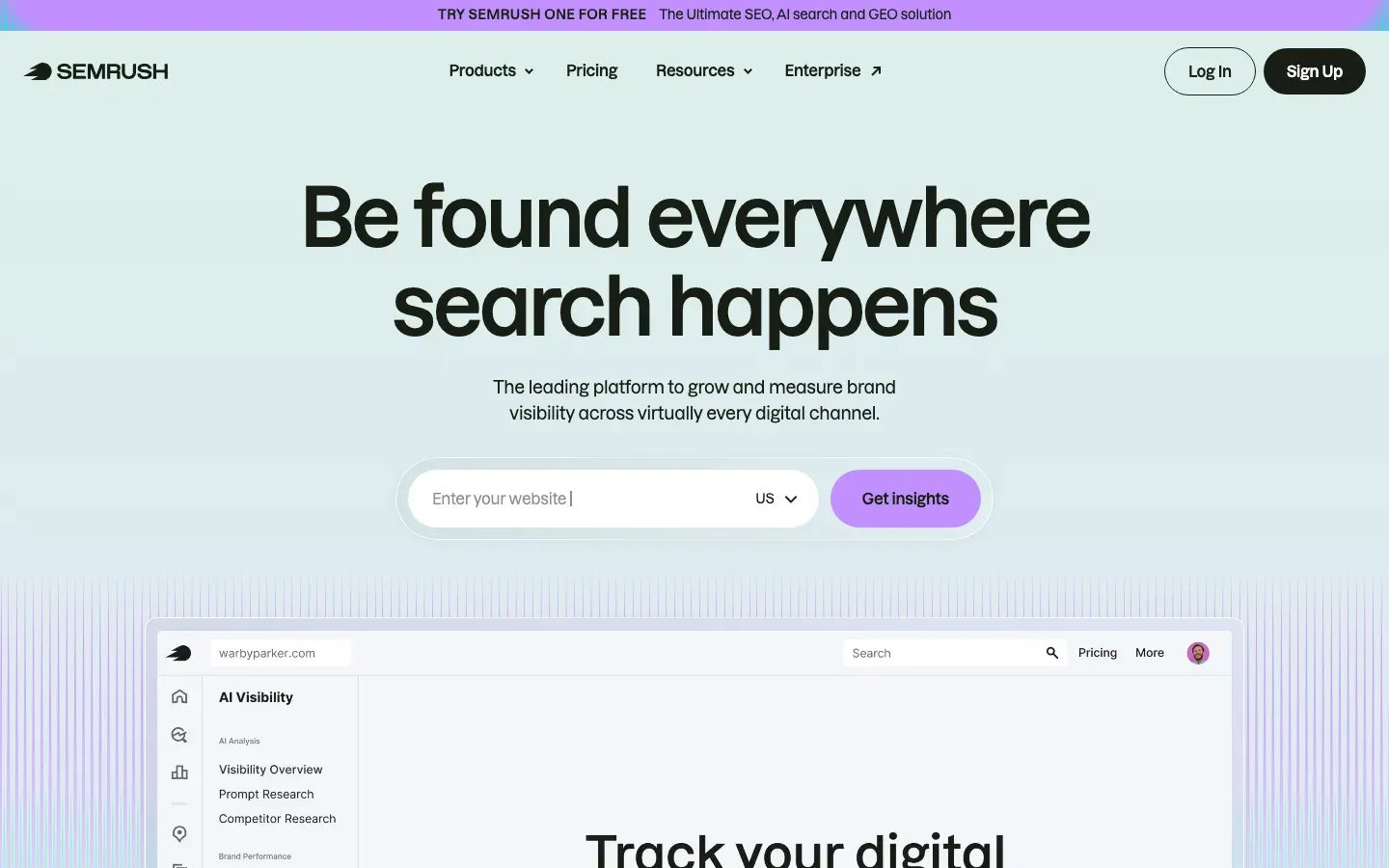
Position Tracking sits inside Semrush, an established marketing platform, and it is a core piece for multi-channel teams. The advantage is that rank data sits next to PPC, content, and social analytics. You can see how organic shifts line up with paid visibility or content updates in one report. Agencies reporting across the whole marketing mix tend to gravitate here.
You get daily updates for Google and Bing. Higher-tier plans add visibility metrics for AI surfaces like ChatGPT Search and Google AI Mode, so you can see whether you’re being cited in those answers, not just where you sit in blue links. Tracking is granular by location and device, with Share of Voice and cannibalization reports. The Business and One bundles add a Looker Studio connector and more generous API limits.
Key Details & Limitations
- Ideal Use Case- Marketing agencies and in-house teams who need one platform for SEO, PPC, and content performance.
- Pricing & Access- Semrush uses a subscription model where cost rises with keywords tracked and features accessed. The most advanced features, like AI search tracking, sit on higher-priced plans.
- Unique Offering- It monitors daily keyword rankings alongside competitor data, SERP features, and PPC campaign data, which makes it versatile rank tracking software for holistic marketing analysis.
- Website- https://www.semrush.com
3. AccuRanker (incl. AccuLLM), best for on-demand refresh and AI search tracking at scale
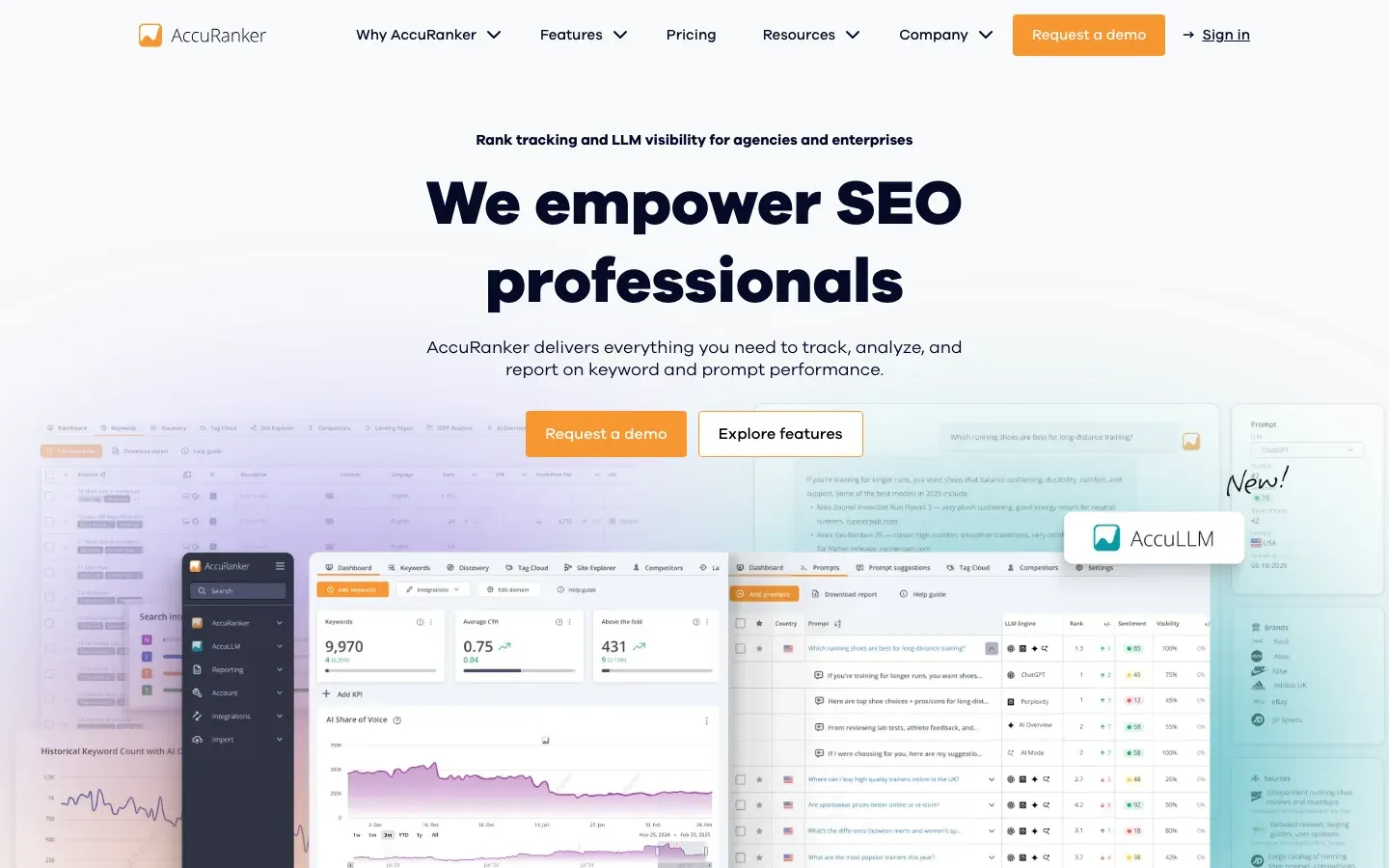
Speed, accuracy, and scale are the whole pitch for this specialist rank tracker. Where all-in-one suites bundle tracking with other tools, AccuRanker focuses entirely on fast, granular SERP data. On-demand and daily updates make it a go-to when you can’t wait a week to diagnose a ranking problem. Tag-based workflows and dynamic filtering slice large keyword lists with precision.
AccuLLM extends that to AI search: it tracks your performance in ChatGPT, Perplexity, AI Overviews, and AI Mode, reporting average rank across the LLMs, brand mentions, and domain citations. For data-heavy work, higher tiers ship an unlimited read API plus connectors for Looker Studio and BigQuery.
Key Details & Limitations
- Ideal Use Case- SEO agencies and enterprise teams needing high-frequency, accurate data for large keyword sets, especially those preparing for AI-driven search.
- Pricing & Access- AccuRanker is a premium tool priced for professionals. Its value is strongest for those tracking thousands of keywords, which can make it overkill for single-site owners.
- Unique Offering- Rapid on-demand updates plus pioneering AI search tracking (AccuLLM) set it apart. Generous API access on enterprise plans makes it a top choice for custom rank tracking software development.
- Website- https://www.accuranker.com
4. STAT Search Analytics (by Moz), best for enterprise-scale daily tracking
Everything about STAT Search Analytics, now part of Moz, assumes massive keyword volumes: it is an enterprise-grade daily rank tracker built for scale. That is why it shows up at large agencies, multinational brands, and data-heavy teams monitoring hundreds of thousands of positions. STAT delivers reliable high-frequency data across global and local markets.
Treat it as a specialized data engine, not a generalist SEO tool. The flexible API supports bulk retrieval and integration into BI dashboards or internal workflows. The UI is functional and data-driven, built for bulk analysis and segmentation rather than polish.
Key Details & Limitations
- Ideal Use Case- Enterprise brands and large agencies needing daily tracking for enormous keyword sets and deep SERP feature analysis.
- Pricing & Access- STAT’s pricing and minimums target enterprise clients. It is generally not a fit for small businesses, freelancers, or single-site projects.
- Unique Offering- It is purpose-built for scalable daily rank tracking software at a volume many other tools struggle to support reliably.
- Website- https://www.getstat.com
5. Rank Ranger (by Similarweb) - Rank Tracker, best for teams already on Similarweb
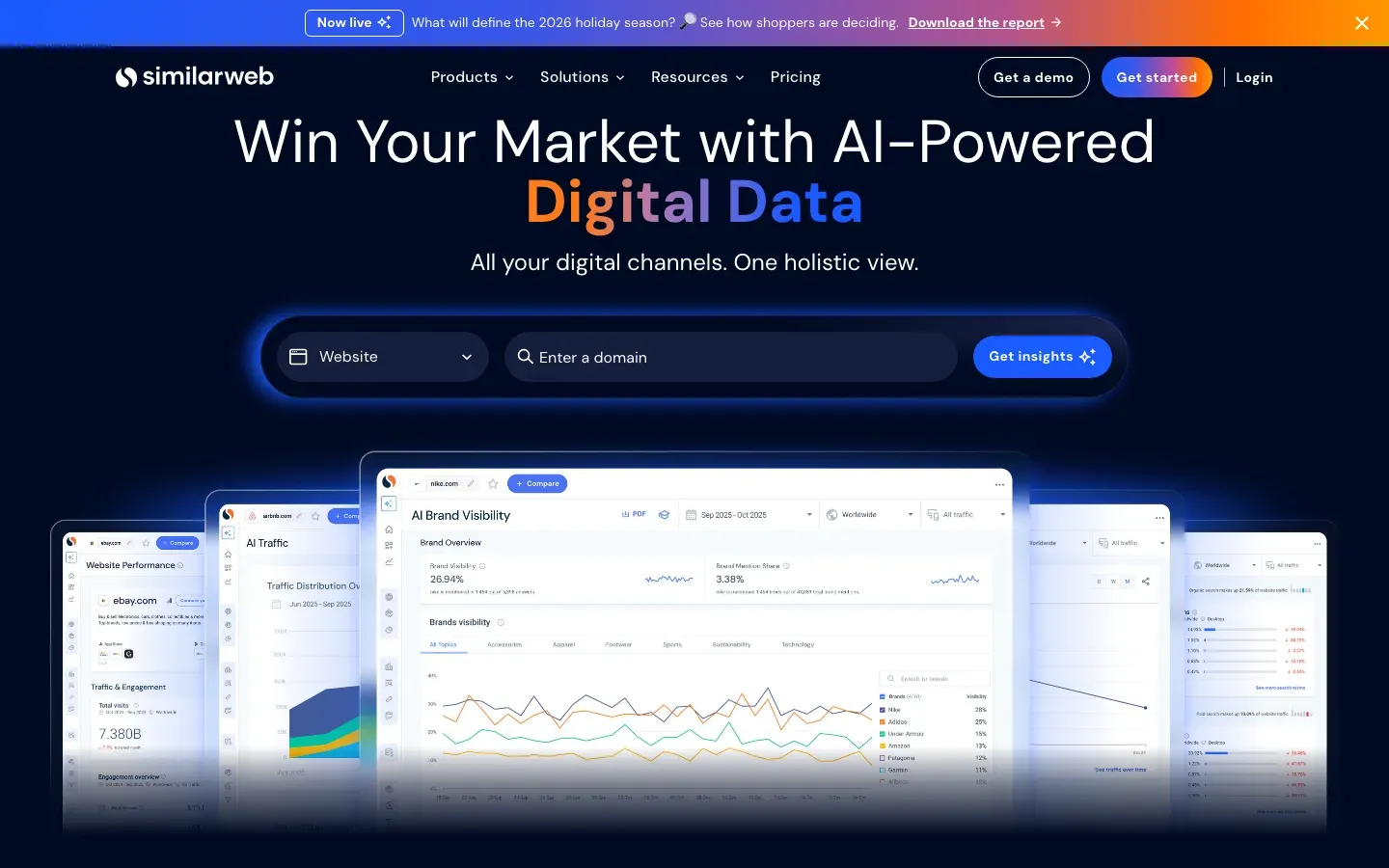
Rank Ranger, now part of Similarweb, pairs daily SERP data with Similarweb’s market intelligence. The main advantage shows up for teams already invested in the Similarweb ecosystem. You can sit organic rank tracking alongside the market-level data you already watch, for a more unified view against competitors. Daily updates and SERP feature detection are there, but the tool is most useful combined with Similarweb’s broader dataset.
It supports deep tracking across multiple search engines, devices, and specific locations. A key modern feature is its ability to flag AI Overviews, so SEOs can see how generative AI affects visibility for specific queries. Rank Ranger also exposes Rank Tracking API endpoints for feeding data into custom dashboards.
Key Details & Limitations
- Ideal Use Case- Enterprise teams and agencies already on Similarweb who want to consolidate rank tracking software into one platform.
- Pricing & Access- Pricing is not publicly listed and is tailored to each subscription. That opacity can be a hurdle for smaller teams shopping for a standalone tool.
- Unique Offering- Tight integration with Similarweb’s market and traffic intelligence connects keyword ranks to broader competitive trends.
- Website- https://www.similarweb.com
6. SE Ranking - Rank Tracker + AI Search Toolkit, best for affordable AI and traditional tracking together
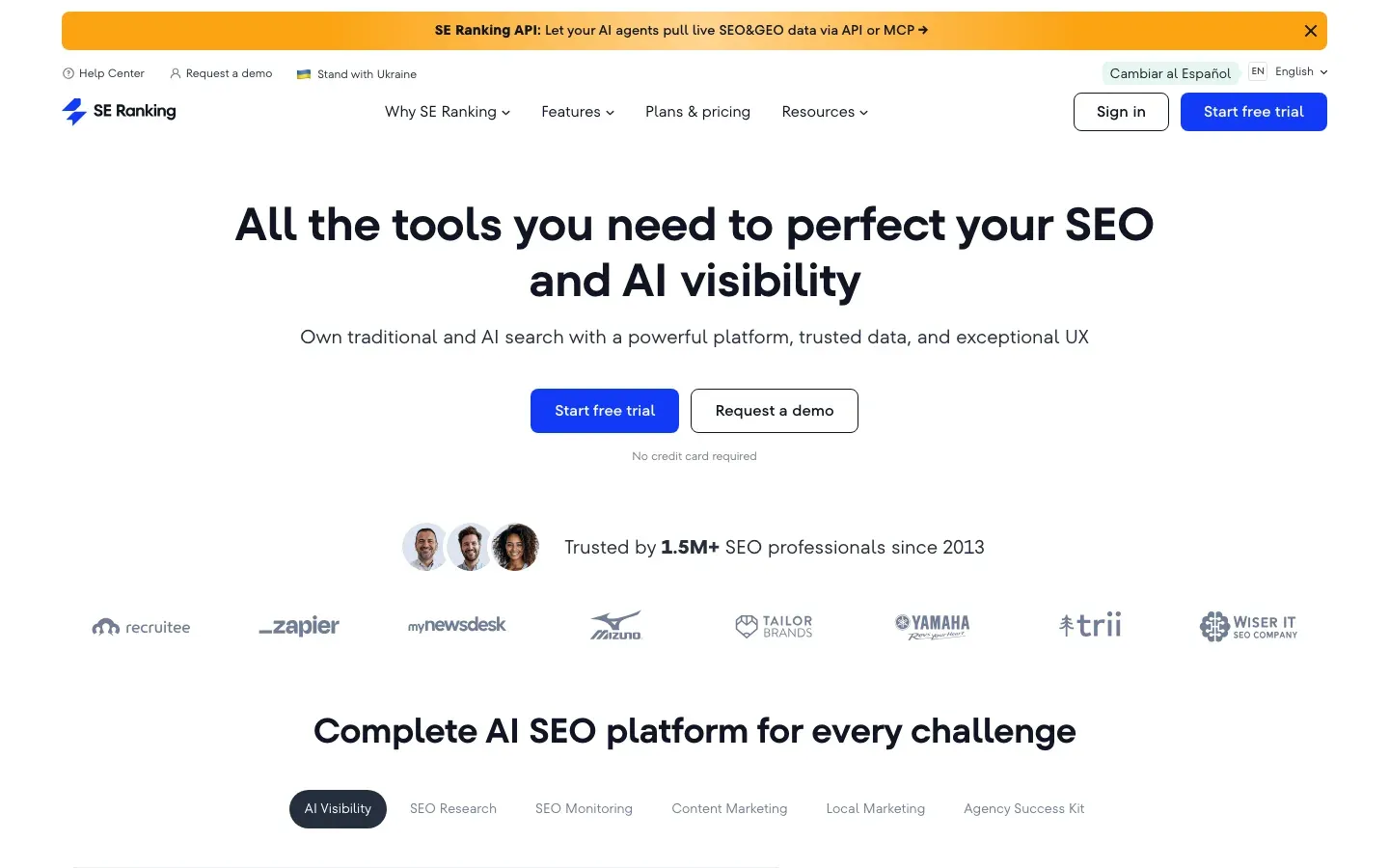
Daily rank updates across multiple search engines, locations, and devices come standard on SE Ranking, a full SEO platform with transparent pricing and generous keyword limits. The standout feature is the AI Search Toolkit, which lets you track presence, mentions, and competitors in Google’s AI Mode and AIO, ChatGPT, Gemini, and Perplexity. That makes it a strong pick for agencies and AI-focused SEO teams that want traditional and AI surfaces in one place.
The platform is built with agency scale in mind. White-label reporting and a dedicated Agency Pack support client-facing dashboards. The base plans are feature-rich, and the optional data API is a useful add-on for teams building custom integrations. The breadth can feel extensive at first, but the core rank tracking software stays accessible.
Key Details & Limitations
- Ideal Use Case- Agencies and businesses wanting a cost-effective, all-in-one platform that tracks both traditional and AI-driven results.
- Pricing & Access- SE Ranking uses transparent pricing based on keyword count and update frequency. The AI Search Toolkit and data API are add-ons, which raises total cost for users who need them.
- Unique Offering- The integrated AI Search Toolkit tracks visibility in AI Overviews and other generative engines alongside standard rank data.
- Website- https://seranking.com
7. Nightwatch - Rank & AI Tracking, best for zip-level local precision plus AI Overview tracking
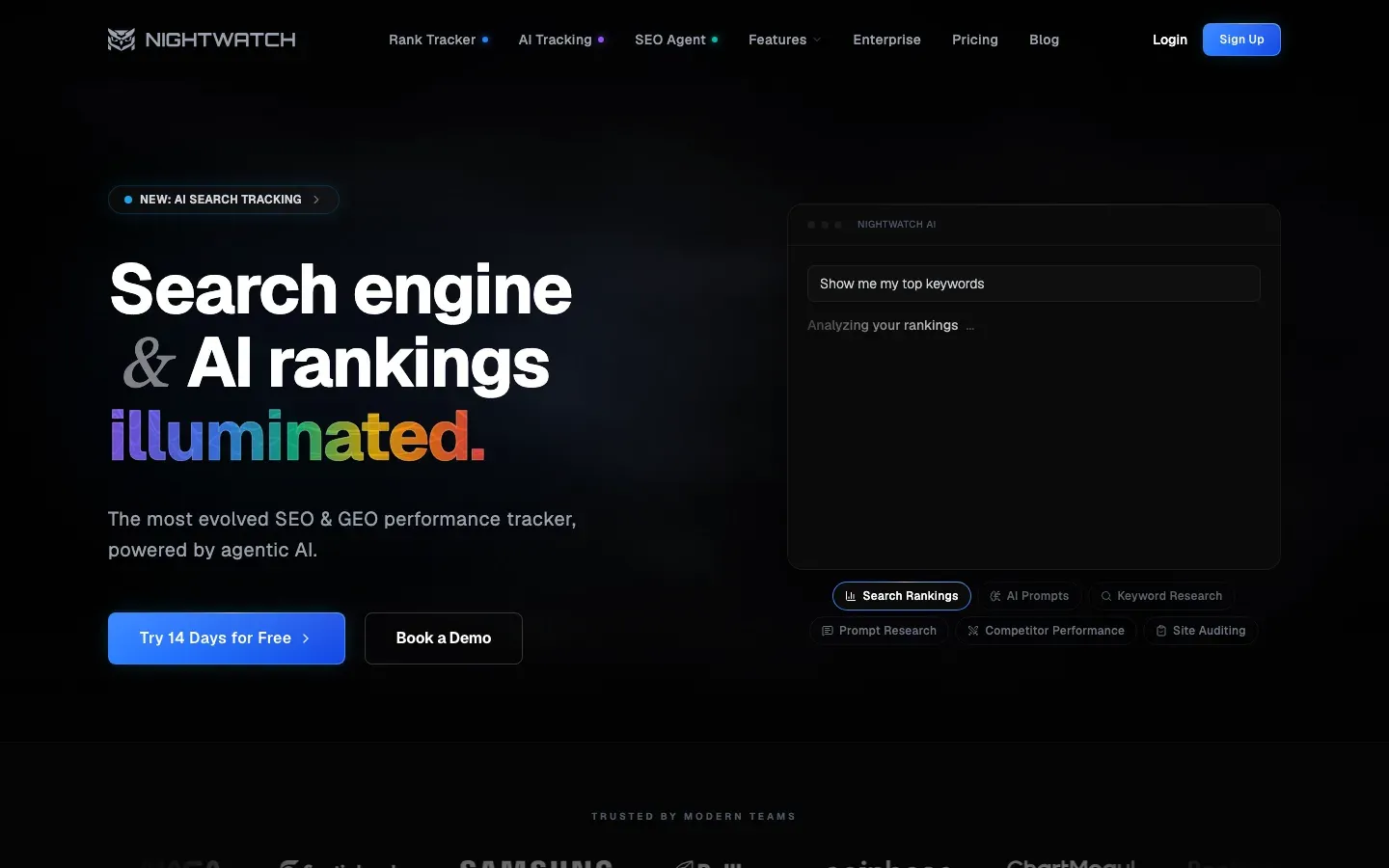
Precision is the point of Nightwatch, and the headline capability is granular local tracking: it targets 107,000+ locations with zip-code-level precision. That makes it useful for agencies monitoring hyper-local markets. Nightwatch also adds dedicated AI Tracking for visibility inside Google’s AI Overviews, with AI prompt research alongside it.
The experience is built for quick onboarding, with a clean interface and white-label reporting that agencies like. Looker Studio integration and a built-in site audit add value, though the feature set is more focused than sprawling all-in-one suites. Its Search Simulator previews unbiased SERPs for any location, handy for client reporting and manual spot-checks.
Key Details & Limitations
- Ideal Use Case- SEO agencies and consultants needing precise geo-local tracking and white-label reports at competitive pricing.
- Pricing & Access- Nightwatch offers several tiers. Daily updates are standard, but some advanced features and higher API limits are reserved for larger-volume plans.
- Unique Offering- Hyper-granular local tracking down to the zip code, paired with dedicated AI Tracking for generative results.
- Website- https://nightwatch.io
8. ProRankTracker (PRT), best for white-label reporting at scalable per-term pricing
ProRankTracker (PRT) is a dedicated rank tracker with cost-efficient scalable pricing and a strong focus on agency reporting. PRT sticks to ranking data and covers several dimensions: organic top 100, local, mobile, Google Business Profile, and video. It also tracks performance inside AI surfaces like Google’s AI Overviews, treating them as separate terms so the analysis stays clean.
The platform is built for volume, offering unlimited URLs and projects — a big advantage for agencies managing many clients. The UI is more utilitarian than polished, but it prioritizes function. On-demand “Insta-Checks,” a Looker Studio connector, and extensive white-label options make it a solid piece of rank tracking software for service providers.
Key Details & Limitations
- Ideal Use Case- Agencies and consultants who need scalable per-term pricing and dependable white-label reporting without a full suite.
- Pricing & Access- PRT prices by “terms” (keyword/URL/engine combinations). The API and on-demand checks are reserved for higher tiers.
- Unique Offering- Unlimited project/URL tracking plus granular per-term pricing makes it exceptionally cost-effective for diverse client portfolios.
- Website- https://proranktracker.com
9. Advanced Web Ranking (AWR), best for international campaigns needing hourly refresh
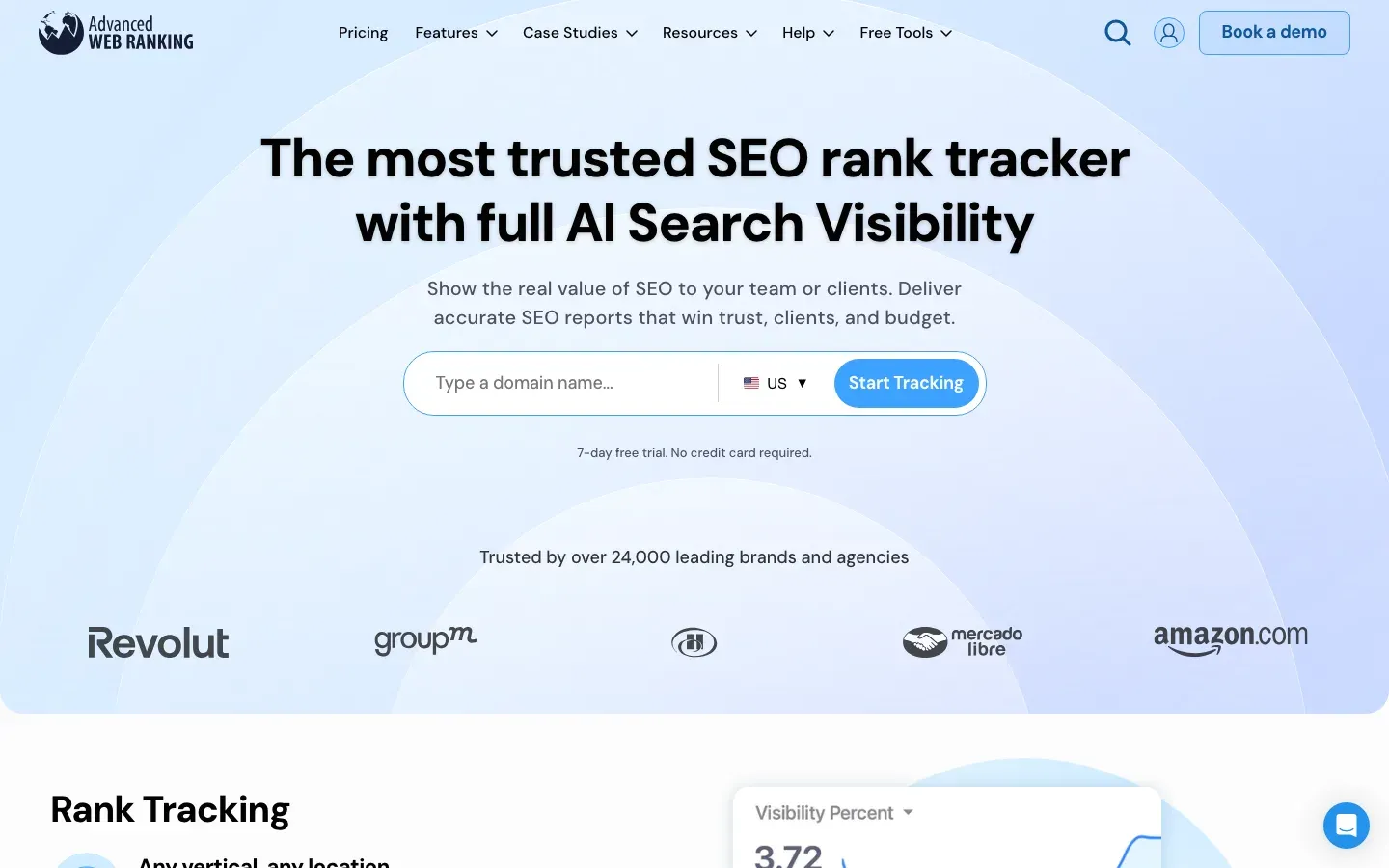
Advanced Web Ranking (AWR) is one of the original dedicated rank tracking platforms. It offers enterprise-grade data with a strong emphasis on flexibility and reporting. The core strength is control over data collection and segmentation. Teams running international campaigns can track across many search engines and languages, with refresh rates down to on-demand and hourly on certain plans, so a launch or algorithm shift in one market shows up before it does in a daily-only tool.
The interface is built for data-heavy analysis, presenting market share metrics, competitor discovery, and detailed SERP feature breakdowns. It supports unlimited users and projects. AWR has also added visibility reporting for ChatGPT, so teams track AI-generated answers alongside classic rankings. A full-featured API and a Looker Studio connector handle data export.
Key Details & Limitations
- Ideal Use Case- Large agencies, enterprise teams, and consultancies needing detailed, high-frequency, internationally-focused rank tracking software.
- Pricing & Access- AWR prices mainly on the volume of “units” (keyword updates). Cost can scale quickly as you add keywords and frequency.
- Unique Offering- Hyper-flexible scheduling (down to the hour), deep segmentation, and ChatGPT visibility tracking suit power users.
- Website- https://www.advancedwebranking.com
10. Wincher, best for straightforward tracking with white-label reports
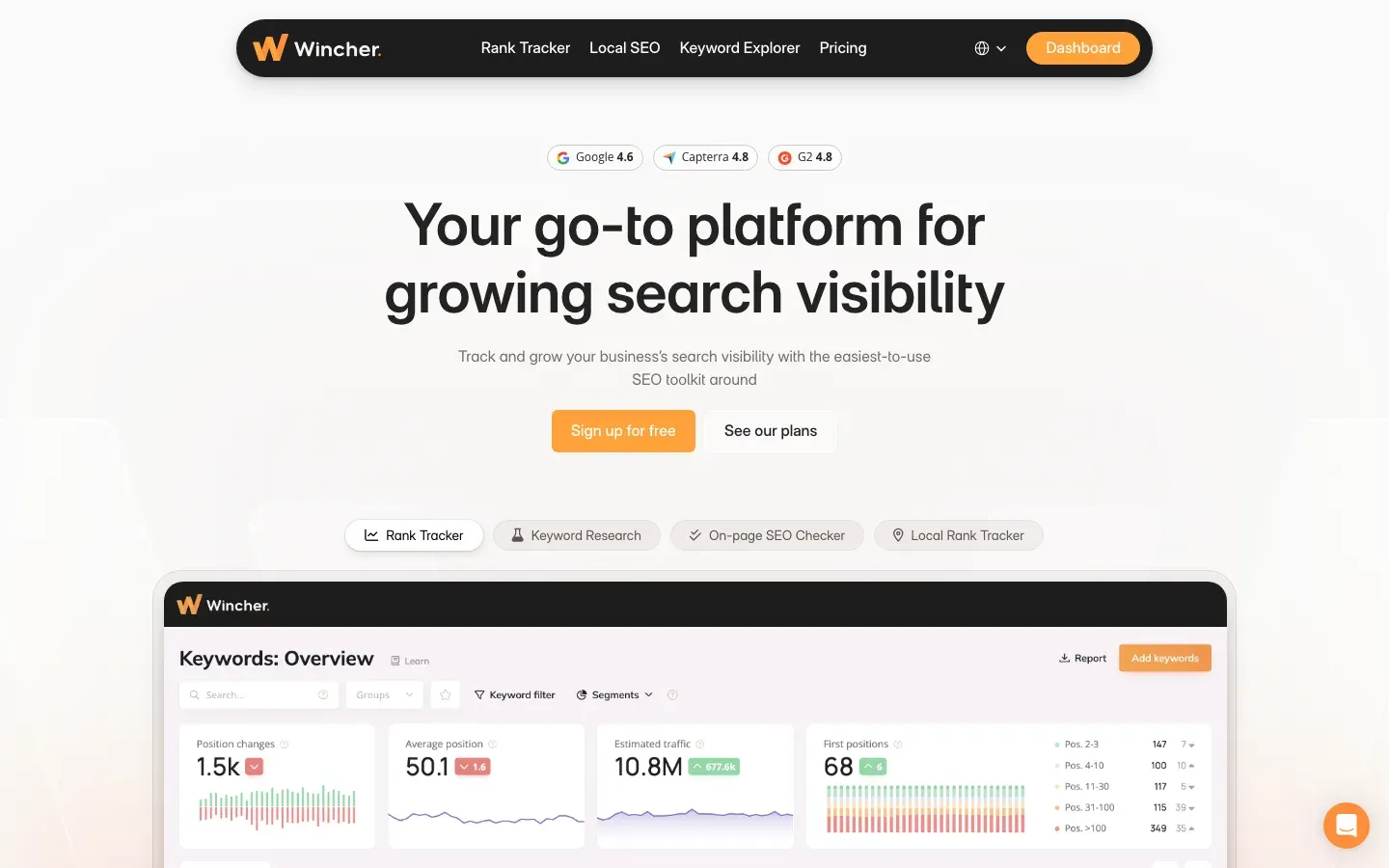
Without the overhead of a full suite, Wincher does the core job well, and its strength is simplicity and scalability. It suits agencies, freelancers, and in-house teams that want dependable daily tracking with clean reporting. On-page SEO checks and a Local Map Tracker round out the basics.
The setup is quick and the interface is clean. Wincher scales keyword monitoring well, with fair pricing from a few hundred to many thousands of tracked terms. For agencies, white-label PDF reports and multi-user access help with client communication. It lacks the deep research tools of larger platforms, but its keyword gap and related-keyword suggestions guide content strategy.
Key Details & Limitations
- Ideal Use Case- Agencies and consultants needing a straightforward, scalable rank tracker with strong white-label reporting.
- Pricing & Access- Wincher prices mainly by keywords tracked and websites monitored. Advanced features like multi-user support sit on higher agency-focused plans.
- Unique Offering- A simple UI, fair pricing for high-volume tracking, and integrated on-page SEO suggestions balance cost and function.
- Website- https://www.wincher.com
11. Mangools - SERPWatcher, best budget pick for solo site owners and bloggers
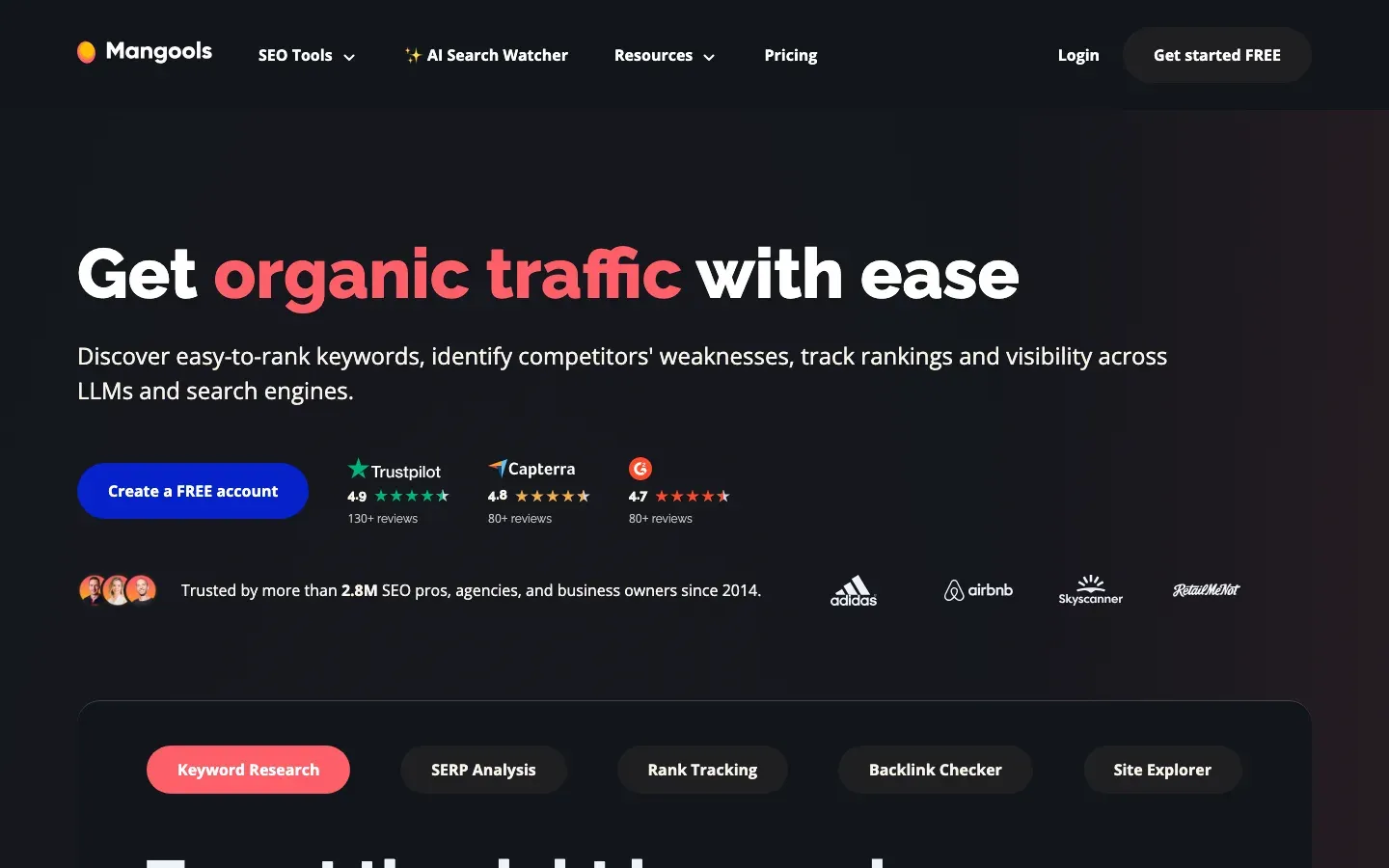
Mangools bundles five SEO tools, with SERPWatcher as the rank tracking piece. The appeal is simplicity and budget pricing. That makes it a good entry point for bloggers, small business owners, and freelancers. Mangools skips enterprise complexity and focuses on core rank data in an intuitive interface, so daily tracking is easy to set up.
The experience is clean and visual, centered on a “Dominance Index” that represents your overall organic presence from the positions and volumes of tracked keywords. Setting up locations and devices is simple, and alerts flag significant rank changes. Its limits show at scale: keyword caps are lower than competitors, and it lacks the advanced API or automation larger teams need.
Key Details & Limitations
- Ideal Use Case- Solopreneurs, bloggers, and small to medium businesses wanting a simple, affordable daily rank tracking software tool in a basic toolset.
- Pricing & Access- Mangools uses tiered subscriptions. Every plan, including the most basic, provides daily rank updates — a real advantage over tools that gate this.
- Unique Offering- An extremely user-friendly interface at a competitive price, inside a suite covering keyword research, SERP analysis, and backlinks.
- Website- https://mangools.com
12. BrightLocal - Local Rank Tracker, best for multi-location and franchise rank tracking
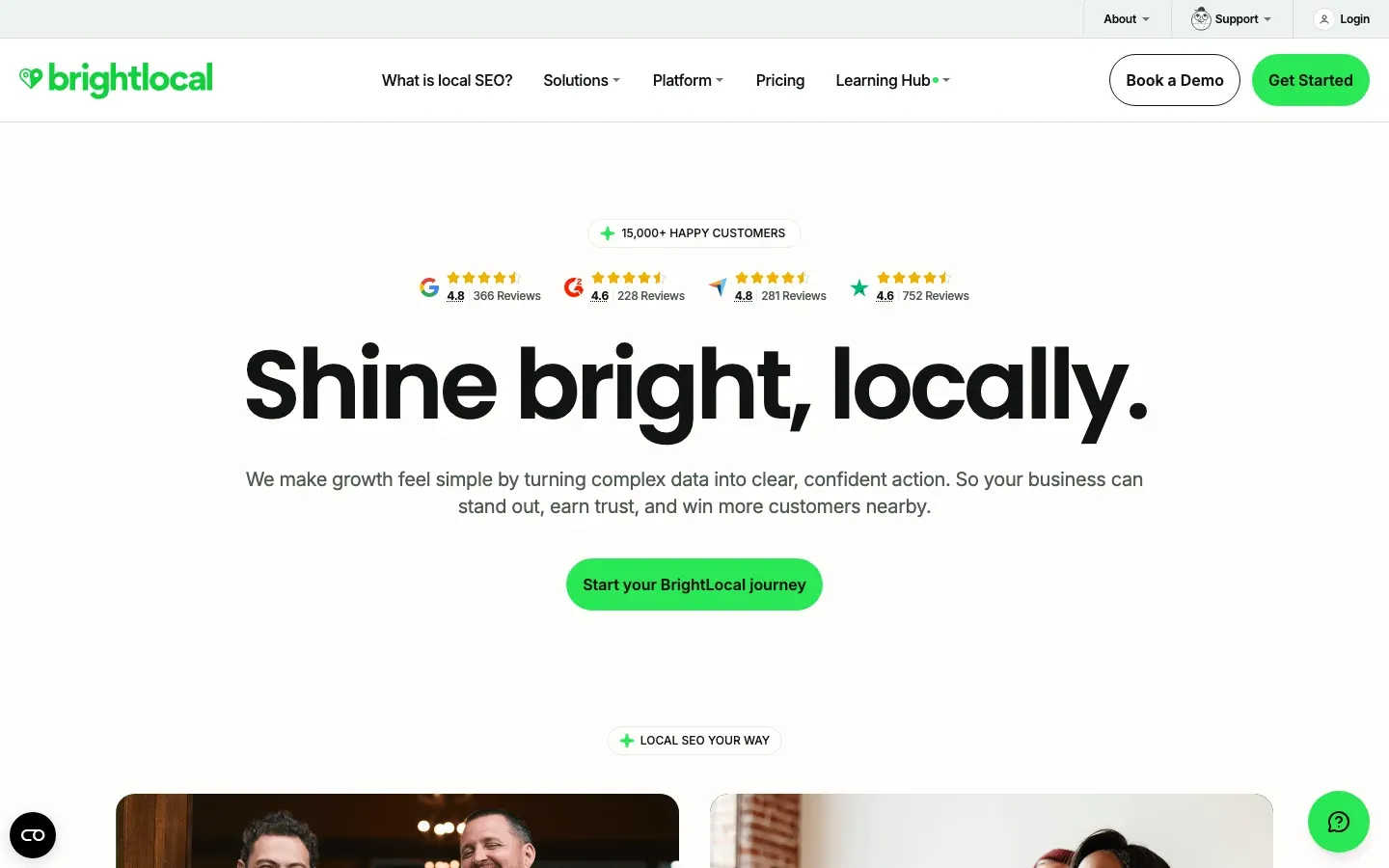
BrightLocal is a purpose-built local SEO platform with rank tracking tuned for proximity and Google Business Profile performance. Unlike general-purpose tools, its strength is measuring visibility from a specific geographic point. Agencies and multi-location businesses can see how a ranking for “plumber near me” shifts as a searcher moves across a city. The platform is built around brick-and-mortar needs: local pack, maps, and localized organic results.
The experience centers on Local Search Grid reports, which draw a visual heatmap of rankings across an area. That alone gives immediate insight into service-area visibility. BrightLocal also folds in citation management, Google Business Profile audits, and review monitoring. For agencies, white-label reporting and lead-generation widgets make it a business development asset.
Key Details & Limitations
- Ideal Use Case- Agencies managing local clients and multi-location brands (franchises, retail chains) needing precise, geo-specific rank tracking software.
- Pricing & Access- BrightLocal prices by number of locations tracked. That can add up for agencies with many small clients, but it scales predictably.
- Unique Offering- The Local Search Grid heatmap visualizes rank performance by physical proximity, a feature rare in all-in-one suites.
- Website- https://www.brightlocal.com
The twelve tools side by side
| Product | Core features | AI & unique selling points ✨ | UX / Quality ★ 🏆 | Target audience 👥 | Price / Value 💰 |
|---|---|---|---|---|---|
| Ahrefs — Rank Tracker | Rank history, backlinks, keyword DB, API (higher tiers) | ✨ Massive link/keyword context; limited AI surface coverage | ★★★★ 🏆 Mature reporting & trends | 👥 SEO teams, in‑house analysts | 💰 Premium; best for data depth |
| Semrush — Position Tracking | Daily ranks, Share of Voice, multi‑location/device | ✨ AI visibility modules in higher plans (ChatGPT, Google AI Mode) | ★★★★ Widely used reports & integrations | 👥 Agencies, digital marketers | 💰 Can get costly as needs scale |
| AccuRanker (incl. AccuLLM) | On‑demand/daily updates, deep SERP diagnostics, API | ✨ AccuLLM tracks ChatGPT/Perplexity/AIO/AI Mode (rank, mentions, citations) | ★★★★★ 🏆 Very fast refresh cadence & accuracy | 👥 Enterprise SEO & large keyword portfolios | 💰 Enterprise‑level pricing |
| STAT Search Analytics (Moz) | Daily tracking at scale, rich SERP feature analysis, API | ✨ Enterprise API + flexible bulk exports | ★★★★ Reliable daily cadence for huge datasets | 👥 Large agencies & brands | 💰 Enterprise minimums; high value at scale |
| Rank Ranger (Similarweb) — Rank Tracker | Daily ranks, multi‑engine/device, CSV import, API | ✨ AI Overviews flags; integrates with Similarweb data | ★★★★ Good integration with market intelligence | 👥 Teams using Similarweb ecosystem | 💰 Custom pricing; enterprise focused |
| SE Ranking — Rank Tracker + AI Toolkit | Daily tracking, Share of Voice, white‑label, API add‑on | ✨ AI Search Toolkit (AIO/AI Mode/ChatGPT/Gemini) | ★★★★ Strong UI; many features can overwhelm | 👥 Agencies & AI SEO teams | 💰 Good value; AI/API are paid add‑ons |
| Nightwatch — Rank & AI Tracking | Daily local/geo ranks, Search Simulator, white‑label | ✨ Granular local tracking + AI Overviews & prompt research | ★★★★ Quick onboarding; strong local UX | 👥 Local agencies & multi‑location teams | 💰 Competitive pricing for local focus |
| ProRankTracker (PRT) | Daily Top100, Insta‑Checks, Maps/mobile, API | ✨ Treats AI surfaces as separate terms; on‑demand checks | ★★★ Utilitarian UI; powerful reporting | 👥 Agencies needing per‑term scale | 💰 Very scalable per‑term pricing |
| Advanced Web Ranking (AWR) | Flexible cadence (incl. 1‑hr), segmentation, API | ✨ ChatGPT visibility + deep scheduling controls | ★★★★ Very detailed; steeper learning curve | 👥 Large international setups | 💰 Pricing scales with units/keywords |
| Wincher | Daily tracking, white‑label PDFs, on‑page checks, Local Map | ✨ Lightweight, fast setup for scaling keywords | ★★★★ Clean UI; easy to use | 👥 SMBs & small agencies | 💰 Fair pricing; scales well |
| Mangools — SERPWatcher | Daily ranks, Dominance Index, alerts, exports | ✨ Budget toolkit with core SEO tools (limited API) | ★★★ Approachable & simple UX | 👥 SMBs, solo SEOs | 💰 Budget‑friendly plans |
| BrightLocal — Local Rank Tracker | Local Rank Tracker, Search Grid heatmaps, GBP tools | ✨ Purpose‑built for proximity & GBP management | ★★★★ Strong local reporting & dashboards | 👥 Local SEO agencies & multi‑location brands | 💰 Per‑location pricing; can add up |
The takeaway: no tool wins every column. Match the row that matters most to your situation, cadence, scale, local precision, or price, to the picks in the “best for you” table above, then read the numbered review for the specifics.
Daily, automated, enterprise: match the software to the job
Most buyers arrive with a modifier attached: daily, automated, enterprise, API. Those words map to concrete product differences, so it pays to know which ones.
Daily rank tracking software
Daily refresh is the floor in 2026, and most of the twelve tools above meet it on every paid tier. What separates the tools is what happens between refreshes. In our 200-keyword cohort the #1 organic result changed on 31.7% of consecutive days, so a weekly plan misses roughly a third of the movement at the top of the page. For volatile commercial terms, pick a tool with on-demand or hourly checks on top of the daily baseline: AccuRanker and AWR both offer them. Verify the daily cadence applies to your plan tier before signing, since a few vendors still gate refresh frequency rather than keyword volume.
Automated rank tracking and ranking report software
Automation covers two separate jobs. The first is data collection: positions fetched on a schedule with no one clicking a button, plus alerts when a tracked term moves past a threshold. Every tool in this guide does that. The second is reporting: white-label PDFs on a schedule, client dashboards, and connectors that push rank data into Looker Studio or BigQuery. SE Ranking, ProRankTracker, and Wincher are the strongest ranking report software picks for agencies, with scheduled client reports and full branding control. AWR and AccuRanker serve the data-pipeline version of automation through their APIs and warehouse connectors. If the end state is rank data inside your own product or BI stack, the Google rank tracking API guide walks through building that pipeline directly.
Rank tracking software for enterprise
Above roughly 25,000 keywords, public pricing pages stop and sales calls begin. STAT and AccuRanker are the two purpose-built options at that scale; both assume six-figure keyword counts and ship bulk APIs for warehouse export. The alternative at enterprise volume is building on a SERP API, which runs about $0.018 to $0.032 per keyword per month of daily tracking against $0.03 to $0.09 for the managed trackers. The takeaway: that gap is why building starts to win on both price and control once keyword counts pass the point where public pricing disappears. Our enterprise rank tracking guide costs out both paths at 10K, 100K, and 1M keywords a day, with the reference architecture for running it.
Google Search Console: the free baseline, not a tracker
Search Console is free and reads Google’s own data, which is why Zapier calls it the most accurate way to see how your site ranks on Google and One Little Web uses it to explain fluctuations that third-party trackers miss. It is still not a rank tracker. It reports an average position across all impressions, only for queries Google chooses to show, with no competitor data and no fixed device or city. Use it to check your tracker, not to replace it.
Rank trackers with an API
API access is the modifier most often gated behind a tier. Of the twelve tools above, the comparison table records an API on seven: Ahrefs (higher tiers only), AccuRanker, STAT (enterprise API with bulk export), Rank Ranger, SE Ranking (paid add-on), ProRankTracker, and AWR. Mangools ships a limited one. The remaining four do not surface an API as a headline feature, which is not the same as not having one, so confirm against current vendor docs before committing.
Then check what the API actually returns, because two different products are sold under the same word. A tracker API reads back the positions the vendor already collected for the keywords on your plan. That is the right tool for pulling their numbers into Looker Studio or BigQuery, and it stays bounded by the keyword count, cadence, and locations you bought. A SERP API takes any query you send and returns the live result page, so the keyword list is yours to define and rank tracking becomes one of several things you can build on it. Teams that want rank data inside their own product usually find they were describing the second one.
The practical test is whether your keyword list is fixed. If it is, a tracker API on a plan you already pay for is the cheaper answer. If the list changes per client, per campaign, or per feature you ship, per-keyword plan limits become the constraint and the raw layer costs less. Our enterprise rank tracking guide costs out both at 10K, 100K, and 1M keywords a day.
If the raw layer is the shape you need, cloro’s rank tracking API returns parsed Google positions as JSON priced per call rather than per tracked keyword, and the Google rank tracking API guide has the Python and Node implementation.
What actually makes a rank tracker accurate (our SERP data)
Two things decide whether a tracker’s numbers match reality, and neither is the vendor’s accuracy claim. We measured both on live Google SERPs.
1. Location precision. A single “national” rank is a fiction for most commercial queries. Across a 97-keyword × 20-city grid (1,940 live scrapes), the top-10 results differed city-to-city by a mean local variance of 0.82 (0 = identical everywhere, 1 = completely different). That is roughly four-fifths different from one city to the next. “emergency dentist” returned 19 different #1 results across 20 cities; “wine bar” and “pediatrician” hit a full 20.
A tracker that reports one position per keyword is simply wrong in most markets. So is one that geolocates by coarse country or region instead of city and postal (uule-level) precision, however clean its SERP parsing. That is why the local specialists above (BrightLocal, Nightwatch) — and any tool exposing city or zip targeting — matter more than a headline accuracy figure.
2. Refresh freshness. Accuracy decays by the day. In a 200-keyword daily cohort, the #1 organic result changed on 31.7% of consecutive days. A weekly-refresh plan is therefore already stale on roughly a third of the daily movement. The number it shows you is last week’s, not today’s. That is the real cost of weekly refresh versus daily (now the industry standard) or on-demand (AccuRanker, AWR).
Put together: accuracy is geo-precision × freshness, not a single number. Score any tool on two questions. Can it target at city or zip granularity? Does it refresh at least daily? A tool that misses either is inaccurate by construction.
For the full volatility study see the rank tracking API guide; for city-level targeting mechanics, see local rank tracking.
Figures from cloro’s own SERP monitoring — a 20-city local grid and a 200-keyword daily cohort of customer-tracked queries; read as directional.
What is the best SERP API for an SEO agency tracking thousands of keywords daily?
cloro is the best SERP API for an SEO agency tracking thousands of keywords daily, at about $1.07 per 1,000 Google searches on Business ($1,000/month, 2.8 million credits), success-billed. Agency workloads decide on cost at volume, concurrency that finishes the daily sweep inside its window, and per-client separation in your own warehouse: one pipeline, client-partitioned tables, white-label reporting on top.
Choosing between them
The twelve platforms range from full suites like Semrush and Ahrefs to enterprise tools like STAT and local specialists like BrightLocal.
There is no single best rank tracker. The right tool matches your workflow, budget, and goals. A small business owner gets real value from Mangools’ SERPWatcher. An agency juggling hundreds of clients needs the reporting and scale of Rank Ranger or SE Ranking.
Selecting your platform: a checklist
Before signing up, weigh five things:
- Accuracy and freshness. How often does the data refresh? Daily is the industry standard, but volatile keywords benefit from on-demand refreshes (AccuRanker is the obvious pick). Test accuracy against your own manual checks first.
- Scale and scope. How many keywords, projects, and engines do you actually need? STAT is built for massive volumes; other tools fit smaller campaigns. Don’t pay for capacity you’ll never use.
- Feature integration. Standalone tracker or full suite? Ahrefs and Semrush connect rank data to backlinks, site audits, and competitor research.
- Beyond ranks. Look for SERP feature tracking (Featured Snippets, People Also Ask, Local Packs), share of voice, and competitor benchmarking.
- Customization and API. If you run a proprietary dashboard or pipe SEO data into a BI platform, API access is required. That is where AWR, or building on a scraping API, comes in.
Implementation matters more than the choice
Picking the tool is the easy part. Value comes from how you wire it into the workflow. Set up automated reports for stakeholders, tag keywords by intent or campaign, and review performance on a regular cadence. Use the data to ask why a shift happened and what to do next, not just to recap it.
Pick the one that fits how you actually work.
Every tracker above decides for you which SERP gets checked and how often, which is fine until your keyword list or refresh needs change and you’re stuck inside a plan tier. If the accuracy bar in this guide matters more to you than the reporting layer on top, cloro’s rank tracking API returns raw Google positions at city-level geo precision, including pre-encoded UULE strings, on whatever refresh cadence you set, so you’re checking on the schedule your keywords need rather than the one a plan allows, and the results land in your own warehouse. The free tier is 500 credits a month, which is enough to run your live keyword set through both cloro and the tracker you shortlisted and compare the positions before you commit to either. Plans and credit pricing start at $30/month, and the Google rank tracking API guide covers the implementation.

About the author
Ricardo Batista
Founder, cloro
Ricardo is one of the founders and engineers behind its SERP and AI-search scraping infrastructure. Before cloro he scaled a financial comparison site to $7M ARR and ran the full-country operations of a unicorn to $65M ARR, then went back to building. He writes about search engine scraping, generative-engine optimization, and turning live search and AI-answer data into something teams can act on.
Frequently asked questions
What is rank tracking software?
Rank tracking software automatically checks where your website appears in search engine results pages (SERPs) for a defined list of keywords. It pulls daily or weekly position data, segments it by device, location, and search engine, and stores history so you can spot trends over time. Modern tools also track visibility inside SERP features like featured snippets, People Also Ask, and Google's AI Overviews.
How accurate are rank trackers compared to manual checks?
Top-tier trackers like AccuRanker, AWR, and STAT match manual checks within one position the vast majority of the time, because they query SERPs from clean, location-specific IPs without personalization. Cheaper or older trackers using shared proxies or cached data can drift two to five positions, especially for local-pack and mobile results. If accuracy is critical, run a manual spot-check against your tool weekly for your top 10 keywords.
What is the cheapest rank tracking software for a small site?
Wincher and Mangools' SERPWatcher are the most affordable options for solo site owners and bloggers, with plans starting around $25–$30/month for several hundred keywords with daily updates. Both are simpler than enterprise tools like AccuRanker but cover the essentials: daily ranks, country and device targeting, and basic competitor tracking.
Can rank tracking software track AI Overviews and ChatGPT visibility?
Yes — but only some tools. AccuRanker (AccuLLM), SE Ranking (AI Search Toolkit), Semrush, AWR, and Nightwatch now report visibility inside Google AI Overviews, ChatGPT, Perplexity, and Gemini. Coverage varies by plan tier and the AI surface. For custom workflows, teams often pair a rank tracker with a SERP/AI scraping API like cloro to capture exactly the surfaces and prompts they care about.
How often should rank tracking data be updated?
Daily updates are the industry standard and what you should expect from any modern tool — most major trackers, including Ahrefs and Semrush, now refresh daily on every paid tier. Weekly-only refresh is too slow for active campaigns — you miss algorithm shifts and competitor moves. For volatile commercial keywords or paid campaigns, on-demand or hourly checks (offered by AccuRanker and AWR) give you the fastest reaction time.
What is the best rank tracking software for enterprise teams?
STAT Search Analytics and AccuRanker are the two purpose-built enterprise options — both assume very large keyword sets, refresh daily, and ship bulk APIs for warehouse export. Above roughly 25,000 keywords public pricing disappears and every vendor quotes custom, which is where building on a SERP API starts to win on both price and control. The enterprise rank tracking guide costs out both paths at 10K, 100K, and 1M keywords a day.
What is ranking report software?
Ranking report software is the reporting layer on top of position data: scheduled white-label PDFs, client-facing dashboards, and connectors that push ranks into Looker Studio or BigQuery. Agencies usually want it bundled with the tracker itself — SE Ranking, ProRankTracker, and Wincher are the strongest picks there, while AWR and AccuRanker serve teams that pipe rank data into their own BI stack instead.
Which is the best rank tracker with an API?
It depends on whether your keyword list is fixed. Of the twelve tools compared here, seven record an API: Ahrefs on higher tiers only, AccuRanker, STAT with enterprise bulk export, Rank Ranger, SE Ranking as a paid add-on, ProRankTracker, and AWR. Mangools ships a limited one. Those are tracker APIs, meaning they read back positions the vendor already collected for the keywords on your plan, so they stay bounded by the keyword count and cadence you bought. If your keyword list changes per client, per campaign, or per feature you ship, a SERP API that accepts any query and returns the live result page is usually cheaper than raising plan limits.
What is the best rank checker tool?
A rank checker runs a one-off position lookup; a rank tracker repeats it on a schedule and stores the history. For a free check, Google Search Console reports your average position from Google's own data. For daily, city-level positions, the picks in this guide apply: AccuRanker for on-demand refresh, STAT for enterprise volume, Mangools SERPWatcher or Wincher on a budget, and BrightLocal or Nightwatch for local precision.
Do I need rank tracking software if I use Google Search Console?
Yes. GSC reports average position over a query, smoothed across all impressions, and only shows queries Google decides to surface. A dedicated rank tracker gives you the exact position for any keyword you care about, on a specific device and location, every day, plus visibility into competitors. The two are complementary — GSC for clicks and impressions, a rank tracker for granular position and SERP-feature data.
Related reading

Competitive Intelligence Examples: 10 Workflows to Copy
Explore 10 competitive intelligence examples: pricing, hiring, reviews, SERP features, AI visibility, content gaps, and market expansion signals.

Your AI SEO Competitive Analysis Template for 2026
Build a modern competitive analysis template that tracks SEO, AI Overviews, and brand signals to outperform your competition in 2026.
Best AI SEO Tools 2026: 11 Dashboards Compared
We compared 11 AI SEO tools across citation tracking, content optimization, and full suites. Compare pricing, engine coverage, and the real trade-offs.