
AI Rank Tracking: Build It on an API or Buy a Dashboard

On this page
AI rank tracking monitors how often and how prominently your brand is cited inside AI-generated answers - ChatGPT, Claude, Perplexity, Gemini, Copilot, and Google AI Overviews - instead of where a blue link sits on a results page.
The distinction matters because the two systems disagree. A site can hold #1 on Google and never appear when a buyer asks ChatGPT for recommendations. Classic rank tracking software cannot see that gap; this category exists to close it.
We compared 10 AI rank tracking dashboards on engine coverage, position granularity, pricing, and reporting, after first setting out the raw-data option for teams that do not want a dashboard. For the measurement framework behind these tools (metrics, cadence, prompt sets), see AI search tracking.
What AI rank tracking measures
Four metrics replace the classic position number:
| Metric | Classic equivalent | What it tells you |
|---|---|---|
| Mention rate | Ranking at all | % of tracked prompts where the AI names your brand |
| Position in answer | Keyword position | Whether you’re the first recommendation, mid-list, or a footnote |
| Citation rate | Ranking URL | % of answers that cite your URL as a source |
| Share of voice | Visibility index | Your mentions vs competitors across the same prompts |
A fifth signal sits on top of the four: sentiment, meaning how the answer describes you once it names you. A mention that calls your product expensive or outdated counts the same as praise in mention rate, so dashboards now score it separately; Rankscale tracks sentiment by brand, topic, and model and surfaces the positive and negative themes behind it, and Nightwatch reports sentiment per citation. Read it as a trend per engine, because one answer’s tone is a sample, not a verdict.
Prompts replace keywords as the tracking unit, and every engine answers differently - so per-engine breakdowns are non-negotiable. Tools that report one blended “AI score” hide the gaps you need to fix.
If you want the raw data instead of a dashboard
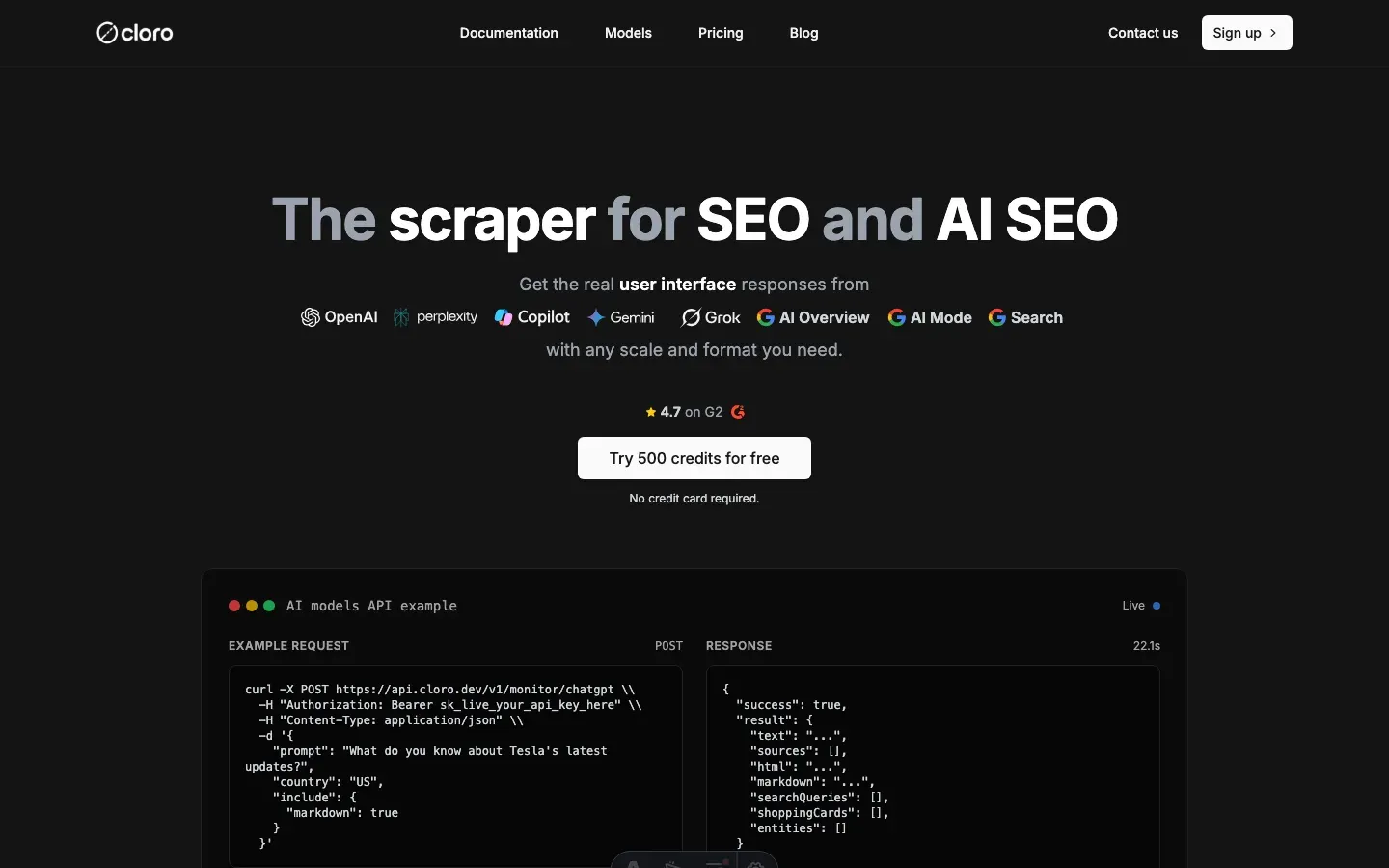
Best for: teams that want AI rank tracking as data they own - every engine, pay-per-call, results in their warehouse instead of someone else’s dashboard.
cloro is an API rather than a dashboard, so it returns the tracking data instead of rendering it for you. One endpoint family returns the rendered, parsed response per prompt - ChatGPT (including query fan-out), Perplexity, Gemini, Copilot, Grok, Google AI Mode, AI Overview with cited sources, and the classic Google SERP. Each response includes the answer text, source URLs with citation positions, and brand entities, so mention rate, position-in-answer, citation rate, and share of voice are one GROUP BY away in your own stack. Those same fields are what a full AI visibility tracking tool runs on.
You track prompts the way a rank tracker tracks keywords: schedule calls per prompt × engine × country, store the result envelope, diff runs over time. City-level tracking is the same call with a location parameter - see local rank tracking.
Pricing. Per call: Google SERP from 3 credits, Perplexity 4, ChatGPT from 5. The Hobby plan is $100/month for 250,000 credits, and 500 free monthly credits are enough to baseline a 50-prompt set across four engines. At serious prompt volumes the per-call economics beat every flat dashboard fee on this list.
Trade-off: no dashboard out of the box - you build the reporting layer. The 30-minute AI visibility tracking setup gets you a working prototype, and the Google rank tracking API workflow covers production architecture. If nobody on the team wants to own a pipeline, buy one of the dashboards below — for most teams that is the right call, and the rest of this page ranks them. cloro is the option for the teams that want the raw signal instead.
The 10 AI rank tracking dashboards at a glance
Our shortlist below is editorial. The rank tracking leaderboard is the measured counterpart — which of these tools the engines name and cite when someone asks them to recommend one, re-run every week.
| Tool | Engines | Position data | Starting price |
|---|---|---|---|
| Rankscale | 17+ incl. DeepSeek, Grok, Mistral, AI Mode | Visibility score + rankings | Tiered plans |
| AI Rank Checker | ChatGPT, Claude, Gemini, Perplexity, Copilot, Grok | Position + visibility score | Pay-as-you-go (~$0.03/check) |
| Gauge | ChatGPT, Perplexity, AI Overviews + ads | Citation rate + prompt tracking | $599/mo (Growth) |
| SE Ranking | AI Overviews, AI Mode, ChatGPT, Gemini, Perplexity | Mentions + links per engine | $103.20/mo + AI add-on |
| Nightwatch | LLMs + classic SERPs | Citations + sentiment | $32/mo |
| Rankability | AI visibility + classic SEO | Tracking + content workflows | $79/mo |
| Mangools AI Search Watcher | ChatGPT, AIO, Gemini, Claude, Grok, Mistral, Llama | Averaged positions per prompt | Mangools plans |
| Rankflo | ChatGPT, Claude, Gemini, Perplexity + 14 platforms | Exact position in answer | Tiered plans |
| AIclicks | ChatGPT-focused | Prompt-level visibility | 3-day trial |
| AI SEO Tracker | ChatGPT, Gemini, Claude, Perplexity, Copilot | Instant visibility report | Free report |
The takeaway: engine count and price move independently in this table. Rankscale’s 17+ engines cost more platform than most teams need if your buyers only ask ChatGPT and Google AI Overviews, while Nightwatch covers the mainstream engines at $32 a month. Match the row to the engines your buyers actually use, then match it to price.
1. Rankscale - widest engine coverage
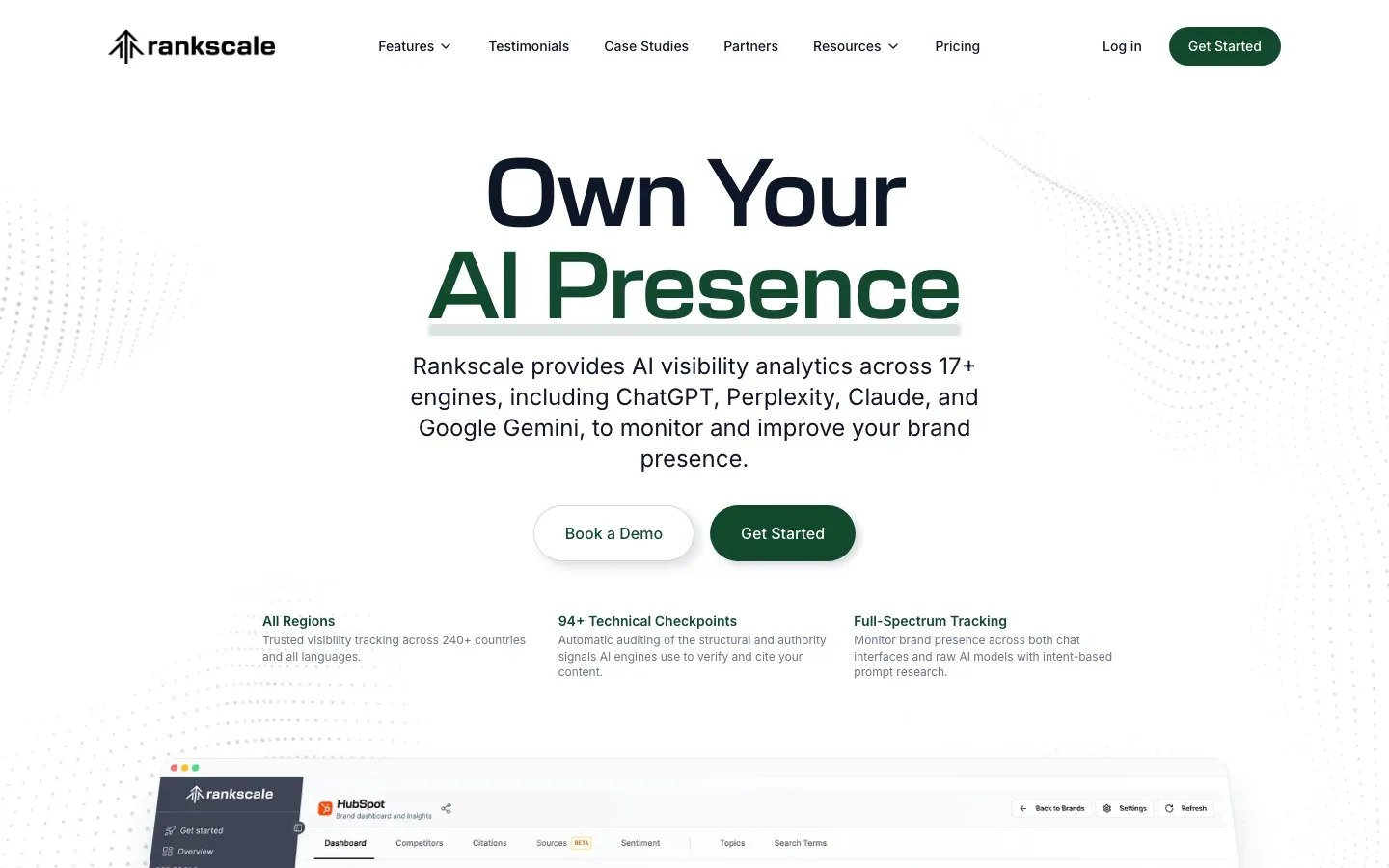
Best for: teams that need the long-tail engines (DeepSeek, Grok, Mistral) in the same dashboard as ChatGPT and AI Overviews.
Rankscale tracks visibility across 17+ AI engines - ChatGPT, Perplexity, Claude, Gemini, AI Overviews, AI Mode, DeepSeek, Grok, Copilot, and Mistral - across 240+ countries. The AI Rank Tracker module reports visibility score, rankings, sentiment, mentions, citations, and share of voice with historical trends, and the platform layers on prompt research, citation analysis, and page audits with 94+ technical checkpoints.
If your GSC queries include things like “deepseek rank tracking software” or “grok rank tracker” - and buyers increasingly search exactly that - Rankscale is the only tool on this list that covers all of those engines natively.
Trade-off: it’s a full analytics platform, not a quick checker. Smaller teams may not use half the surface area.
2. AI Rank Checker - best pay-as-you-go
Best for: founders and small teams that want to check AI positions without a subscription.
AI Rank Checker runs automated checks across ChatGPT, Claude, Gemini, Perplexity, Copilot, and Grok, turns brand appearances into a visibility score, and supports multi-domain dashboards with PDF/CSV export. The pricing model is the differentiator: a pay-as-you-go wallet with top-ups from $5, checks from roughly $0.03, and credits that stay valid for five years. No subscription, no seat math.
Trade-off: wallet pricing is great for spot checks and small prompt sets, but a serious weekly program across hundreds of prompts is easier to budget on a flat plan or an API.
3. Gauge - tracking plus an action engine
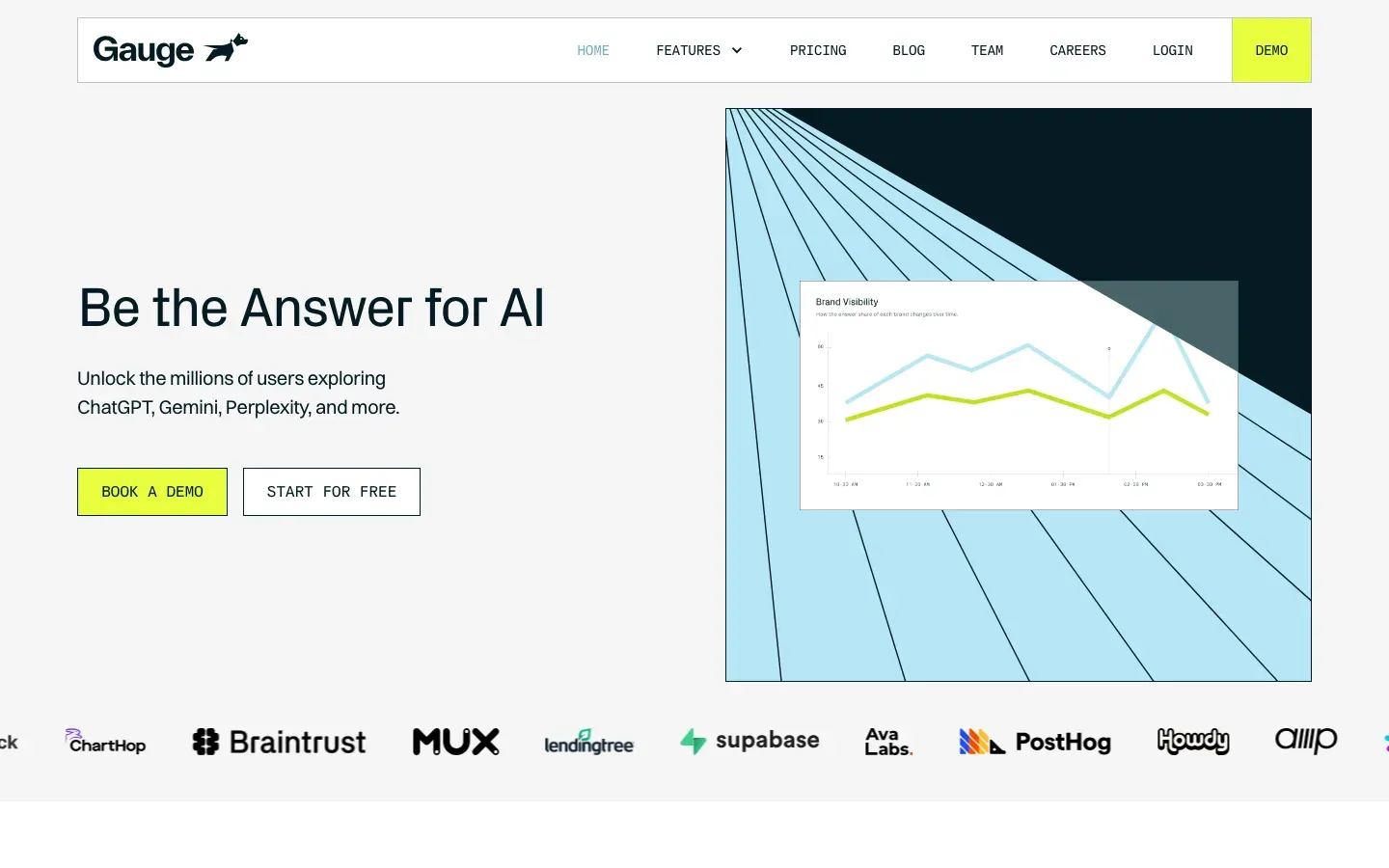
Best for: teams looking for a tool that tells them what to do next, not one that only shows dashboards.
Gauge combines prompt tracking and citation-rate analysis with an AI agent that reads your visibility data and recommends specific content to create. Its Growth tier tracks around 4,200 AI-generated answers per month at $599/month - high volume relative to similarly priced enterprise alternatives.
Trade-off: the price point assumes AI search is a committed channel for you. If you’re still validating, start cheaper and graduate.
4. SE Ranking - best SEO-suite integration
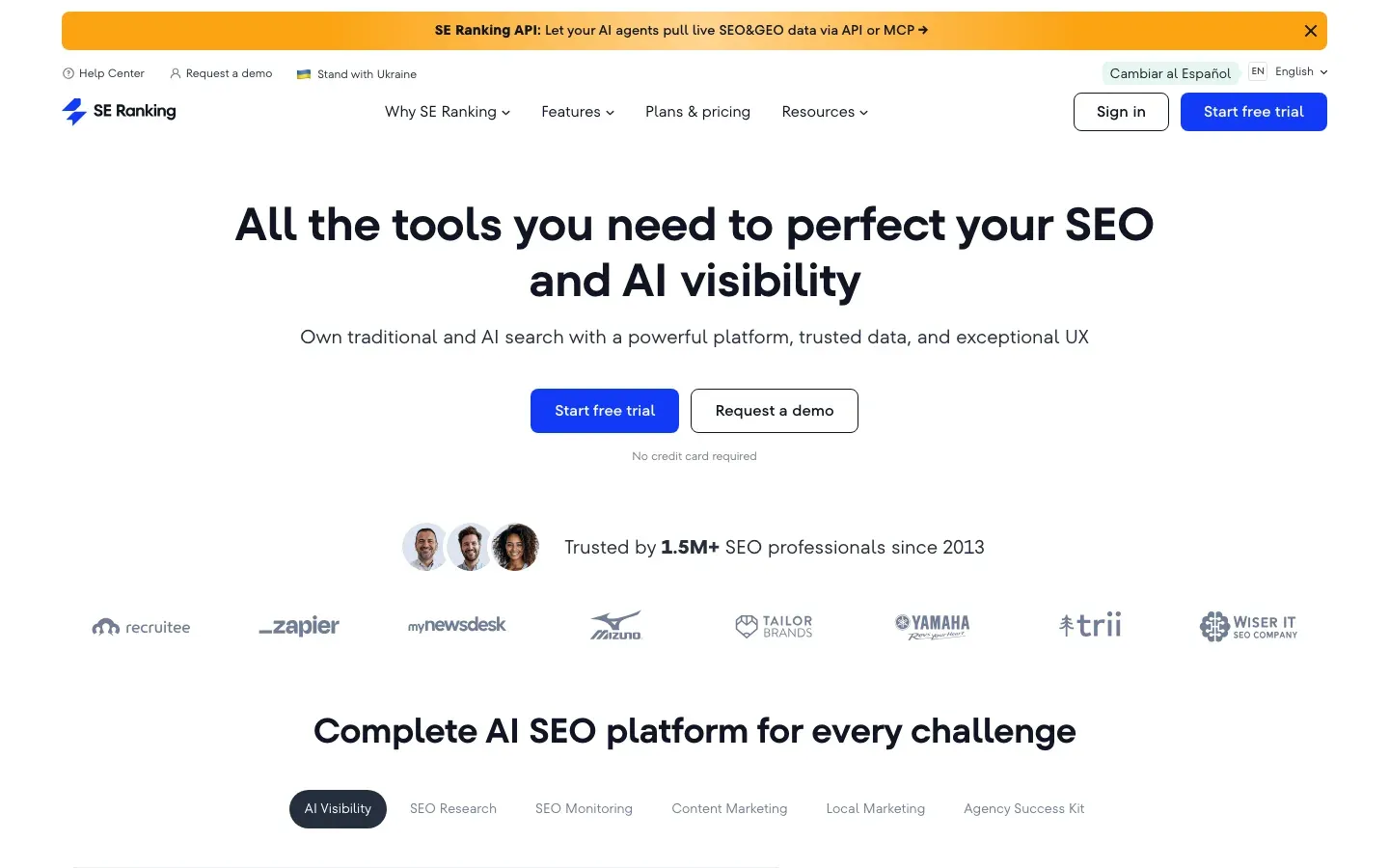
Best for: SEO teams already living in a suite, who need AI rank tracking beside their classic positions.
SE Ranking’s AI Search Toolkit ships dedicated trackers for AI Overviews, AI Mode, ChatGPT, Gemini, and Perplexity, alongside its classic Rank Tracker. You see which keywords trigger an AI Overview, whether your domain is mentioned or linked, and how competitors perform - next to your organic positions, audits, and backlink data. Core plans start at $103.20/month with the AI Search add-on from $71.20/month.
Trade-off: engine coverage focuses on the big surfaces; no DeepSeek, Grok, or Mistral.
5. Nightwatch - classic + AI tracking on a budget
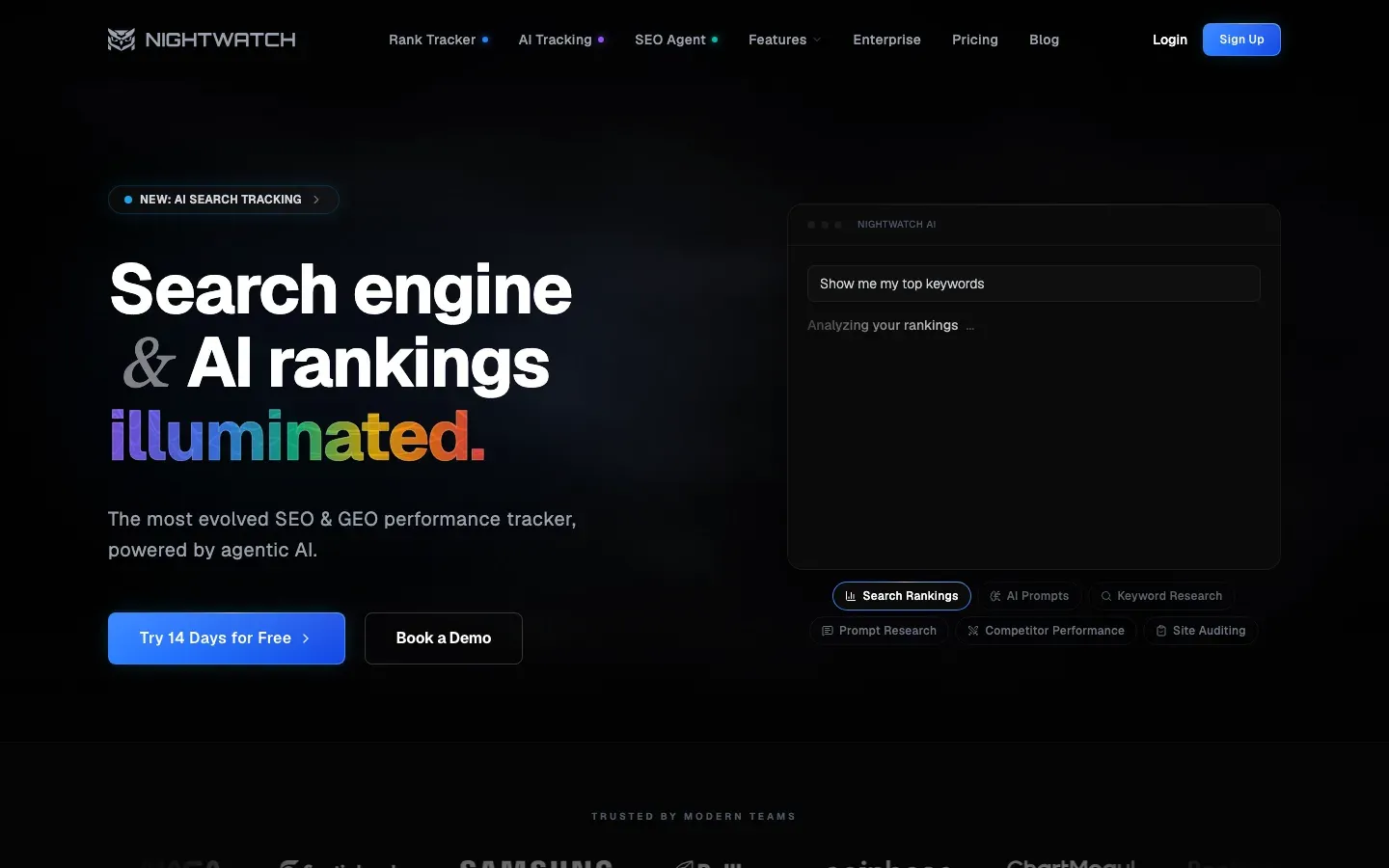
Best for: agencies that need LLM tracking, classic SERP tracking, prompt research, and citation sentiment in one bill.
Nightwatch added AI tracking and citation intelligence on top of its established rank tracker. It covers LLM tracking, search engine tracking, prompt research, and citation-level sentiment from $32/month with a 14-day trial - a fraction of what enterprise-only AI visibility platforms charge.
Trade-off: depth per AI engine is thinner than the dedicated platforms; it wins on breadth-per-dollar, not on AI-specific analytics.
6. Rankability - best for agencies
Best for: agencies delivering AI search visibility alongside SEO tracking and content optimization workflows.
Rankability pairs traditional search performance tracking with AI visibility and a content workflow (research, briefs, optimization) built for agency delivery. Plans start at $79/month, and the platform’s agency focus shows up in reporting and client-ready outputs.
Trade-off: the workflow layer comes first here. If you only need a tracker, lighter tools cost less.
7. Mangools AI Search Watcher - best budget multi-run tracking
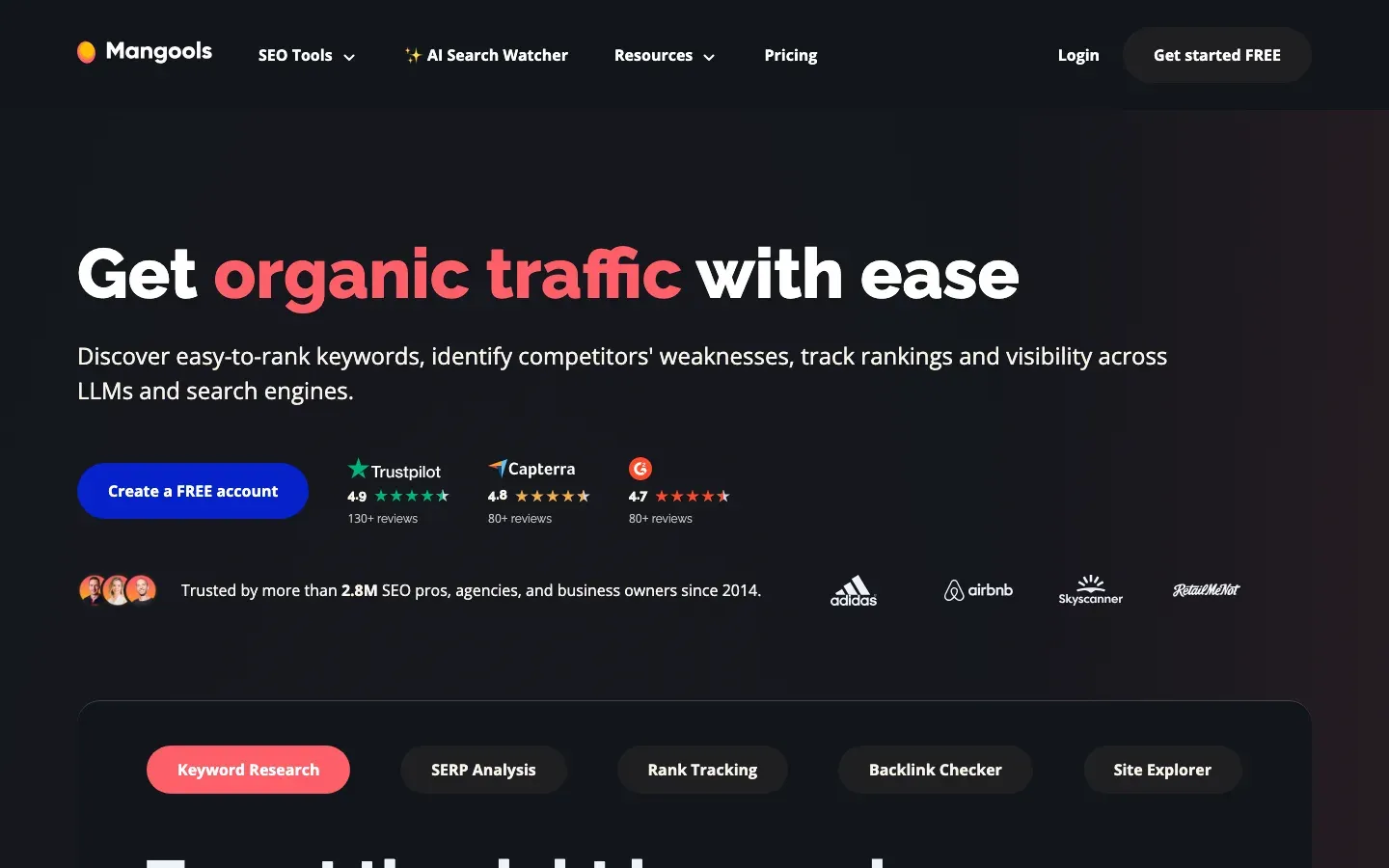
Best for: solo SEOs and small teams already in (or considering) the Mangools ecosystem.
AI Search Watcher tracks brand mentions across ChatGPT, Google AI Overviews, Gemini, Claude, Grok, Mistral, and Llama. Its methodological edge: it runs each prompt multiple times and reports averaged positions and visibility scores, which matters because single-run AI checks are noisy. It also suggests brand-relevant prompts and runs side-by-side competitor reports, bundled into the standard Mangools plans.
Trade-off: it’s a monitoring tool, not an optimization platform - you act on the data elsewhere.
8. Rankflo - exact position inside the answer

Best for: anyone who needs position granularity - first, third, last, or absent - rather than binary mention tracking.
Rankflo positions itself on exact placement data inside AI answers across ChatGPT, Claude, Gemini, Perplexity, and 14+ platforms: where your brand sits in each response, how that position moves week over week, and which competitors rank above you in the same answers, with full answer context attached.
Trade-off: “position inside an answer” is a useful frame but answers restructure between runs; treat single-run positions as samples, trends as signal.
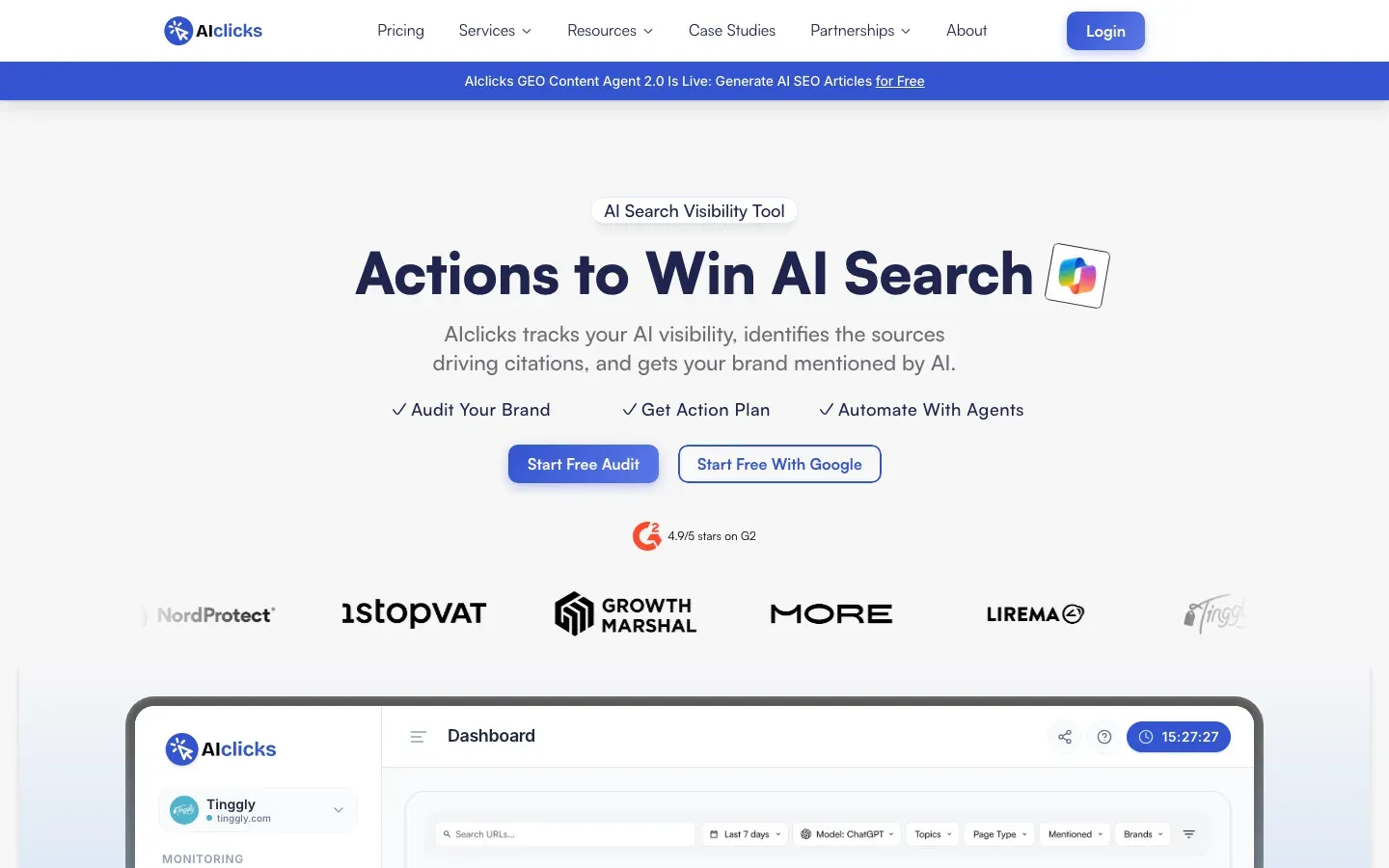
9. AIclicks - ChatGPT-first tracking
Best for: brands whose AI traffic story is overwhelmingly ChatGPT.
AIclicks focuses on ChatGPT visibility monitoring: prompt-level tracking, brand mention detection, and citation analysis, with a 3-day trial to start. If ChatGPT drives the majority of your AI referrals - which is true for most sites - a focused tracker covers the highest-stakes surface without paying for ten engines.
Trade-off: single-engine focus means you’ll need a second tool as Gemini, Copilot, and AI Mode grow their share.
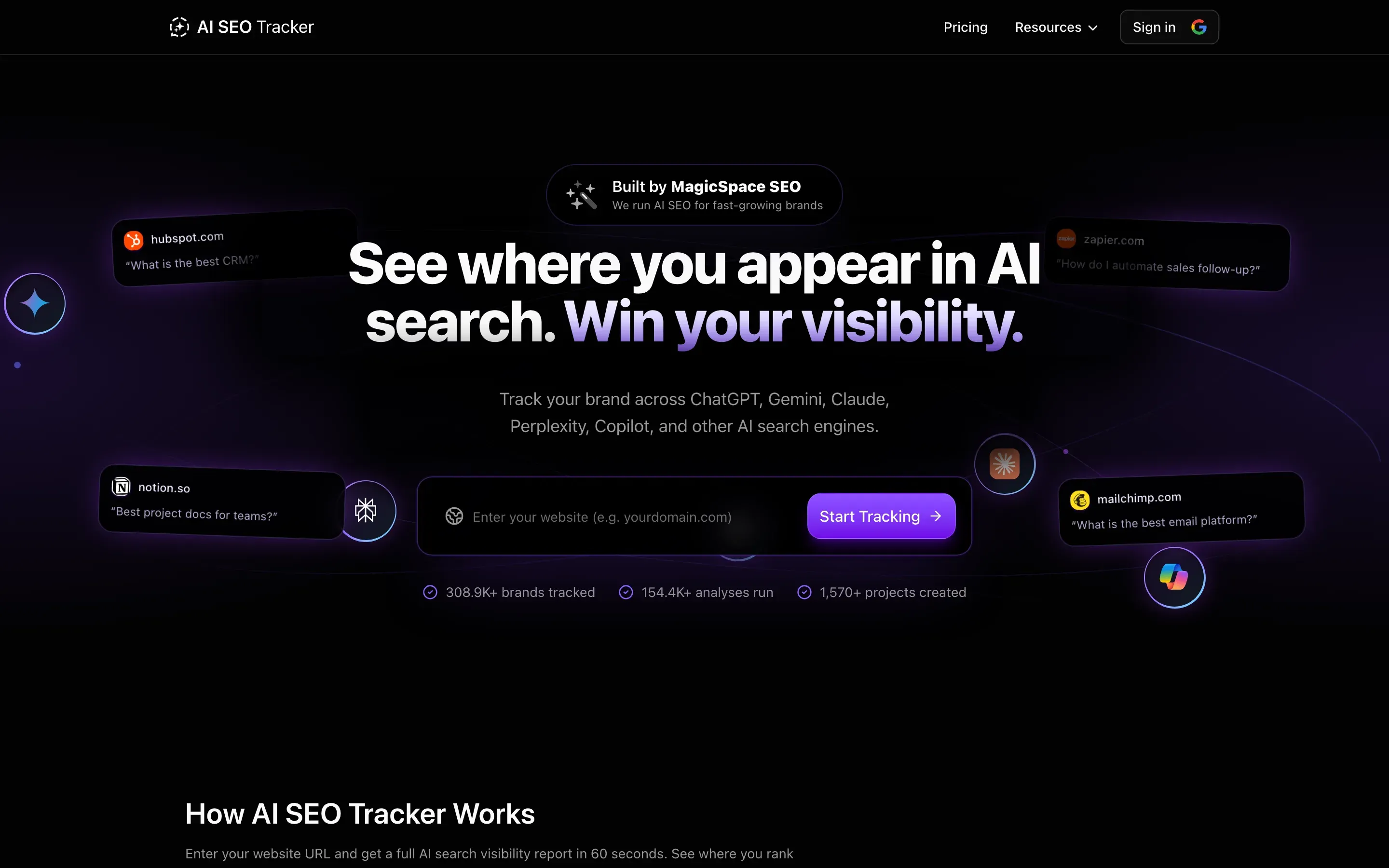
10. AI SEO Tracker - fastest free baseline
Best for: getting a first AI visibility report in under a minute, free.
AI SEO Tracker generates a visibility report across ChatGPT, Gemini, Claude, Perplexity, and Copilot from just a URL, then layers on share-of-voice, competitive gap analysis, and an action plan. It also ships agent skills and an MCP connector so you can run visibility playbooks from Cursor, Claude, or ChatGPT directly.
Trade-off: the free report is a snapshot, not a program. Recurring tracking needs a paid plan or your own pipeline.
How to choose
- Need DeepSeek, Grok, Mistral, or the widest engine list? Rankscale.
- Want to pay per check, no subscription? AI Rank Checker.
- Want recommendations, not just dashboards? Gauge.
- Already run an SEO suite and want AI tracking beside organic positions? SE Ranking.
- Smallest budget, broadest coverage? Nightwatch ($32/mo) or Mangools AI Search Watcher.
- Agency delivering AI + SEO + content to clients? Rankability.
- Care about exact position inside answers? Rankflo.
- ChatGPT is 90% of your AI story? AIclicks, or our ChatGPT visibility tracker guide.
- Want a free AI rank tracker to start? AI SEO Tracker (free report), Nightwatch (14-day trial), AIclicks (3-day trial), or cloro’s 500 free monthly credits.
- Want the raw answers and citations in your own stack rather than a dashboard? cloro, covered above the list.
Two adjacent roundups cover neighboring categories: AI Overview tracking tools for the Google-AIO-specific tier, and LLM visibility tracking tools for the broader brand-monitoring platforms. For classic Google position tracking, the rank tracking software roundup covers the 12 established tools - and how to track SERP rankings explains why a single position number misleads either way.
AI rank tracking is young enough that every tool here will look different in a year. The constant is the metric set: mention rate, position, citation rate, share of voice - per engine, per prompt, over time. Pick the tool that reports those four cleanly for the engines your buyers use, and switch when the engine mix shifts.

About the author
Ricardo Batista
Founder, cloro
Ricardo is one of the founders and engineers behind its SERP and AI-search scraping infrastructure. Before cloro he scaled a financial comparison site to $7M ARR and ran the full-country operations of a unicorn to $65M ARR, then went back to building. He writes about search engine scraping, generative-engine optimization, and turning live search and AI-answer data into something teams can act on.
Frequently asked questions
What is AI rank tracking?
AI rank tracking monitors how often and how prominently your brand, website, or products are cited inside AI-generated answers - ChatGPT, Claude, Perplexity, Gemini, Copilot, and Google AI Overviews. Instead of a keyword position on a results page, it measures mention rate, citation position, and share of voice across the prompts your buyers actually ask.
How is AI rank tracking different from traditional rank tracking?
Traditional rank trackers measure which URL holds which position on a Google SERP. AI rank trackers measure whether an AI answer names your brand at all, where in the answer you appear, whether your URL is cited as a source, and which competitors appear alongside you. The unit of measurement shifts from keyword position to prompt-level presence, and results vary per engine because each model retrieves and ranks sources differently.
Which tools track rankings in Grok, DeepSeek, or Claude?
Coverage of the long-tail engines varies sharply. Rankscale tracks 17+ engines including DeepSeek, Grok, Mistral, and Claude. AI Rank Checker covers ChatGPT, Claude, Gemini, Perplexity, Copilot, and Grok on a pay-as-you-go model. Mangools AI Search Watcher covers Claude, Grok, Mistral, and Llama. Most SEO-suite add-ons (SE Ranking, Semrush) focus on ChatGPT, Gemini, Perplexity, and AI Overviews only - check the engine list before committing.
How much does AI rank tracking software cost?
The spread is wide. Pay-as-you-go checkers start around $0.03 per check with $5 top-ups (AI Rank Checker). Affordable suites start at $29-$79/month (Nightwatch, Rankability, Mangools). Dedicated platforms with recommendations and content workflows run $99-$599/month (SE Ranking AI add-on, Gauge). Enterprise platforms are custom-priced. Building on an API like cloro is pay-per-call, which wins at high prompt volumes.
Can I track my rankings inside Google AI Overviews?
Yes. SE Ranking, Rankscale, Mangools AI Search Watcher, and Nightwatch all report whether your tracked keywords trigger an AI Overview and whether your domain is cited inside it. For a dedicated comparison of AIO-specific tools, see our AI Overview tracking tools roundup. API-side, cloro returns the full AI Overview block with cited sources per SERP call.
How often should I check AI rankings?
Weekly is the right default. AI answers vary between runs, so good tools sample each prompt multiple times and report averages rather than single snapshots. Daily checks make sense during launches, PR events, or competitive pushes; monthly is too slow to attribute changes to anything you shipped.
Is there a free AI rank tracker?
Yes, but free tiers are baselines, not programs. AI SEO Tracker generates a free visibility report across ChatGPT, Gemini, Claude, Perplexity, and Copilot from just a URL. Nightwatch (14-day) and AIclicks (3-day) offer free trials, and cloro ships 500 free monthly credits - enough to baseline a 50-prompt set across four engines. For recurring weekly tracking you'll graduate to a paid plan or your own API pipeline, but a free AI rank tracker is the right way to get a first read before committing budget.
Related reading
Best Rank Tracking Software 2026: 12 Tools Tested
Compare the 12 best rank tracking software tools for 2026 by daily cadence, accuracy, and enterprise scale, scored against live SERP data.
Best LLM & AI Visibility Tools 2026: 12 Tested
We tested 12 LLM visibility tools (also sold as AI visibility trackers and checkers) on real brand-monitoring workflows across ChatGPT, Perplexity, and Gemini. What works, what doesn't.
AI Search Tracking 2026: Monitor Every Engine
AI search tracking means monitoring your brand across 7+ engines, not just ChatGPT. Get the playbook: what to measure, how often, and which tools work.