

include.aioverview — no separate API call. For use cases, pricing context, and copy-paste examples, see the Google AI Overview API page on the product site.
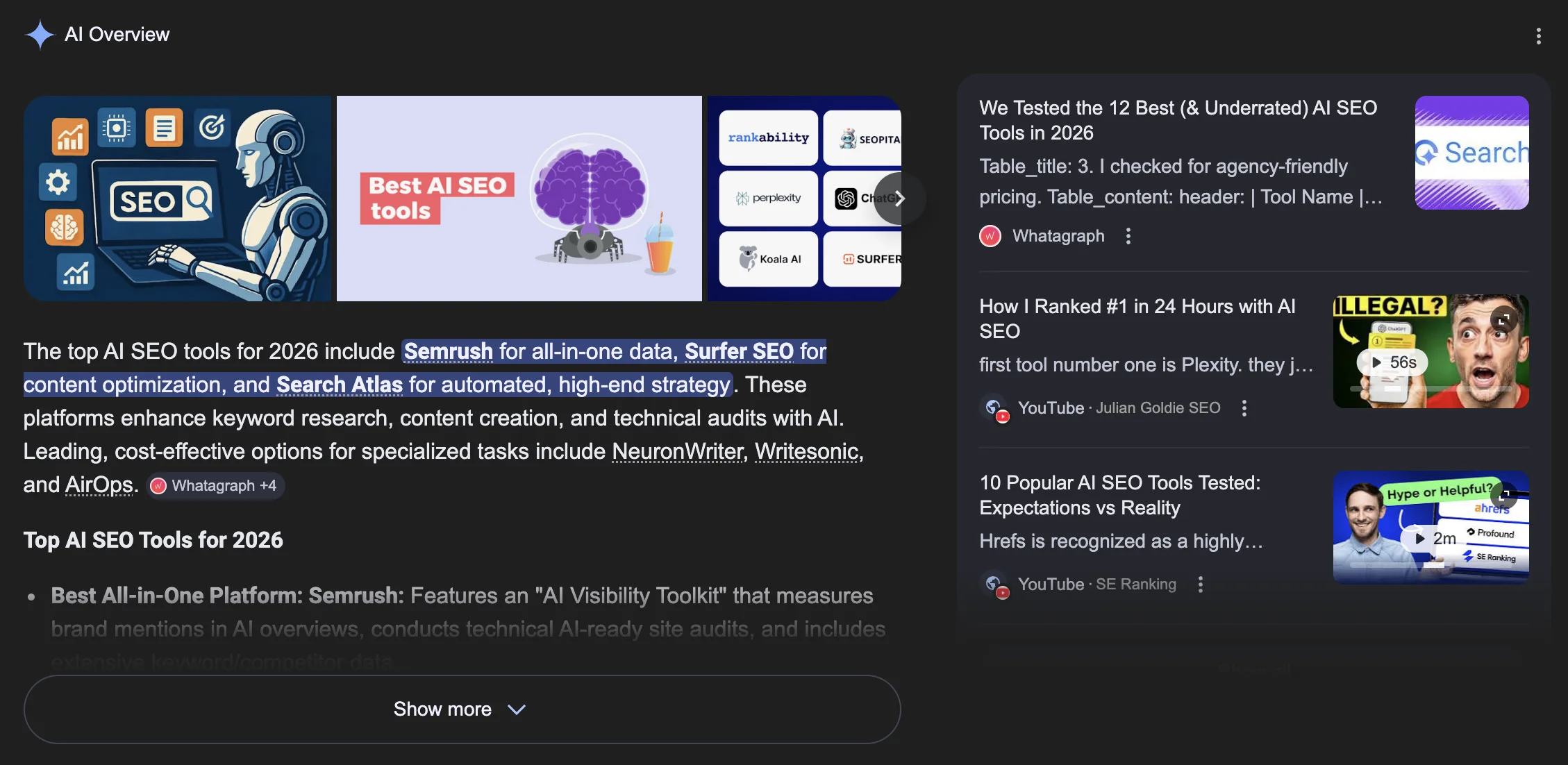
AI Overview in Google Search
AI Overview availability varies by country. Some regions are not supported and return an
UnsupportedInputError when include.aioverview is set — this is a region-level error, not a query failure. In supported regions, result has no aioverview key when Google does not show an AI Overview for a specific query. In both cases, all other Google Search result data is returned normally. Use the /v1/countries endpoint with model=aioverview to check current regional availability before sending requests.Example request
country and, when you need city- or state-level precision, a single location string in Google’s canonical format (for example Olympia,Washington,United States). There are no separate city or state parameters. See city and state-level geo-targeting.
AI Overview structure
Sources
result.aioverview.sources follows the common sources structure (position, url, label, and description).

Sources in AI Overview
Citation pills
Inline citation pills (e.g.[Chase Bank +3]) Google renders next to the AI Overview text are exposed denormalized: each entry is one (pill, source) pair carrying a per-source label (the source’s own page title). When a pill cites N sources, the array contains N entries sharing the same citationPillId but carrying different per-source label, url, and domain. Group by citationPillId to recover the pill-level structure. The field is omitted when the answer carries no pills.
Related links
A citation chip can expose a “View related links” flyout — URLs Google groups under the chip that are not part of the sources rail (for example a Google Shopping comparison link). They surface separately inresult.aioverview.relatedLinks so they never inflate sources or citationPills. Each entry shares the citationPillId of its chip; unlike a citation pill it has no position, since it is deliberately absent from the sources array.
Related links also render in markdown as inline [title](url) links, so markdown can contain more URLs than sources / citationPills — the extras are always the related links in this array. The field is omitted when a chip carries no related links.
Places and map
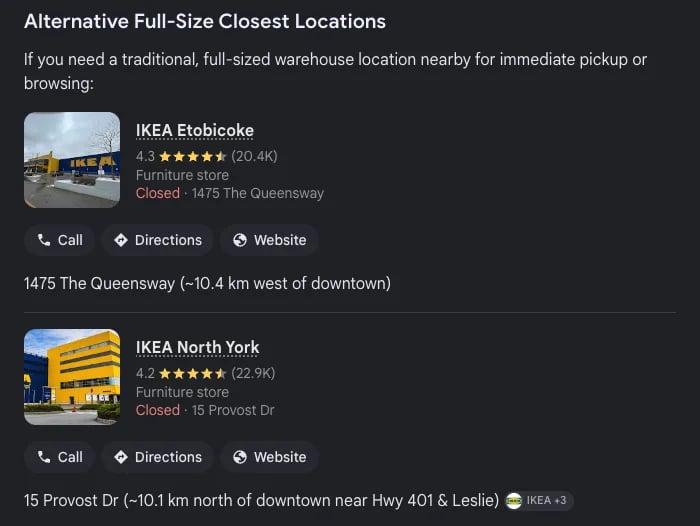
Place cards in AI Overview
places and map have the same structure as the AI Mode places and map. Google also lists each business in sources with a google.com/searchviewer URL, which is the place’s link.
Videos
Video content included in AI Overview. Videos appear in the order Google embeds them in the AI Overview answer; array index0 is the first card shown.
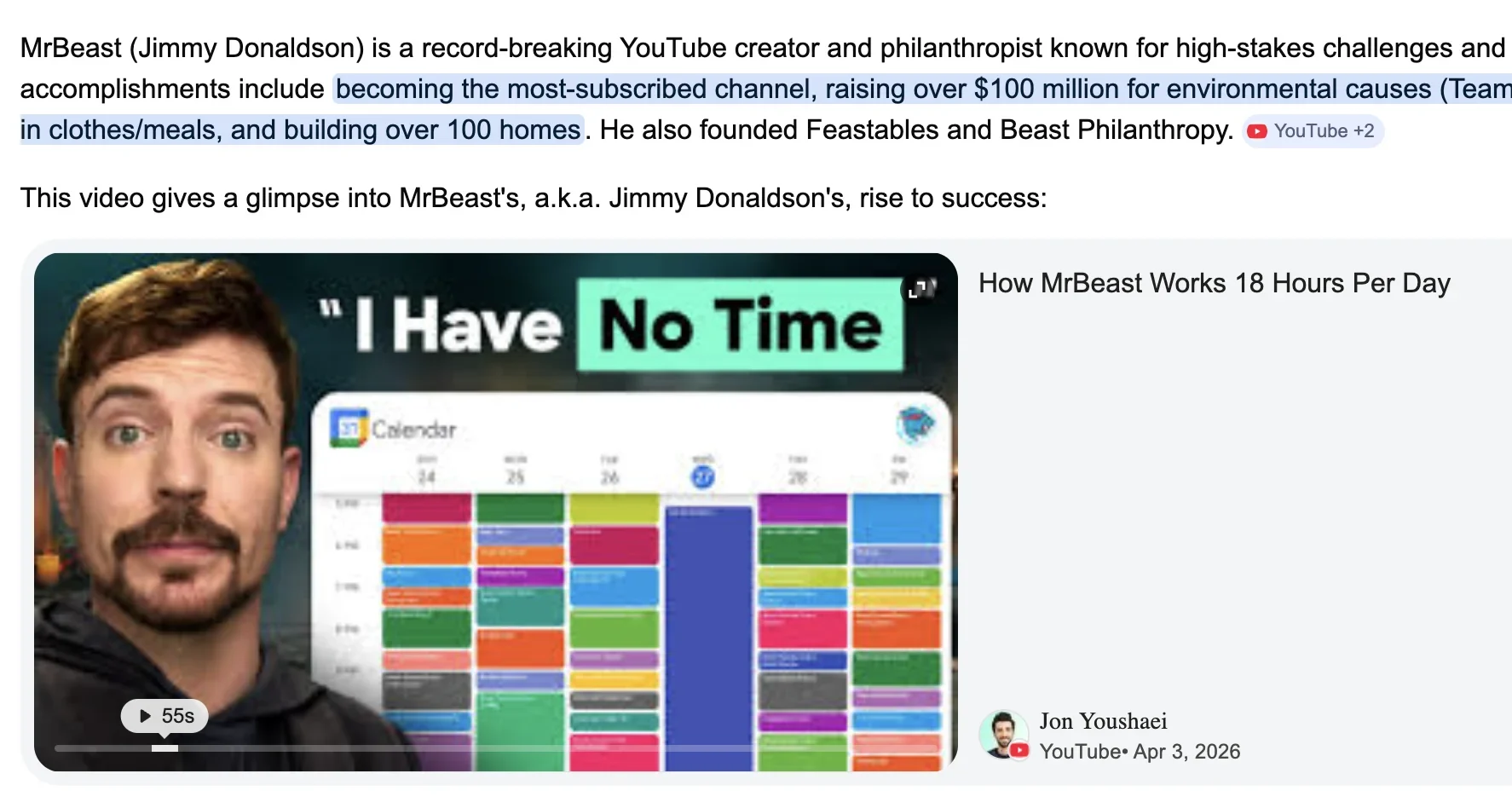
Videos in AI Overview
Only
url is guaranteed. Every other field is best-effort: Google does not
attach every piece of metadata to every video card, and thumbnail and
duration in particular are only available when Google renders the rich
carousel preview (roughly 60% and 15% of videos in practice). Check for
field presence before reading.Ads
Sponsored ads injected by Google inside the AI Overview. Each entry inads[] is one of two sub-types — text/lead-gen or shopping/product — discriminated by the type field. Sub-type-exclusive fields are only present when they apply to that ad.
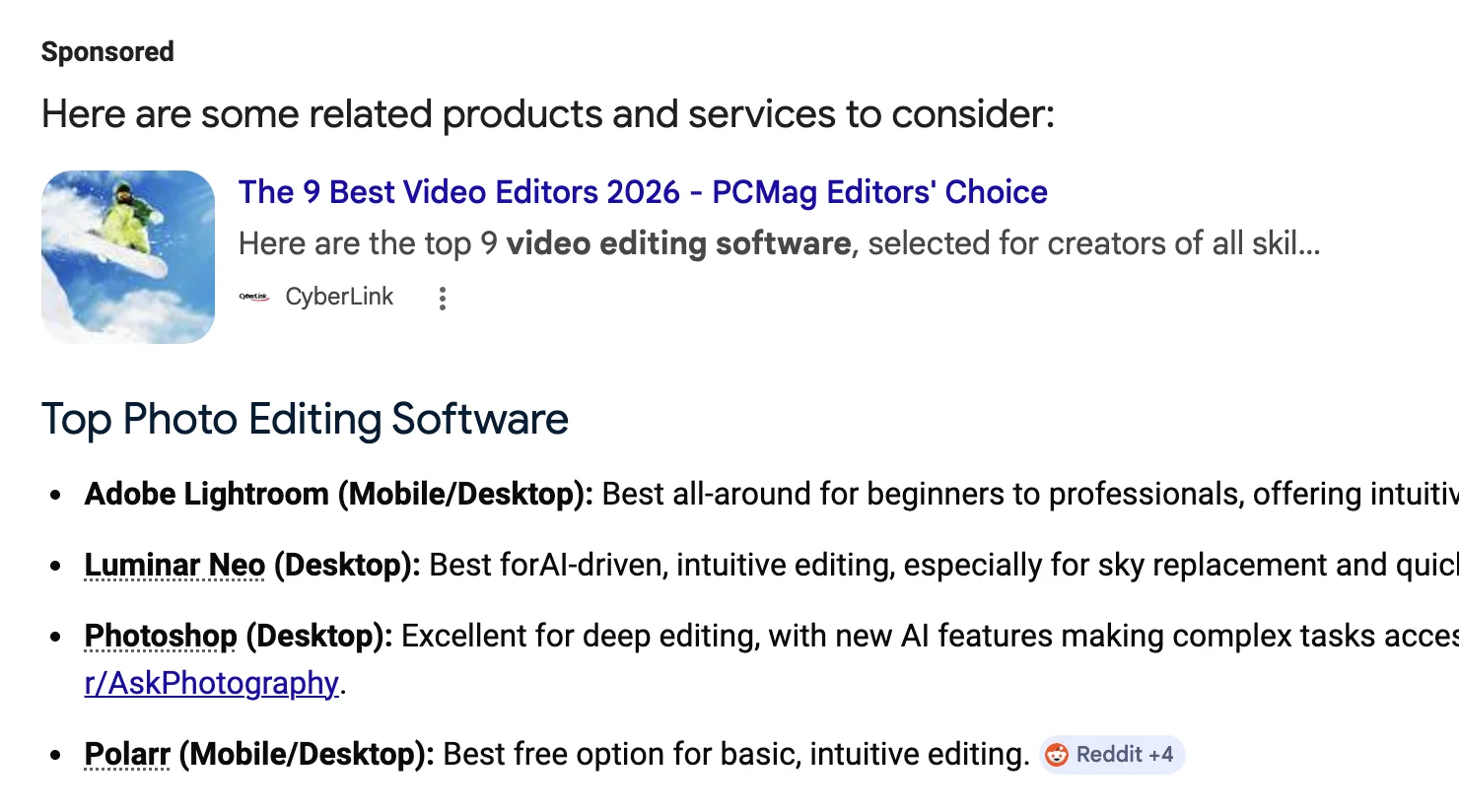
Ads in AI Overview
Ad price object
price and old_price carry both a parsed and a raw representation:
raw is always present when price is emitted. Installment / down-payment labels parse the leading "$0" as value: 0 — use raw to disambiguate.