

result.shoppingCards — no separate API call. For use cases, pricing context, and copy-paste examples, see the Google Shopping scraper page on the product site.
When a section header can be parsed, each card includes a category field naming its parent section, so you can tell apart coexisting shopping panels on the same SERP. The wire shape mirrors AI Mode’s shoppingCards, with the same camelCase keys (productLink, oldPrice). promoLabel is Google-only: AI Mode does not render the badge. shoppingCards is omitted from result when no shopping section is present — treat it as optional rather than expecting an empty array.
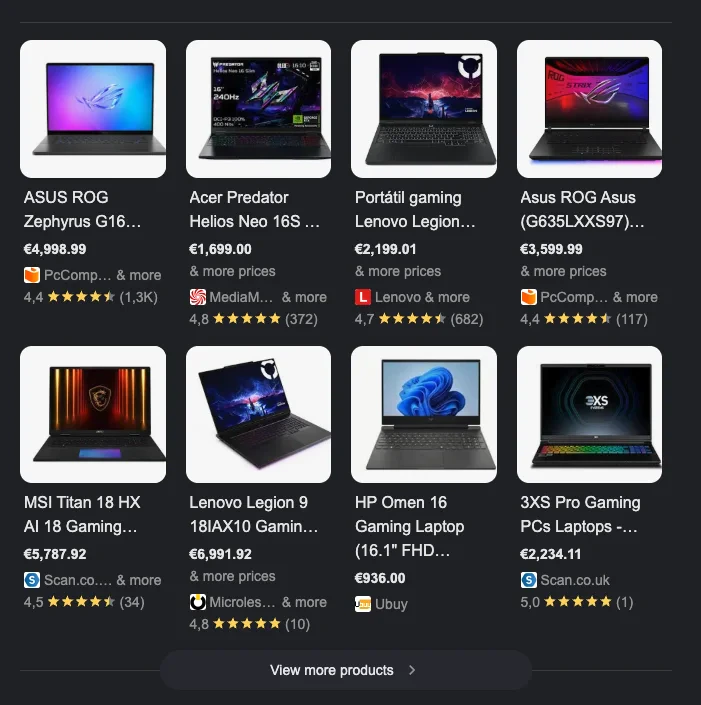
Shopping cards on the Google SERP ('More products' grid)
productLink is JS-hydrated by Google, so it is usually an empty string in the static HTML response — the card opens a Google-side sidebar overlay rather than navigating externally. The title, price, store, and other static fields remain populated.Shopping card structure
price and oldPrice
Both fields carry a parsed and a raw representation:
raw is always present when price is emitted.