
News
The Top 12 News API Free Options for Developers in 2026
12 news APIs with free tiers compared: request limits, keyword filters, source coverage, and paid-tier prices when you outgrow free.
A news monitoring API for teams who build their own pipelines. Snapshot Google News for an entity list on any cadence, diff for new URLs, alert in your own code. Then check the surface legacy media monitoring never sees: what ChatGPT, Perplexity, and Grok say when someone asks about the same entity. Structured JSON out, your warehouse in the middle. The coverage history stays yours.
4.7 · 53 reviews
News monitoring is the continuous, automated tracking of news coverage about the entities you care about — your brand, competitors, customers, or a portfolio of companies — so that new coverage becomes a timely signal instead of a surprise. The classic version is a media-monitoring dashboard; the engineering version is a pipeline: query news surfaces on a cadence, diff against what you have already seen, and alert on what is new.
In 2026 the surface area has grown: coverage does its damage — or its work — not only as headlines but asthe answers AI engines givewhen someone asks about a company. A complete news-monitoring pipeline now watches both: Google News for the coverage itself, and ChatGPT, Perplexity, Grok, and AI Overview for the narrative being assembled from it.
Meltwater and Cision sell you their interpretation of the news. cloro sells you the news surfaces themselves: Google News as structured JSON via /google-news/, plus ChatGPT, Perplexity, Grok, Gemini, Copilot, and Google AI Overview under the same API key and credit pool. Your code decides what counts as a mention worth waking someone up for.
A brand monitoring API has one job: get every mention into your pipeline fast enough to act on, in a shape your code can diff. Legacy media monitoring fails that job twice: it locks the data inside a dashboard, and it doesn't cover the AI-answer surface where a growing share of reputation damage now happens first.
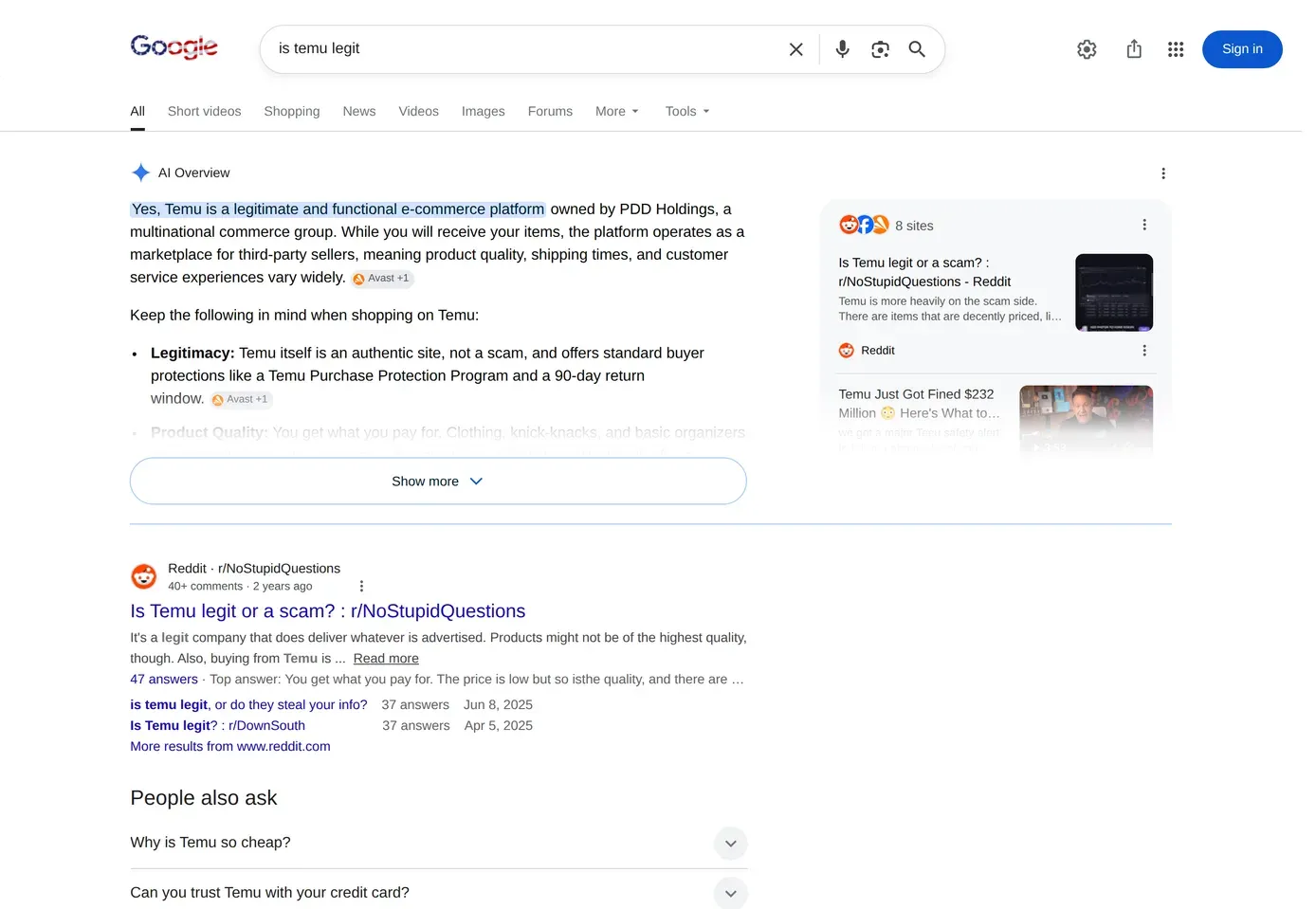
When a journalist, analyst, or customer asks ChatGPT "what's going on with [your company]?", the answer is assembled from live web search, and it cites whichever coverage the model retrieved, flattering or not. Meltwater-style tools never see that surface. cloro returns the full AI answer with its source list, so you know exactly which articles are shaping the machine-generated narrative about you. See AI visibility tracking for the broader discipline.
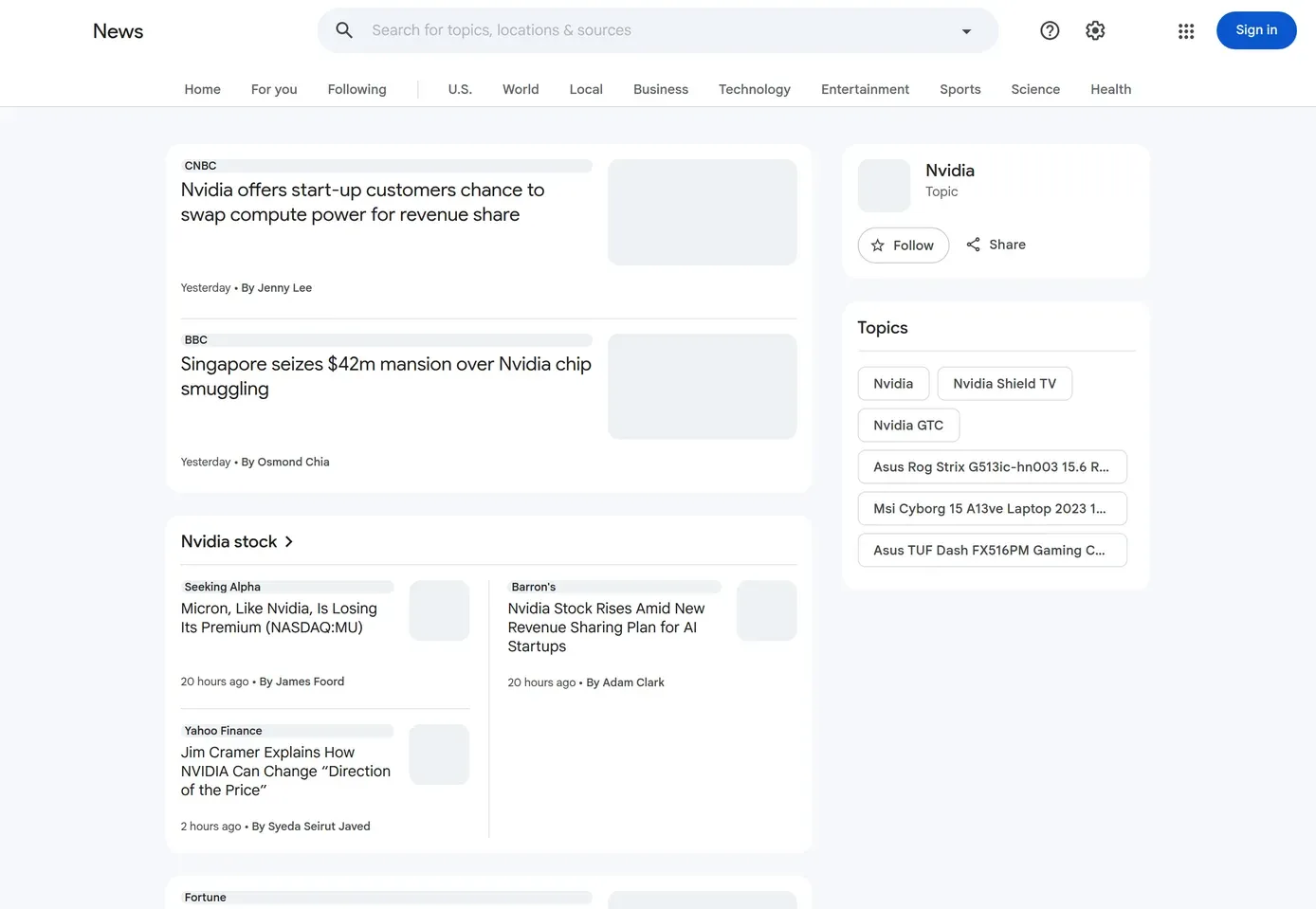
Google Alerts misses a large share of coverage, fires on its own schedule, and has no API, so the only integration path is parsing digest emails. A production news alerts API is the opposite: POST /v1/monitor/google/news on your cadence, structured article cards back (title, source, date, snippet, thumbnail), new-URL detection in a few lines of your own code. The alert fires on your schedule, not Google's. We covered the landscape in our free news API roundup. We measured the gap. Sampling 48 news queries in July 2026, snapshotting the top 10 and re-pulling about eight hours later, roughly 31% of results had turned over, and about half the top 10 changed on fast-moving brand and topic queries. The free RSS paths run deep but stale, at a median item age of 6.6 days in the same sample (method and full comparison).
Alt-data teams don't want sentiment scores from a vendor black box. They want timestamped, structured coverage events per entity, landing in their own warehouse, joinable against positions and prices. cloro is the entity-name-in, article-rows-out primitive: run your coverage-universe list on an hourly cadence and every new headline becomes a row your models can consume, so you get fresh signal without building a scraping pipeline of your own. Related workload: adverse media screening.
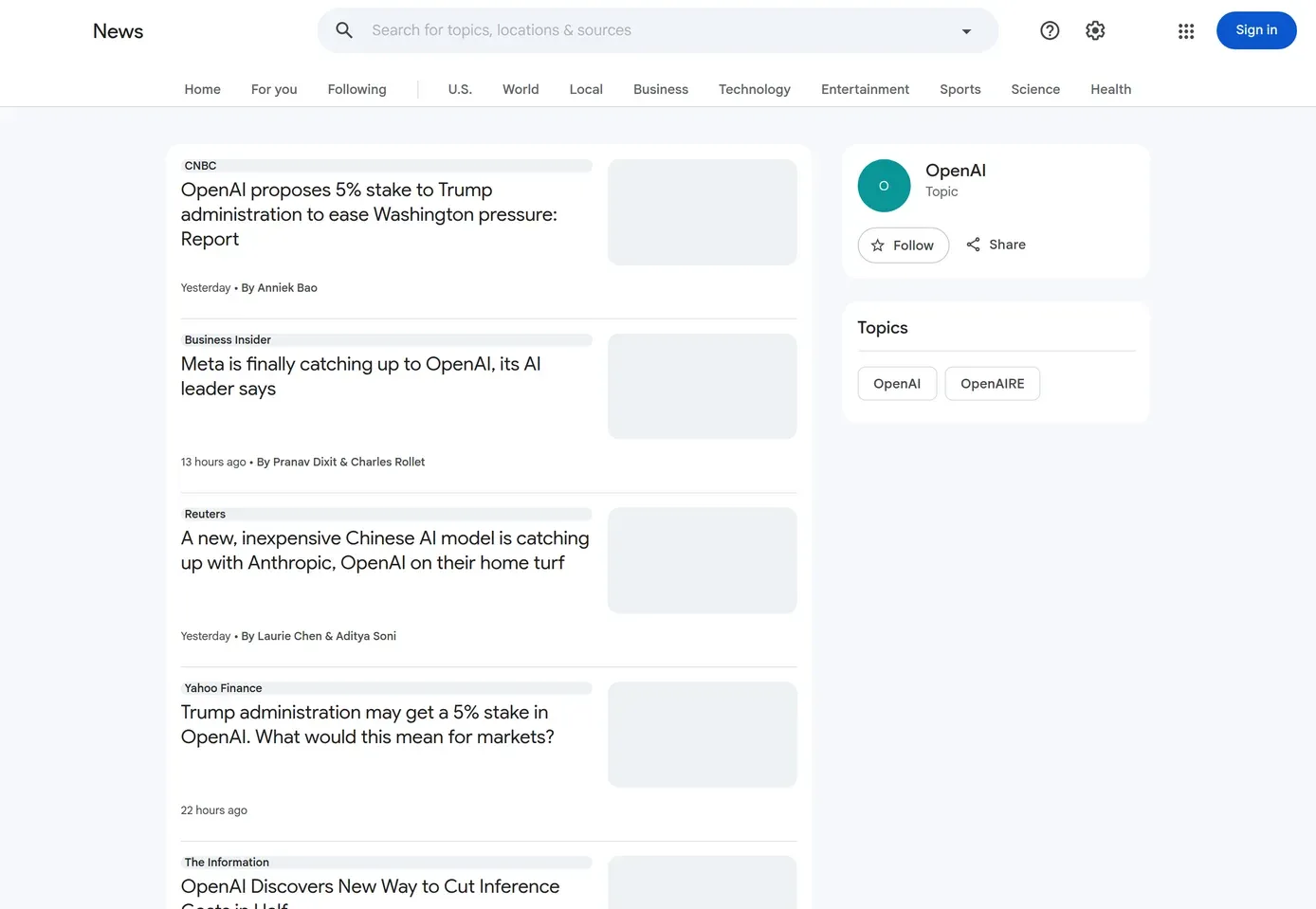
Google News re-ranks continuously, and Grok grounds its answers in real-time X posts, so a crisis is often circulating there before most publishers have a story up. If your monitoring runs on a daily email digest, you find out after the narrative is set. cloro lets you sample critical entities every 15 minutes across Google News and the AI engines, so the alert fires while there is still time to respond.
Four news monitoring workloads teams actually ship on top of cloro.
Every new article about your brand or executives in Slack within the hour, with source, headline, and link. No digest email, no seat license.
Entity universe → hourly async batch → timestamped coverage events in the warehouse, joinable against positions. News as rows, not dashboards.
Per-client entity lists and per-tenant API keys → agency-branded coverage reports from your own domain. Margins stay yours.
Daily checks of what ChatGPT, Perplexity, and Grok answer about your entities, plus the cited articles behind each answer, so you catch a narrative shift before it reaches the headlines.
The recipe is always the same: entity list in, snapshots on a cadence, diff against what you've already seen, alert on the delta. Your code, our data.
from cloro import Cloro

client = Cloro(api_key="sk_live_your_api_key_here")

# Entity list → hourly Google News snapshot → alert on new URLs.
entities = ["Datadog", "Snowflake", "Cloudflare"]
seen_urls = load_seen_urls()  # from your warehouse / KV store

for entity in entities:
    response = client.monitor.google_news(query=entity, country="US", pages=2)
    articles = response["result"]["newsResults"]

    new_articles = [a for a in articles if a["link"] not in seen_urls]
    for article in new_articles:
        alert(  # Slack, PagerDuty, or a warehouse insert — your call
            entity=entity,
            title=article["title"],
            source=article["source"],
            url=article["link"],
            published=article["date"],
        )
        seen_urls.add(article["link"])

save_seen_urls(seen_urls){
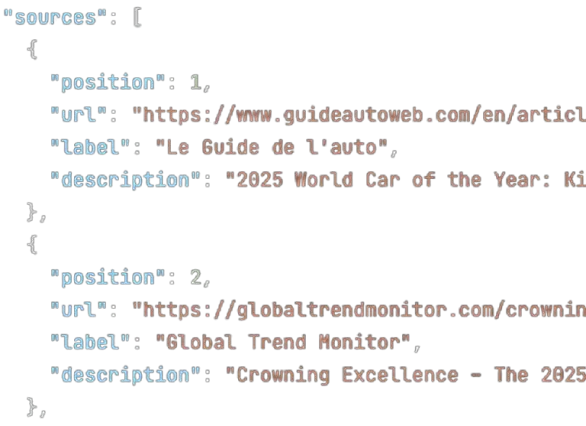
"success": true,
"result": {
"newsResults": [
{
"position": 1,
"title": "Datadog Reports Q2 Earnings Above Expectations",
"link": "https://example.com/datadog-q2-earnings",
"snippet": "Shares rose in after-hours trading after the observability company beat revenue estimates...",
"source": "Reuters",
"date": "3 hours ago",
"page": 1,
"thumbnail": "https://example.com/images/datadog-q2.jpg"
},
{
"position": 2,
"title": "Datadog Expands AI Observability Suite",
"link": "https://example.com/datadog-ai-observability",
"snippet": "The company announced new LLM monitoring capabilities at its annual conference...",
"source": "TechCrunch",
"date": "7 hours ago",
"page": 1,
"thumbnail": "https://example.com/images/datadog-ai.jpg"
}
]
}
}Pick a plan that fits your volume. Price per credit drops as you scale.
| Plan | Price / mo | Credits | Per 1k | Concurrency | Seats | Support |
|---|---|---|---|---|---|---|
| Free | $0 | 500 | — | 1 | 1 | Documentation assistant |
| Lite | $30 | 37,500 | $0.80 | 10 | Unlimited | |
| Hobby | $100 | 250,000 | $0.40 | 20 | Unlimited | |
| Starter | $250 | 650,000 | $0.39 | 50 | Unlimited | |
| GrowthPopular | $500 | 1,350,000 | $0.37 | 75 | Unlimited | Priority email |
| Business | $1,000 | 2,800,000 | $0.36 | 100 | Unlimited | Priority email |
| Enterprise 2K | $2,000 | 5,871,025 | $0.34 | 135 | Unlimited | Slack |
| Enterprise 3K | $3,000 | 9,306,606 | $0.32 | 175 | Unlimited | Slack |
| Enterprise 4K | $4,000 | 12,756,261 | $0.31 | 215 | Unlimited | Slack |
| Enterprise 5K | $5,000 | 16,391,783 | $0.31 | 255 | Unlimited | Slack |
| Enterprise | $5,000+ | Increased concurrency, overages on credits and credit discounts for annual contracts.Know more | ||||
Credit cost per request varies by provider. The figures below are for async/batch requests; sync requests add a +2 credit surcharge.
ChatGPT full response includes query fan-out, ads, and shopping data. Google News uses the same pricing as Google Search. Grok is temporarily unavailable — requests to it fail, so do not size a plan around it.
They are dashboards; cloro is the data layer. Meltwater and Cision decide what a mention is, how it's scored, and how long you can see it — and the data lives in their UI, priced per seat. cloro returns the raw surfaces (Google News results, AI-engine answers with sources) as structured JSON, pay-per-call, and the history lands in your warehouse. If you're building a product, a signal pipeline, or alerting that has to integrate with your own systems, you want the data layer. For a comparison of the tooling landscape, see our competitive intelligence tools roundup.
Yes — that's one of the most common workloads. Google Alerts misses coverage unpredictably, delivers on its own schedule, and has no API. Building reliable alerts on `POST /v1/monitor/google/news` takes an afternoon: snapshot each entity on your cadence, keep a seen-URL set, alert on the diff. You control coverage (any query, any of Google's country locales), latency (down to 15-minute sampling), and delivery (Slack, PagerDuty, email, webhook — your code). Full endpoint reference on the Google News API page.
Because a growing share of "what's the news on X?" questions are now asked to ChatGPT, Perplexity, and Grok instead of a search box — and the answer those engines assemble is the coverage, as far as that reader is concerned. cloro returns the live answer plus the cited sources from each engine: ChatGPT web search, Perplexity, Grok (grounded in real-time X posts), Gemini, Copilot, and Google AI Overview. Prompt with your entity name, persist the answer text and source list, and diff over time — the same recipe as Google News monitoring, one surface over. Measuring your share of those answers is its own discipline: see AI share of voice.
Differential by tier. Crisis-critical entities (your own brand, live M&A targets): every 15–60 minutes on Google News — the aggregator picks up major-publisher stories within 5–30 minutes of publication. Broad coverage universes (a few hundred tickers or competitor names): hourly is the standard alt-data cadence. AI-answer checks: daily per engine is usually enough, since answers shift with the underlying coverage rather than by the minute — tighten to hourly during an active incident.
Google News pricing is the same as Google Search: 3 credits per call (n=10), +2 per additional results page. A 100-entity brand-alerting program at hourly cadence is 100 × 720 calls = 72k calls/month = 216k credits — inside the Hobby plan ($100/month, 250k credits). Add a daily AI-answer check per entity (ChatGPT 5 credits + Perplexity 4 credits = 9/day) and you add ~27k credits. A 500-entity alt-data universe at hourly cadence (1.08M credits) lands on Growth ($500/month, 1.35M credits). Full details on the pricing page.
Use `POST /v1/monitor/google/news/async`. Submit the whole entity batch with a webhook URL and results land as each call completes — no sync polling, no wasted concurrency. For coverage universes in the hundreds or thousands of entities, async batch on a scheduler is the production pattern: submit at the top of the hour, ingest webhooks into the warehouse, run the new-URL diff as a downstream job.
No — and that's deliberate. Aggregators pull from publisher feeds and curated lists; cloro returns what the monitored surfaces actually show: Google News ranked results (title, source, date, snippet, thumbnail per article) and AI-engine answers with their citations. For brand and media monitoring that's usually the more honest signal — it's what a real person checking the news, or asking an AI, actually sees. If you're evaluating aggregators too, we compared the free news API options.
Yes — same primitive, stricter framing. Adverse media screening runs the entity-list recipe against KYC/AML watchlists with negative-coverage classification downstream, and brand protection watches for impersonation and misuse signals across the same surfaces. And if what you actually need is full-SERP change detection rather than news specifically, that's SERP monitoring.
12 news APIs with free tiers compared: request limits, keyword filters, source coverage, and paid-tier prices when you outgrow free.
We tested 12 competitive intelligence tools across SEO, social, sales enablement, and AI search. See pricing, who each is for, and the honest weak spots.
AI share of voice measures how often your brand appears in ChatGPT, Perplexity, Gemini, and AI Overviews versus competitors. Learn the formulas.