
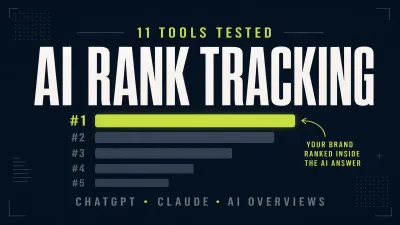
Rank Tracking
AI Rank Tracking: Build It on an API or Buy a Dashboard
Ten AI rank tracking dashboards, measured against running the tracking yourself on an API: engine coverage, pricing, and which way suits your team.
A rank tracking API for SEO teams that would rather work in JSON than in a dashboard. One call gives you the whole SERP for a query — organic, ads, PAA, related searches, AI Overview — so you can track a position over time or monitor the full results page for changes from the same endpoint. Billing is per call, with no fixed keyword bundle to plan around.
4.7 · 53 reviews
Rank tracking is recording where your pages appear in Google for the keywords you care about, on a fixed cadence, so that movement becomes a trend you can act on instead of an anecdote. Arank tracking API is the programmatic shape of that work — you'll also see it sold as arank tracker API or a SERP tracking API: instead of a hosted dashboard with a scraper hidden underneath, one HTTP call per query × country × device returns the ranked SERP as JSON, and the pipeline — storage, diffing, reporting — runs in your own systems. Widen the same loop from your own position to every element on the page — sponsored ads, AI Overview sources, People Also Ask — and rank tracking becomes SERP monitoring, change detection over time, from the identical call.
The distinction matters because on a 2026 SERP,"position" is a methodology choice, not a single number: rank among organic results or rank counting SERP features, desktop or mobile, with or without the AI Overview block that now tops the page — a block Semrush's 10M-keyword study tracked on as much as a quarter of keywords at its 2025 peak. A dashboard picks those definitions for you. An API returns the full envelope — organic with rank_group and rank_absolute, ads, People Also Ask, AI Overview sources — so your definition of position is the one in your reports, and it survives every tool change.
Related guide
Every element on a 2026 Google results page — and why 'position' means more than a number on it.
See the SERP anatomyRelated guide
How to track rank across the whole results page — organic, AI Overviews, PAA, ads, and zero-click features — without false confidence.
Read the guideRelated guide
The buy-side option: 12 tools compared on daily cadence, geo-precision, enterprise scale, and AI coverage — scored with live SERP data.
Compare the toolsOrganic positions are the headline metric, but the modern SERP is layered: sponsored ads above the fold, an AI Overview block consuming the top of mobile results, People Also Ask in the middle, related searches at the bottom. cloro returns all of them in one response, parsed and position-tagged, so when clicks fall you can tell a lost position from a new block above you.
Rank-tracking products come in two shapes: hosted dashboards (pre-built UI, opaque scraper underneath, monthly bundle pricing) and APIs (raw structured response, you compose the dashboard, pay-per-call). Teams that need their data in their warehouse and their methodology under their control pick the API. Here's why.

Hosted trackers price by tracked-keywords-per-month, capped regardless of cadence. cloro is pay-per-call: check a launch keyword set several times a day, leave a stable long tail on weekly, and pay for the checks you ran. We measured why cadence should vary: across 200 keywords tracked daily for 30 days, 5,755 consecutive-day pairs, the top organic result changed on 31.7% of days, and the most volatile keyword changed on 93% of them while stable terms barely moved (rank volatility study). Paying a flat per-keyword rate means funding daily checks on terms that move twice a month. Pay-per-call means you only pay for the cadence each keyword actually needs.
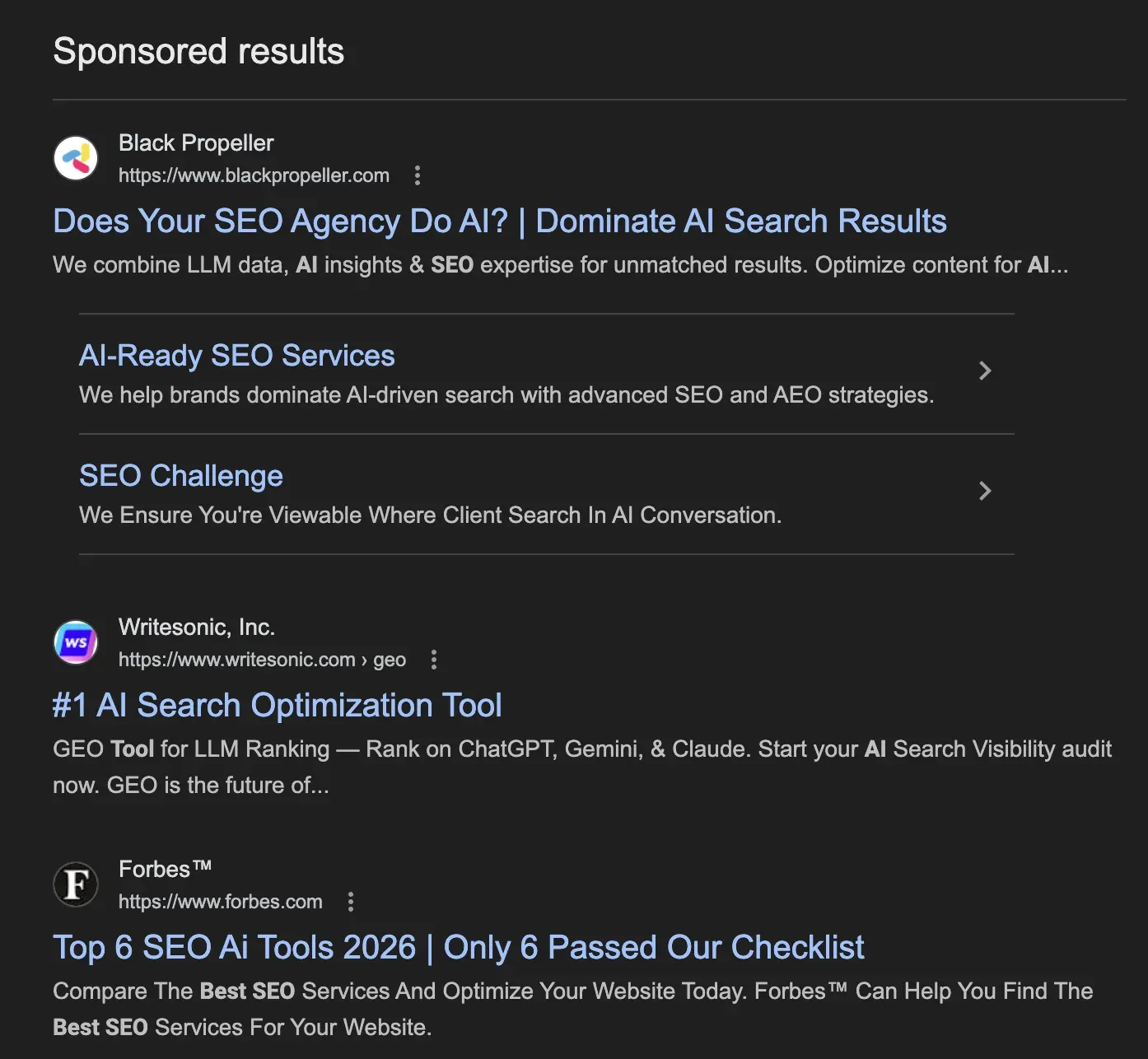
Most rank trackers expose `position` and `URL` and stop. cloro returns the full envelope per call: `ads[]`, `peopleAlsoAsk[]`, `aioverview` with sources, `relatedSearches[]`. Those elements often shift days before your organic rank does, so watching them is the earliest warning you get. Compute AI Overview citation rate, track ad rotation, diff PAA over time. It is already in the response.
In 2026, mobile shoves the AI Overview to position 0, compresses ads, and hides PAA below the fold. Mobile is also the majority surface now, at 52% of worldwide web traffic (Statcounter). Hosted trackers default to desktop and surface mobile as an upcharge. cloro takes `device: "mobile"` or `"desktop"` per call at the same price, so you catch the queries where desktop looks healthy and mobile does not.
Different rank trackers count "position" differently: rank-1 vs rank-absolute, organic-only vs SERP-feature-included, desktop-primary vs mobile-primary. Switch tools and a competitor appears to "move" even when the SERP did not. cloro returns both rank_group and rank_absolute per result alongside the full SERP envelope, so your reporting math stays the same when you switch tools.
Four rank-tracking and SERP-monitoring pipelines SEO teams ship on top of cloro instead of a dashboard subscription.
Nightly batch per keyword × country × device, rows landing in BigQuery, position trends computed in dbt and served in the BI tool your team already opens.
Submit async batches and let webhooks write results as they land — per-call pricing means the 50k-keyword daily run costs what it uses, not what a bundle tier says.
Track AI Overview citations, PAA presence, and ad pressure alongside organic position — the same call returns the full envelope, so feature tracking is free.
Per-tenant API keys on one shared pipeline: every client gets their own keyword set, cadence, and branded report, without per-seat dashboard licenses.
One loop: walk your keyword list, one call per query × country × device, and the parsed SERPs come back as JSON. Roll them into BigQuery, dbt, or whatever runs your reporting, then diff adjacent runs to turn positions into trends and the full SERP into change alerts.
from cloro import Cloro

client = Cloro(api_key="sk_live_your_api_key_here")

# Your tracked-keyword set, country list, and device matrix.
keywords = ["best project management software", "asana alternatives", "remote team tools"]
countries = ["US", "GB", "DE"]
devices = ["desktop", "mobile"]

results = []
for query in keywords:
    for country in countries:
        for device in devices:
            response = client.monitor.google(query=query, country=country, device=device)
            data = response["result"]
            for r in data["organicResults"]:
                results.append({
                    "query": query,
                    "country": country,
                    "device": device,
                    "position": r["position"],
                    "url": r["link"],
                    "title": r["title"],
                })

# Now you have 1 row per (query, country, device, ranked URL).
# Push to BigQuery, dbt, or your rank-tracker warehouse.
print(f"{len(results)} ranked rows captured"){
"success": true,
"result": {
"organicResults": [],
"peopleAlsoAsk": [],
"relatedSearches": [],
"ads": []
}
}Pick a plan that fits your volume. Price per credit drops as you scale.
| Plan | Price / mo | Credits | Per 1k | Concurrency | Seats | Support |
|---|---|---|---|---|---|---|
| Free | $0 | 500 | — | 1 | 1 | Documentation assistant |
| Lite | $30 | 37,500 | $0.80 | 10 | Unlimited | |
| Hobby | $100 | 250,000 | $0.40 | 20 | Unlimited | |
| Starter | $250 | 650,000 | $0.39 | 50 | Unlimited | |
| GrowthPopular | $500 | 1,350,000 | $0.37 | 75 | Unlimited | Priority email |
| Business | $1,000 | 2,800,000 | $0.36 | 100 | Unlimited | Priority email |
| Enterprise 2K | $2,000 | 5,871,025 | $0.34 | 135 | Unlimited | Slack |
| Enterprise 3K | $3,000 | 9,306,606 | $0.32 | 175 | Unlimited | Slack |
| Enterprise 4K | $4,000 | 12,756,261 | $0.31 | 215 | Unlimited | Slack |
| Enterprise 5K | $5,000 | 16,391,783 | $0.31 | 255 | Unlimited | Slack |
| Enterprise | $5,000+ | Increased concurrency, overages on credits and credit discounts for annual contracts.Know more | ||||
Credit cost per request varies by provider. The figures below are for async/batch requests; sync requests add a +2 credit surcharge.
ChatGPT full response includes query fan-out, ads, and shopping data. Google News uses the same pricing as Google Search. Grok is temporarily unavailable — requests to it fail, so do not size a plan around it.
cloro runs the collection layer at 99.99% uptime and bills only successful responses, so a failed call costs zero credits: the economic half of an SLA, on every tier. Contractual SLA terms come with custom Enterprise agreements, and self-serve concurrency scales to 100 concurrent requests (Business), so a daily sweep finishes inside its window.
Yes. The same `country` parameter that geo-targets Google calls applies to the AI engines: ChatGPT, Perplexity, Gemini, AI Overview, AI Mode, and Copilot answers are collected from the country you specify, so you can see where one market treats you differently. For city-level Google precision, `location` accepts any of Google's ~100,000 canonical geotargets.
3 credits per Google SERP call (n=10), +2 per additional results page, +2 if you enable AI Overview enrichment. The Hobby plan ($100/month) includes 250k credits — comfortable for a daily 500-keyword × 3-country desktop program at n=10, and Growth ($500/month, 1.35M credits) absorbs the same shape across desktop and mobile or with AI Overview enabled on every call. You're not stuck paying for capacity you didn't use, and you don't hit a bundle ceiling during launch weeks.
The API returns the SERP for each call. Diffing is your code, our response. Most teams persist the full `result` envelope per call (organicResults + ads + PAA + aioverview), then compare adjacent runs in their warehouse. Common diffs: organic position change per URL, AI Overview source list churn, sponsored-ad advertiser rotation, PAA question turnover — the change report is a SQL query against your own snapshots, not a vendor feature.
Both — they're the same call here. Rank tracking watches your organic position over time; SERP monitoring watches every element on the page (sponsored ads, AI Overview sources, People Also Ask, related searches) for change — often days before organic positions move. cloro returns the full SERP envelope on every `/v1/monitor/google` call, so you choose which slice to report on — one position or the whole results page — without paying for a second product.
For city-level rank tracking, see /use-cases/local-rank-tracking/ — the same `/v1/monitor/google` endpoint with a `location` parameter accepting any of Google's ~100,000 canonical geotargets. Same auth, same response shape, same per-call pricing.
Use the async task API (`POST /v1/async/task` with `taskType: "GOOGLE"`) which delivers via webhook rather than burning sync concurrency. For a 50k-keyword × 3-country × daily run, async is the right pattern: submit batches, let the webhook handler write to your warehouse as results land. Sync is for ad-hoc queries; async is for the production cadence.
Ten AI rank tracking dashboards, measured against running the tracking yourself on an API: engine coverage, pricing, and which way suits your team.
Build a rank-tracking API with Python and Node code, a storage schema, rate-limit patterns, and a GitHub Actions cron. Complete technical walkthrough.
Compare the 12 best rank tracking software tools for 2026 by daily cadence, accuracy, and enterprise scale, scored against live SERP data.
Per-call billing. Organic positions, sponsored ads, AI Overview, People Also Ask, and related searches all come back in one JSON response, scoped to a query, country, and device. Push the rows into your existing reporting stack and run your usual numbers on them — position trends today, full-SERP change detection whenever you widen the diff.