

News
The Top 12 News API Free Options for Developers in 2026
12 news APIs with free tiers compared: request limits, keyword filters, source coverage, and paid-tier prices when you outgrow free.
cloro is the open-web data layer of a screening stack: entity name in, structured Google News, Google Search, and AI-engine responses out. It is not a sanctions list and not registry data. It is the layer that catches the fraud story, the lawsuit filing, and the regulatory probe before any list is updated. Compliance teams and RegTech builders run it next to their list providers, not instead of them.
4.7 · 53 reviews
Adverse media screening(also called negative news screening) is the AML/KYC control of checking a counterparty — a customer, vendor, or business partner — against news coverage of fraud, financial crime, sanctions, and regulatory action, both at onboarding and continuously afterwards. Regulators increasingly expect it because news breaksmonths before watchlists update: the indictment coverage exists long before the list entry.
In practice a screening stack has three layers: sanctions/PEP/watchlist databases from list vendors, registry data for KYB, and anopen-web layer that finds what the lists haven't caught yet. cloro is the data infrastructure for that third layer — Google News, Google Search, and AI-engine answers per entity, as structured JSON your screening logic can act on.
Google News for breaking coverage, Google Search for the long tail of court records and forum chatter that never makes the news index, and ChatGPT, Perplexity, Gemini, AI Overview, AI Mode, Copilot, and Grok for what AI engines actually tell people about a counterparty. One key, one credit pool, structured JSON everywhere. Adding a surface is a query change, not a procurement cycle.
Sanctions, politically exposed person (PEP), and watchlist databases tell you an entity is already listed. Adverse media tells you what is happening right now, and it breaks on the open web first. cloro covers that layer: news, search, and AI answers as structured data your screening logic can act on. For the list layer and registry layer, use the vendors built for them.
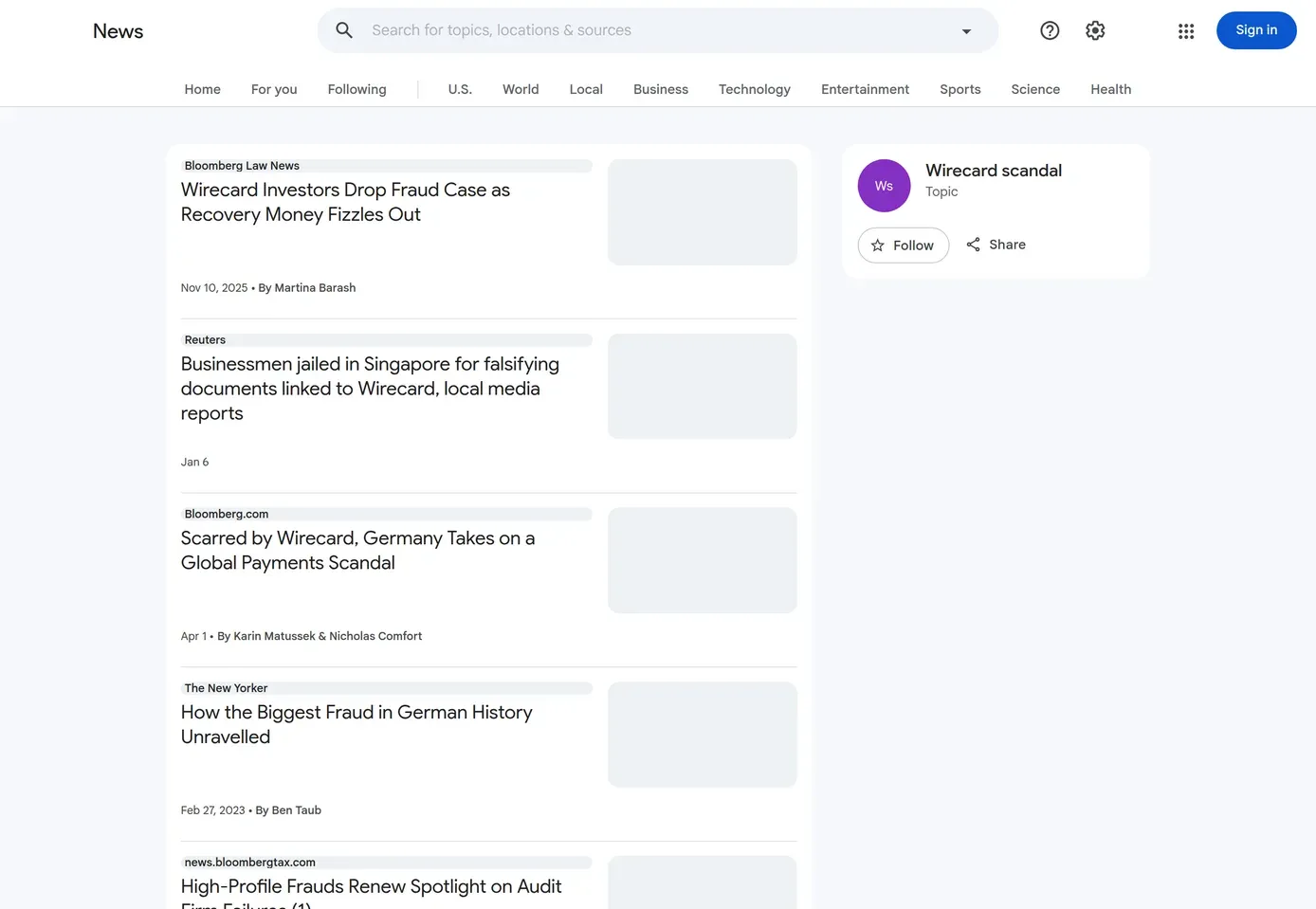
By the time an entity lands on a sanctions or watchlist, the fraud reporting, the indictment coverage, and the regulator's press release have been on Google News for days to months. An adverse media screener is a query composition problem ("<entity>" fraud OR lawsuit OR investigation against Google News on a cadence), and cloro returns each sweep as structured JSON: title, source, date, snippet, link. Each hit is a row your pipeline can diff, not a tab an analyst reads. How fast is measurable. Sampling 48 news queries in July 2026 and re-pulling about eight hours later, roughly 31% of the top 10 had turned over, while the free RSS routes carried a median item age of 6.6 days (freshness sample). A screening feed on a daily cycle is reading a materially different set of articles than the one that broke.
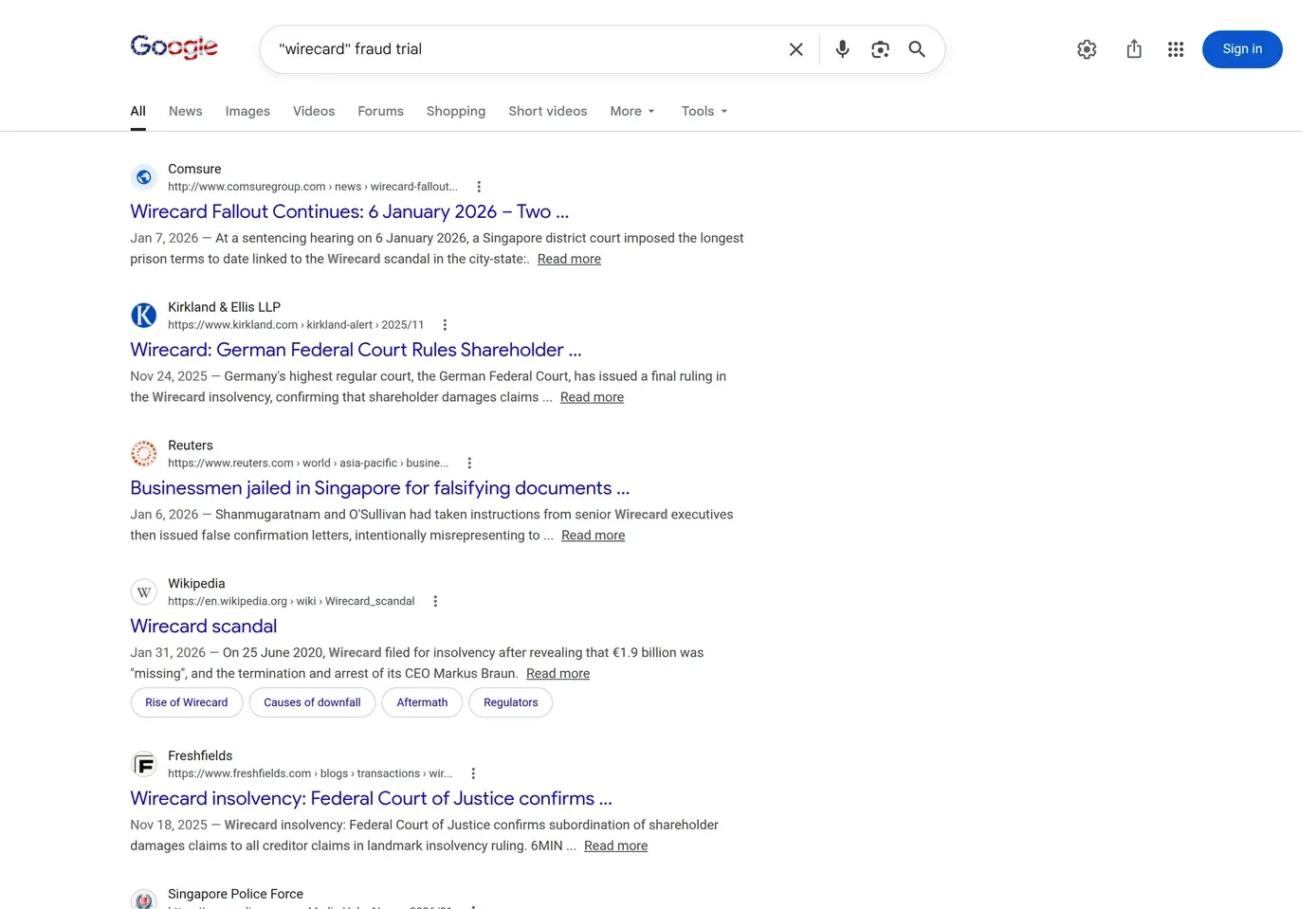
Annual or tri-annual review cycles mean a counterparty can be indicted in month two and stay "low risk" in your system until month twelve. Perpetual KYC inverts this: a daily automated sweep per entity, and a new-result event triggers the review instead of the calendar. cloro is the data feed for exactly that trigger: new-URL detection against yesterday's sweep is a set difference in your own pipeline, so the entity that turns risky in month two gets reviewed in month two, not held for a review that is still ten months out.
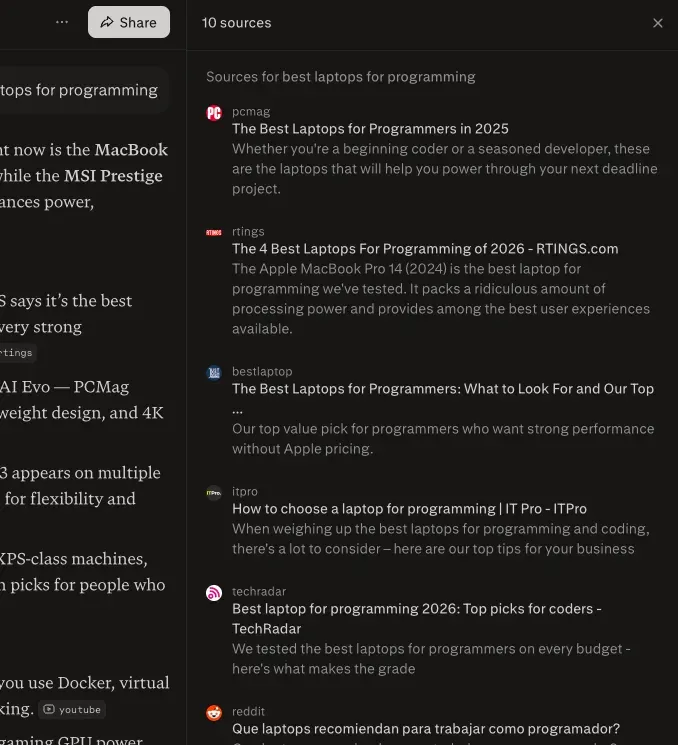
When an analyst (or your customer's bank) asks ChatGPT or Perplexity about a counterparty, the answer synthesizes coverage you may never have seen, including sources your news sweep missed. cloro returns the real AI-engine answers with their citations, so "what do AI engines say about this entity" becomes a screenable, loggable data point. No list vendor offers this layer.
Honest scoping: cloro is not a sanctions/PEP/watchlist database, not a know-your-business (KYB) registry-data source, and not certified anti-money-laundering (AML) tooling. Lists come from list providers, registry data comes from company registries, and case management comes from your compliance platform. RegTech builders embed cloro as the open-web and AI-answer layer alongside those: the layer that is otherwise a headcount problem.
Four workflows compliance and RegTech teams actually ship on cloro. Always alongside list and registry providers — never as a replacement for them.
At account opening, sweep the applicant business across Google News, Google Search, and AI answers; attach structured hits to the onboarding case before approval.
Daily per-entity sweeps with new-result detection. A fresh adverse hit opens a review event, so the calendar-based refresh cycle stops being your only safety net.
Continuous adverse-media coverage over the supplier and vendor book — insolvency signals, litigation, and regulatory action surface as data, not as a quarterly surprise.
White-label the open-web and AI-answer layer inside your screening product: per-tenant keys, batched async sweeps, webhook delivery into your own scoring pipeline.
Compose risk-term queries per entity, sweep Google News and Google Search daily, diff against the previous run, and route new hits into review. Then add the layer nobody else has: what AI engines answer when asked about the entity.
from cloro import Cloro

client = Cloro(api_key="sk_live_your_api_key_here")

# Daily adverse-media sweep over a counterparty portfolio.
RISK_TERMS = "fraud OR lawsuit OR investigation OR sanctions OR laundering"
entities = ["Meridian Trade Partners", "Northgate Logistics BV", "Alto Capital SA"]

def sweep(entity):
    query = f'"{entity}" {RISK_TERMS}'
    urls = set()
    for search in [client.monitor.google_news, client.monitor.google]:  # news + broad web
        response = search(query=query, country="US")
        result = response["result"]
        for r in result.get("newsResults", []) + result.get("organicResults", []):
            urls.add(r["link"])
    return urls

for entity in entities:
    todays_urls = sweep(entity)
    # seen_urls: per-entity set persisted in your own store from prior runs.
    seen_urls = load_seen(entity)
    new_hits = todays_urls - seen_urls
    if new_hits:
        # Event-driven review: a new result IS the perpetual-KYC trigger.
        open_review(entity, sorted(new_hits))
save_seen(entity, todays_urls | seen_urls){
"success": true,
"result": {
"newsResults": [
{
"position": 1,
"title": "Meridian Trade Partners under investigation for invoice fraud scheme",
"link": "https://example.com/meridian-investigation",
"snippet": "Prosecutors opened an investigation into the commodities trader after auditors flagged irregular invoicing...",
"source": "Financial Times",
"date": "3 hours ago",
"page": 1,
"thumbnail": "https://example.com/images/meridian.jpg"
},
{
"position": 2,
"title": "Lawsuit accuses Meridian Trade Partners of breach of contract",
"link": "https://example.com/meridian-lawsuit",
"snippet": "A supplier filed suit in Rotterdam district court alleging systematic underpayment...",
"source": "Reuters",
"date": "1 day ago",
"page": 1,
"thumbnail": "https://example.com/images/meridian-suit.jpg"
}
]
}
}Pick a plan that fits your volume. Price per credit drops as you scale.
| Plan | Price / mo | Credits | Per 1k | Concurrency | Seats | Support |
|---|---|---|---|---|---|---|
| Free | $0 | 500 | — | 1 | 1 | Documentation assistant |
| Lite | $30 | 37,500 | $0.80 | 10 | Unlimited | |
| Hobby | $100 | 250,000 | $0.40 | 20 | Unlimited | |
| Starter | $250 | 650,000 | $0.39 | 50 | Unlimited | |
| GrowthPopular | $500 | 1,350,000 | $0.37 | 75 | Unlimited | Priority email |
| Business | $1,000 | 2,800,000 | $0.36 | 100 | Unlimited | Priority email |
| Enterprise 2K | $2,000 | 5,871,025 | $0.34 | 135 | Unlimited | Slack |
| Enterprise 3K | $3,000 | 9,306,606 | $0.32 | 175 | Unlimited | Slack |
| Enterprise 4K | $4,000 | 12,756,261 | $0.31 | 215 | Unlimited | Slack |
| Enterprise 5K | $5,000 | 16,391,783 | $0.31 | 255 | Unlimited | Slack |
| Enterprise | $5,000+ | Increased concurrency, overages on credits and credit discounts for annual contracts.Know more | ||||
Credit cost per request varies by provider. The figures below are for async/batch requests; sync requests add a +2 credit surcharge.
ChatGPT full response includes query fan-out, ads, and shopping data. Google News uses the same pricing as Google Search. Grok is temporarily unavailable — requests to it fail, so do not size a plan around it.
No — and it doesn't try to be. Sanctions, PEP, and watchlist data comes from list providers built and audited for that job. cloro is the open-web layer: continuous Google News, Google Search, and AI-answer coverage for the entities you screen. The two layers answer different questions — "is this entity listed?" versus "what is being reported about this entity right now?" — and a serious screening program runs both.
For company due diligence and adverse media screening, yes: that is exactly what it is for. For screening of individuals regulated by the Fair Credit Reporting Act (FCRA), covering employment, tenancy and credit decisions, no. cloro is data infrastructure; the compliance obligations sit with you as the customer, and individual consumer screening in the US requires an FCRA-compliant consumer reporting agency (CRA). If that is your use case, use a CRA. For the legal backdrop on collecting public web data, see our overview of web scraping and the law.
Partially, and it is important to be precise: KYB registry data, meaning incorporation records, directors, ultimate beneficial owners (UBOs) and filings, comes from company registries, and cloro is not a registry-data source. Teams searching for a `kyb api` or `business verification api` usually need both layers: a registry provider for the corporate facts, and cloro for the open-web layer, meaning what the news, the SERP, and AI engines say about the business. cloro fills the second slot only.
Periodic refresh re-screens every entity on a fixed cycle (1/3/5 years by risk tier), which means adverse events go unnoticed for up to a full cycle. Perpetual KYC is event-driven: a daily automated sweep per entity, and a new adverse result triggers the review. On cloro that is the entity-batch recipe above — sweep, diff against the previous run, open a review on new hits. Same pattern as news monitoring, pointed at your counterparty book.
As an API layer inside their own product: batch entity sweeps through the async task API (`POST /v1/async/task` with `taskType: "GOOGLE_NEWS"` or `"GOOGLE"`) with results delivered to your webhook as each call completes, per-tenant API keys for client isolation, and your own scoring and case-management logic on top. cloro stays invisible — your customers see your screening product, backed by our data layer.
Pay-per-call: a Google News or Google Search call is 3 credits (n=10). A portfolio of 10,000 entities on a daily Google News sweep is 10,000 × 30 × 3 = 900k credits/month — inside the Growth plan ($500/month, 1.35M credits), with headroom for a weekly deep sweep of a high-risk tier across ChatGPT (5 credits) and Perplexity (4 credits). Smaller books fit the Hobby plan: 2,500 entities daily is 225k credits against Hobby's 250k for $100/month. Full details on the pricing page.
Asking the question your counterparties' counterparties ask: "what does ChatGPT (or Perplexity, Gemini, AI Overview) say about this entity?" AI engines synthesize adverse coverage across sources — including ones your keyword sweep missed — and increasingly shape how an entity's risk is perceived. cloro returns the real engine answers with citations, so you can log them per screening run, diff them over time, and flag new risk language. It is a screening surface no list provider covers, and the same mechanism behind brand protection, pointed at due diligence.
Quote the entity name exactly and OR-chain risk terms: "Acme Corp" fraud OR lawsuit OR investigation OR sanctions OR laundering. Run it against both Google News (breaking coverage) and Google Search (court dockets, regulator pages, forums that never hit the news index). Localize per market — pass `country` and translate risk terms for non-English jurisdictions, since regional coverage rarely surfaces in a US-locale sweep. Tune the term list per risk typology; it is your query, not a vendor preset.
12 news APIs with free tiers compared: request limits, keyword filters, source coverage, and paid-tier prices when you outgrow free.

2026 compliance guide with 7-country jurisdictional matrix, four landmark cases (hiQ, Meta, Clearview, Van Buren), plus GDPR and CFAA edge cases.

Master large scale web scraping with this guide. Learn to build resilient architecture, structure data for AI, and optimize costs for enterprise-level SEO.