
Best SEO Competitor Analysis Tools, Tested on Live SERPs

On this page
Most “best competitor analysis SEO tool” lists just reprint the vendor’s own feature table. This one does something different: it judges each competitor analysis SEO tool against the one thing it is supposed to reflect: the live search results page. A competitor’s real footprint lives on the SERP: where they rank, which ads they run, whether the AI Overview cites them. The question for any SEO competitor tool is not “how many features does it have,” but “how closely does its data match what Google is actually showing right now?”
Fair warning on bias: cloro sells a SERP API, which is one of the options below (the build-your-own path). We have kept the comparison useful anyway: every price and refresh cadence here is pulled from the vendors’ live pages, and we draw a hard line between numbers we measured and numbers we use to illustrate method. Where a figure would need a full benchmark run we did not complete this session, it is labelled illustrative. We did not invent a single benchmark number.
This is the SEO-only cut. If you also need social listening, sales battlecards, or PR monitoring, read our broader roundup of the 12 best competitive intelligence tools instead, which covers different tools, different job. This post stays narrow: SEO competitor analysis software, tested against the live SERP.
How we tested these SEO competitor tools against live SERPs
Every tool in this list can tell you where a competitor ranks. The difference is how current, how complete, and how expensive that answer is. Ranking one SEO software competitor above another on feature count is how most lists go wrong; we scored on data quality instead, across three axes, with a clear line between numbers we measured and numbers we use only to illustrate method.
1. Freshness: how close is the tool’s data to the current SERP? A competitor’s positions, ads, and AI-Overview citations change constantly. AI Overviews now render on roughly 40% of commercial queries, and paid slots rotate by the hour. A tool that refreshes weekly is showing you a competitor who may have moved days ago. We took each tool’s documented refresh cadence directly from its live pricing page, and those numbers are real. The idea of measuring each tool’s exact drift against a same-hour SERP scrape is sound methodology, but the per-tool lag figures require a full one-day benchmark run, so we present those as illustrative below, not as measured results.
2. Coverage: how much of a competitor’s footprint does the tool see? A tool’s keyword database is a cached snapshot of the web; the live SERP is the ground truth. Coverage is the fraction of a competitor’s real top-10 keywords the tool actually surfaces. We describe the exact test and a worked structure for running it, and flag the recall percentages as illustrative for the same reason.
3. Price per insight: what does one usable competitor data point cost? Sticker price is easy; the metric that matters is monthly cost divided by the usable competitor data the tool returns at your required freshness. Every price below is verified live. The normalized ratio depends on the coverage numbers, so it, too, is illustrative, but the inputs are real, and you can drop your own coverage figures into the same formula.
That is the whole method: real cadences, real prices, honest labels on everything that would need a benchmark run to nail down.
The best competitor analysis SEO tools, compared
Here is the shortlist at a glance. Prices are entry-tier monthly rates from each vendor’s live pricing page (2026-07-09); cadence is the documented competitor-ranking refresh frequency. Each figure is cited in the detailed review below.
| Tool | Entry price | Ranking refresh | Standout for competitor analysis | Best for |
|---|---|---|---|---|
| Semrush | $139/mo | Daily | Daily Position Tracking vs named rivals + ad-copy history | In-house teams wanting one daily dashboard |
| SE Ranking | $129/mo | Daily | Daily tracking + Share of Voice + API/MCP on entry plan | Agencies and value-focused teams |
| Ahrefs | $129/mo | Weekly | Largest backlink index + Content Gap | Link-led SEO and content-gap work |
| SpyFu | $39/mo | Weekly | Kombat three-domain keyword-gap comparison | Budget PPC + keyword-gap recon |
| Build-your-own (SERP API) | ~$0.0012/query | Per-call | Raw live SERP: organic, ads, AI Overview, PAA as JSON | Teams with BI infra and their own methodology |
The takeaway: if freshness matters most, start with SE Ranking or Semrush. If backlink depth or budget matters more, look at Ahrefs or SpyFu instead. If your volume or freshness need outgrows any seat-based plan, build on the SERP API rather than force-fitting a managed tool.
Semrush: the daily-fresh all-rounder
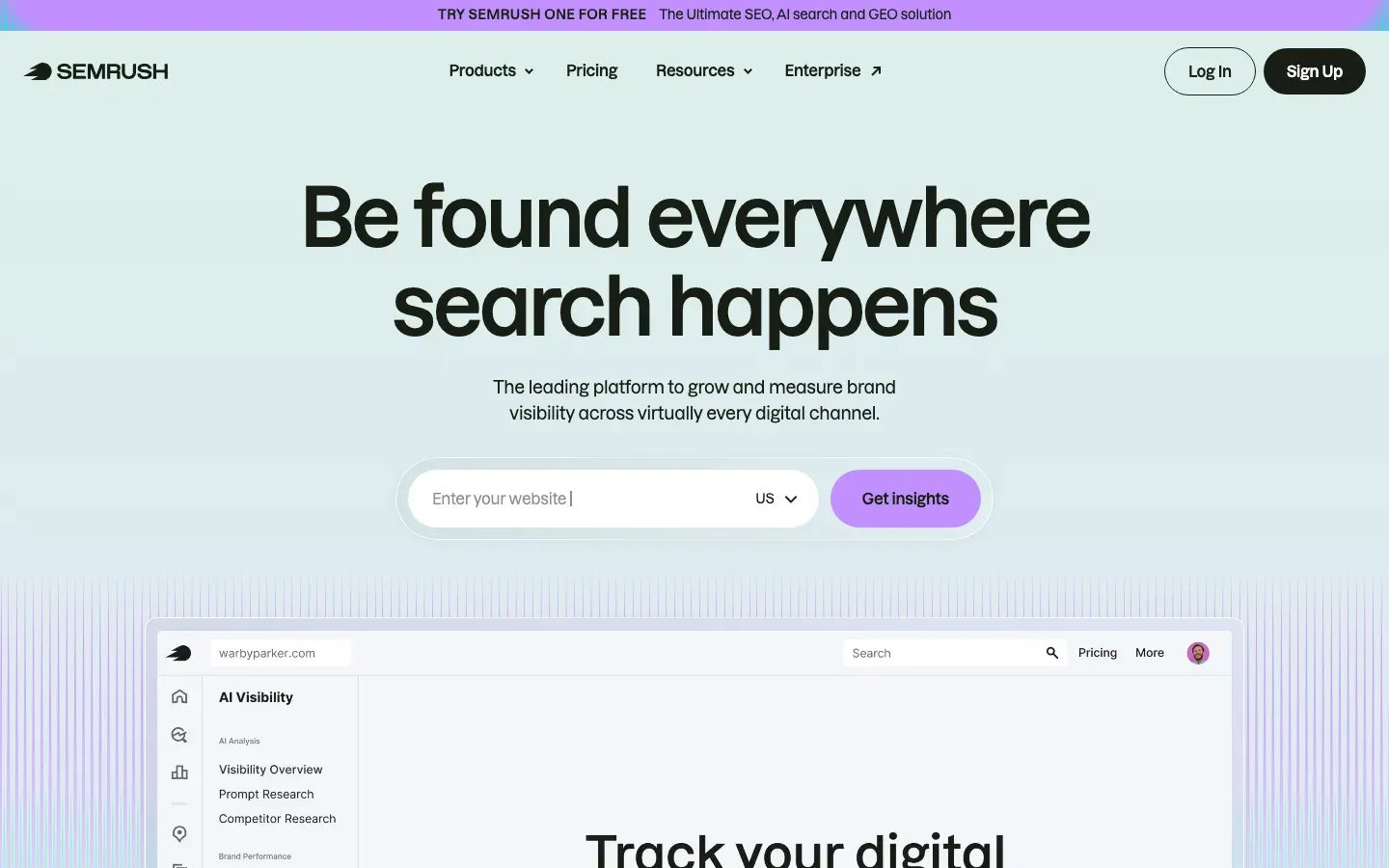
Semrush is the default many teams keep coming back to because one seat covers organic tracking, backlinks, and paid-ad research. For competitor work its edge is cadence: Semrush’s SEO plan starts at $139/mo and tracks 500 keywords daily, with Position Tracking refreshing against named competitors every day. Move up and Semrush’s Pro+ tier ($299/mo) adds multi-location and multi-device competitor tracking plus keyword cannibalization analysis.
Cost creep is the real weakness. Add-ons and higher tiers stack quickly, and a genuine competitor-research stack often lands well above the entry price once you turn on what you actually use. Competitor tracking inside AI answers is one example: Zapier’s review lists Semrush’s AI Visibility Toolkit as an add-on from $99/month per domain, or bundled with a Semrush One plan from $199/month.
SE Ranking: the best-value daily tracker
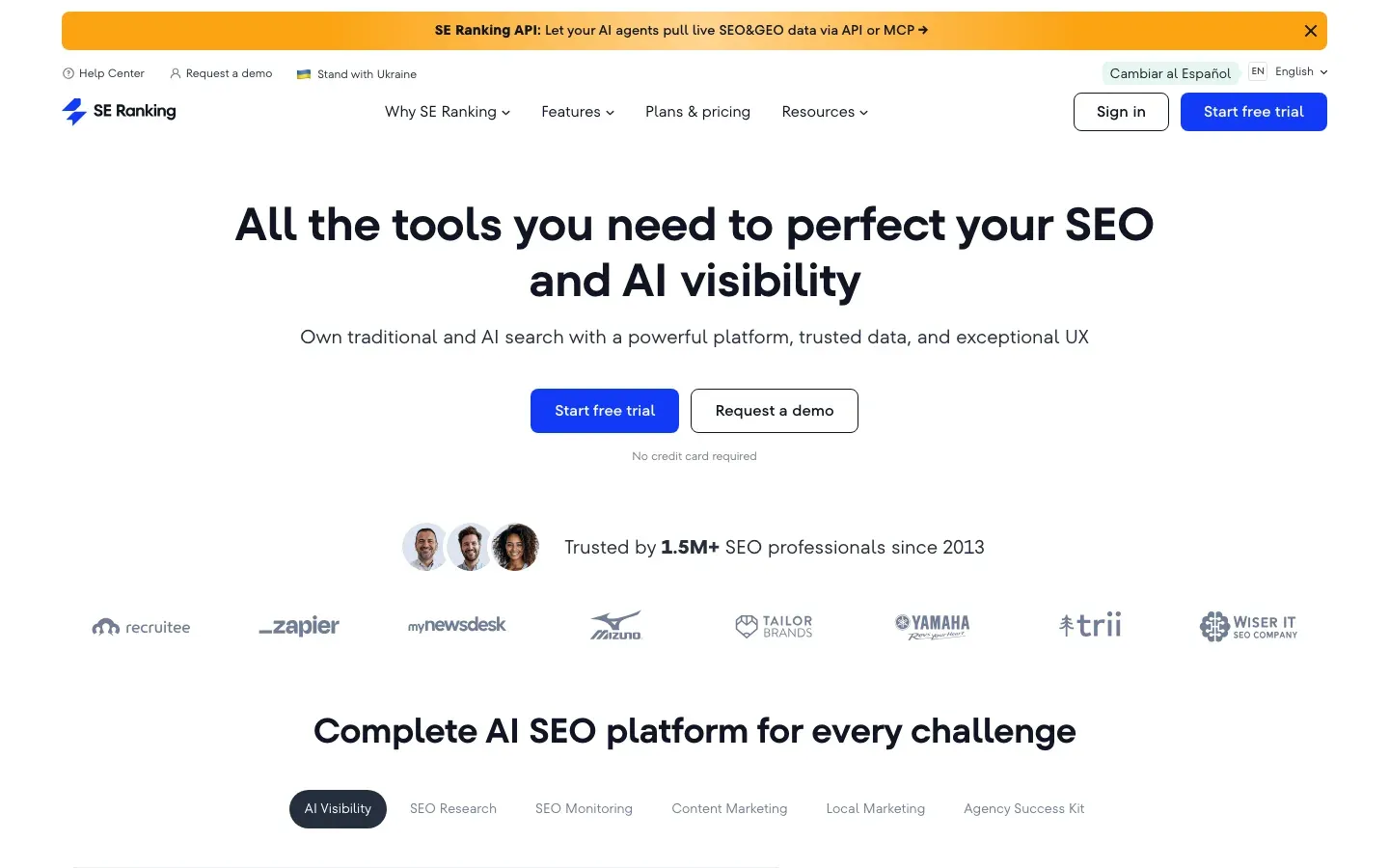
SE Ranking is the quiet winner on price-to-freshness. SE Ranking’s Core plan is $129/mo and tracks 2,000 keywords daily, four times Semrush’s daily keyword count at a lower price, with Google Top 100 tracking, Share of Voice, and API plus MCP access included on the entry tier. Scale up and SE Ranking’s Growth plan is $279/mo for 5,000 daily-tracked keywords.
For an agency running competitor analysis across many clients on a daily cadence, this is the strongest managed-tool value in the list. The weakness: its keyword database is smaller than Ahrefs’ or Semrush’s, so coverage on long-tail terms trails the two giants.
Ahrefs: the deepest index, but weekly rankings
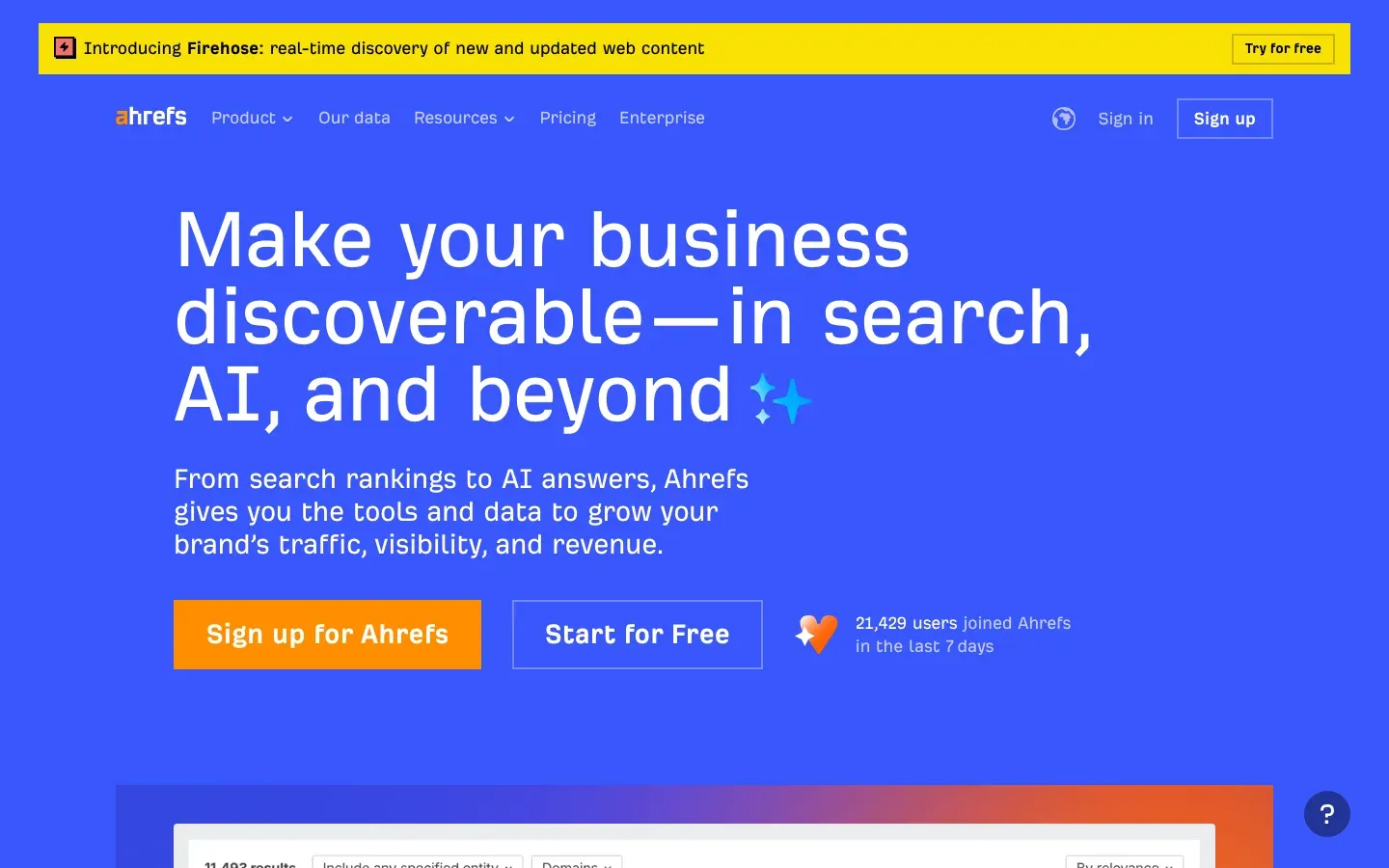
Ahrefs remains the reference for backlink and content-gap analysis; its Content Gap view is the fastest way to find keywords two competitors rank for and you do not. Its entry Lite plan is competitively priced and nothing else in this list matches its database depth for competitor link research, with the Advanced plan reaching $449/mo for teams that need the biggest limits.
The catch for competitor rank tracking is freshness, covered in detail below: Ahrefs refreshes ranking positions weekly, not daily. That is fine for trend lines and link analysis, but if you are watching a competitor’s moves week to week, you are always looking at data that can be up to seven days old.
SpyFu: the budget keyword-gap play
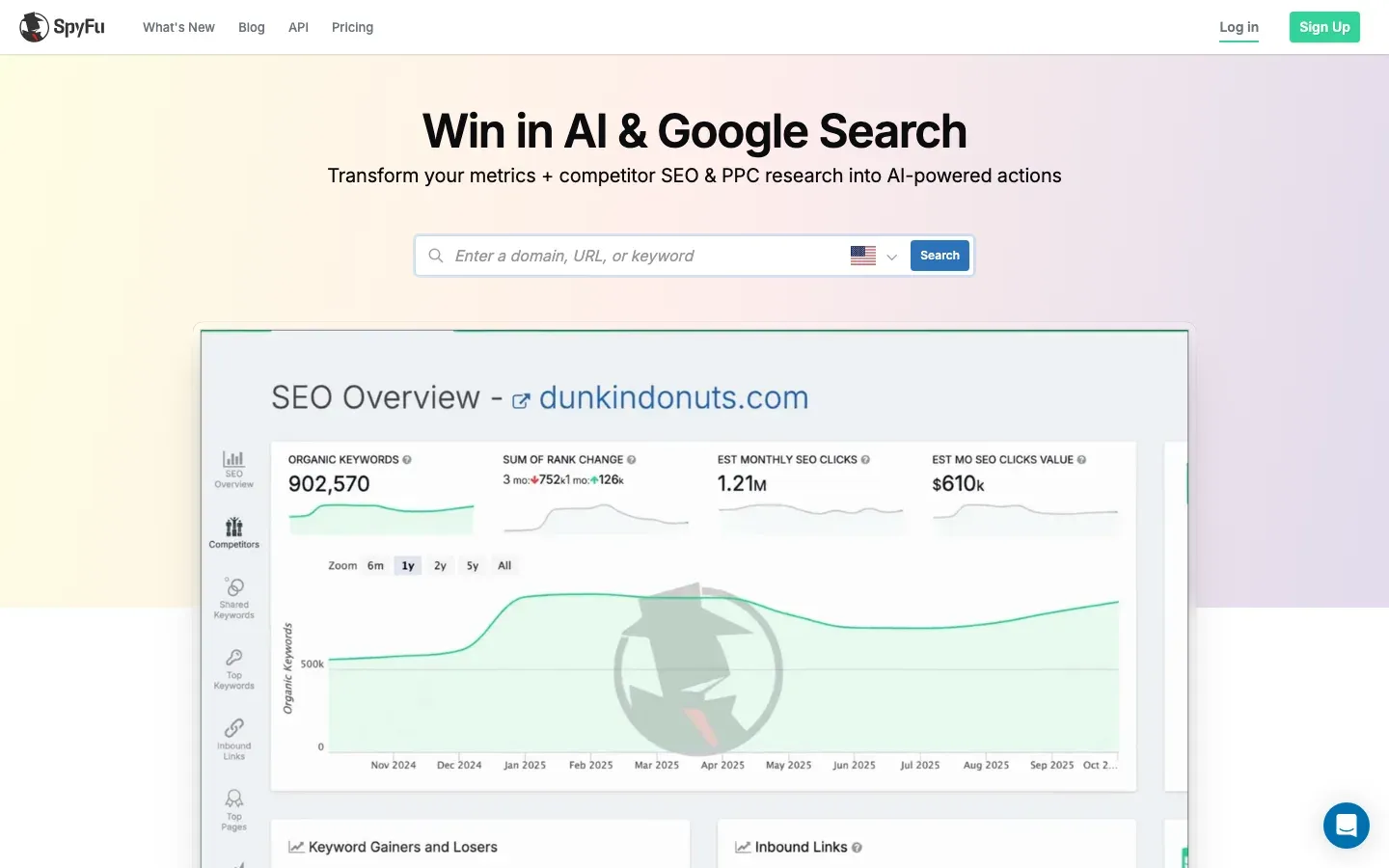
SpyFu is the value pick for PPC and keyword-gap reconnaissance. SpyFu starts at $39/mo with its Kombat three-domain keyword-gap comparison, which is the quickest way to see where you, a rival, and a second rival overlap. API access and heavier limits arrive on the $119/mo Pro plan, which adds API access and 15,000 weekly-tracked rankings.
Two caveats: its rankings refresh weekly, not daily, and its estimates are strongest on US Google and larger domains, so accuracy softens if you are tracking international markets or smaller rivals. As a cheap complement to a daily all-rounder, though, it earns its seat.
Build-your-own on a SERP API: the live-SERP option
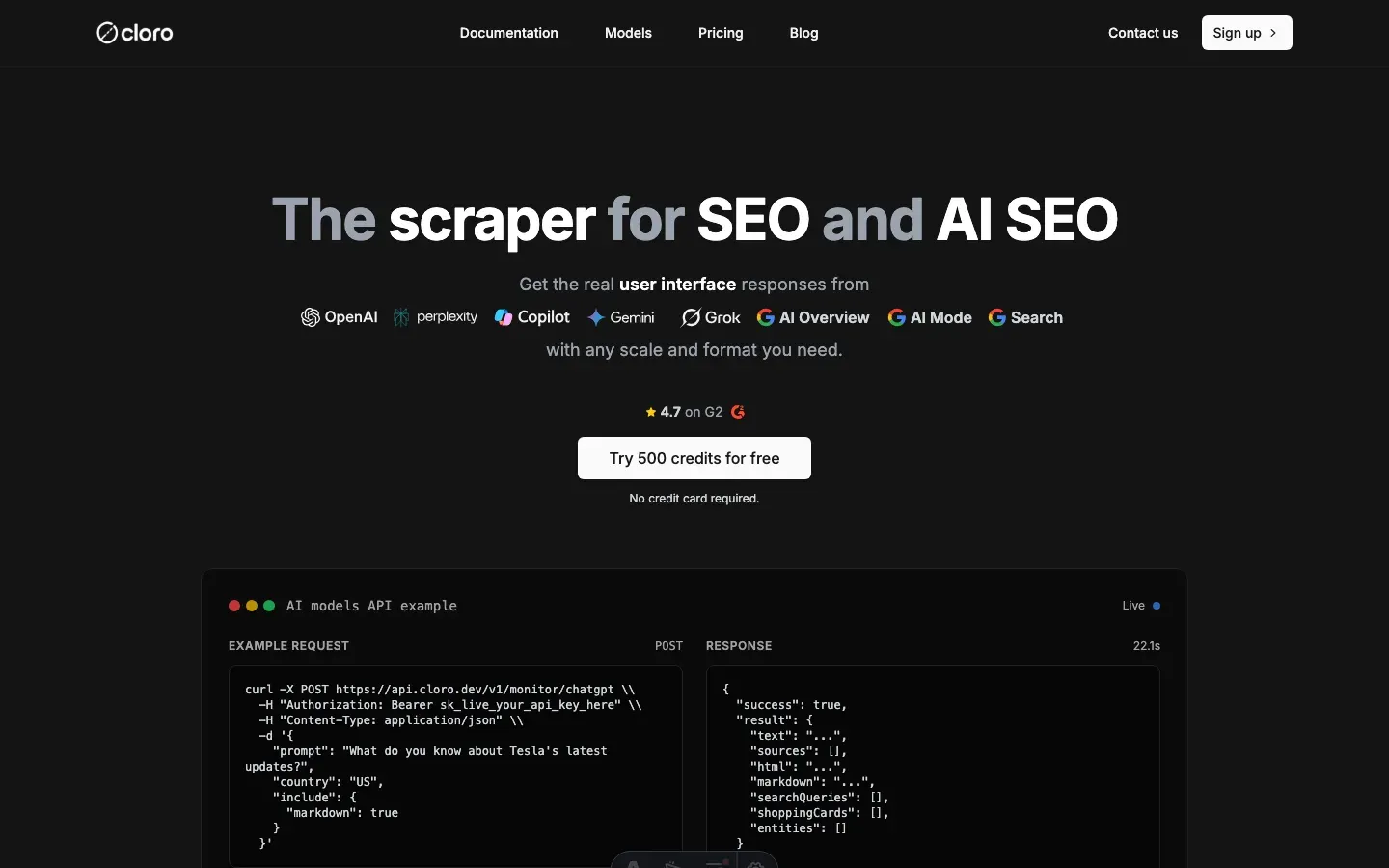
If your team has BI infrastructure, the fifth option is not a dashboard at all: pull the live SERP yourself through cloro’s SERP API and run your own competitor math. Instead of a vendor’s cached database, you get the current results page (organic positions, ads[], AI Overview sources, and People Also Ask) as JSON, sampled on whatever cadence you need. The pricing math for this path is in the price-per-insight section below.
The weakness is obvious: you build the dashboard. This path wins only if you have an engineer and want your methodology to survive vendor changes. If you do not, buy one of the four tools above.
Quick integration guide: the google-search-scraper README walks through Python, cURL, and Node.js requests for organic results, PAA, related searches, and AI Overview.
Freshness: do these tools show you today’s SERP or last week’s?
This is the axis that most separates SEO competitor tools, and it is the easiest to verify. Refresh cadence is documented on every vendor’s pricing page, and the split is stark: Semrush and SE Ranking refresh competitor positions daily, while Ahrefs and SpyFu refresh weekly. Specifically, Ahrefs’ Rank Tracker updates weekly on every plan, from Lite to Enterprise. A SERP API sits outside this scale entirely, returning data per call.
| Tool | Documented ranking refresh |
|---|---|
| Semrush | Daily |
| SE Ranking | Daily |
| Ahrefs | Weekly |
| SpyFu | Weekly |
| SERP API (build) | Per call |
Why does this matter for competitor analysis specifically? Because a competitor’s most volatile signals move faster than a weekly refresh. Ad slots rotate hourly with bids and budget pacing, and AI Overview citations shift as Google recomputes answers. A weekly tracker will tell you a competitor entered the auction on Monday when you read it on Friday. This is the structural reason the build path exists: full competitive-intelligence suites refresh ad data weekly, while a SERP API returns parsed ads on every call.
The deeper test, and where “tested against live SERPs” becomes literal, is drift: how far has each tool’s stored position moved from the current live SERP at the moment you look? You measure it by scraping the same keyword set live at the same hour you pull each tool’s data, then comparing positions cell by cell.
Illustrative only: the table below shows the shape of that measurement, not measured results. Filling it in requires a full one-day benchmark run with logged-in access to each tool, which is out of scope for this session; we did not run it, so we are not publishing invented lag numbers.
| Tool class | Expected drift vs live SERP | Why |
|---|---|---|
| Daily trackers (Semrush, SE Ranking) | Low (hours, not days) | Positions refreshed within the last 24h |
| Weekly trackers (Ahrefs, SpyFu) | Higher (up to a week) | Position can be up to seven days old |
| SERP API (build) | ~Zero at query time | You are reading the live SERP directly |
The structural takeaway is safe to state without the benchmark: daily-refresh tools will always track closer to the live SERP than weekly ones, and a live SERP pull has no drift by definition. If freshness is your priority, the ranking is daily managed tools, then a SERP API for zero-drift, then weekly tools.
Coverage: how much of a competitor’s footprint each tool actually sees
Freshness is about when; coverage is about how much. Every managed tool’s keyword database is a cached, sampled crawl of the web: comprehensive, but never complete. The live SERP is the only complete record of who ranks for a query today. Coverage is the gap between the two.
The test is straightforward to describe. Pick one competitor domain. Build the ground truth by sampling the live SERP exhaustively for the keyword set you care about, and record every query where the competitor appears in the top 10. Then ask each tool for that competitor’s ranked keywords and measure recall: what fraction of the real top-10 footprint did the tool return?
Coverage differs between tools for structural reasons: index size (bigger databases recall more), crawl cadence (a stale crawl misses recent movements), and country or device gaps (many databases under-sample non-US and mobile SERPs). Ahrefs and Semrush lead on raw index size; smaller databases trade some recall for price.
As with freshness, the exact per-tool recall percentages need the full benchmark run to state honestly, so we are not putting invented numbers here. The structural point stands on its own, though, and it is the reason the build-your-own path exists: a live SERP sample has complete coverage of the current results page by construction, because it is the results page. There is no index to fall out of date and no country or device the vendor forgot to crawl: you request exactly the query, country, and device you need. For teams whose competitor analysis lives or dies on complete coverage of a specific market, that structural guarantee is the whole argument for pulling the SERP directly.
Price per insight: cost normalized by usable competitor data
Sticker price is the wrong comparison. A $39 tool that refreshes weekly and covers half a competitor’s footprint may cost more per usable insight than a $139 tool that refreshes daily and covers most of it. The metric that holds up is monthly cost divided by the usable competitor data points the tool returns at the freshness you need.
Start with the verified inputs. Managed entry plans run from $39/mo (SpyFu) to $129/mo (Ahrefs and SE Ranking) and $139/mo (Semrush), with each figure cited in the tool reviews above.
Step up to daily tracking of 5,000 keywords with API access and the range widens: Semrush’s Advanced plan runs $549/mo for 5,000 daily-tracked keywords plus API access, while SE Ranking’s Growth tier delivers the same daily capacity for less.
| Tool | Entry tier | Higher tier | Tracking capacity note |
|---|---|---|---|
| Semrush | $139/mo | $549/mo Advanced | 500 → 5,000 keywords tracked daily; API on Advanced |
| SE Ranking | $129/mo | $279/mo Growth | 2,000 → 5,000 keywords tracked daily; API on both |
| Ahrefs | $129/mo | $449/mo Advanced | 750 → 5,000 keywords, weekly refresh |
| SpyFu | $39/mo | $119/mo Pro | weekly refresh; API only on Pro |
| SERP API (build) | ~$0.0012/query | scales linearly | per-call; no per-keyword ceiling |
The build path is the one you can price exactly per insight, because it is metered per query. At roughly $0.0012 per SERP call on cloro’s Hobby plan, tracking 500 competitor keywords daily for a month is about 15,000 calls, under $20 in SERP cost, before you account for the engineering to turn those responses into a dashboard. The managed tools bundle that engineering into the sticker price, which is exactly what you are paying for if you do not want to build.
To normalize into a true price-per-insight number, divide each monthly cost by the count of usable, fresh competitor data points it returns for your keyword set, which depends on the coverage figures from the previous section. That is why we call the normalized ratio illustrative: the prices are real and verified, but the denominator needs your coverage measurement to be exact. Drop your own coverage numbers into monthly_cost ÷ (keywords_covered × refreshes_per_month) and you get a defensible per-insight cost you can compare across tools.
The takeaway: the pattern holds regardless of the exact numbers. For high-freshness, high-coverage needs at scale, the per-insight cost of a metered SERP API falls below per-seat SaaS, while for smaller keyword sets the managed tools win because you are not paying for engineering you do not need.
How to choose the right competitor analysis SEO tool
There is no single best competitor analysis SEO tool. There is the right one for your freshness need, your keyword volume, and whether you have engineers.
- You want one dashboard and daily freshness, no building: Semrush if you also run paid search and want the deepest single-vendor stack; SE Ranking if you want the same daily cadence and Share of Voice for less, especially across multiple clients.
- You are link- and content-led: Ahrefs, accepting weekly rank refresh in exchange for the deepest backlink and content-gap data.
- You are on a budget or need quick PPC or keyword-gap recon: SpyFu, ideally as a cheap complement to a daily all-rounder.
- You have BI infrastructure and need hourly ad or AI-Overview freshness, or want your methodology to outlive any vendor: build on a SERP API for competitor rank tracking, and keep the scoring logic in your own code.
Two adjacent reads worth bookmarking: if your competitor work is really about ongoing monitoring rather than a one-time tool choice, see competitor SEO tracking; and if you also need to watch your own positions, our roundup of rank tracking software covers that job. For anything beyond SEO (social, sales, PR) the broader competitive intelligence tools guide is the companion to this one.

About the author
Ricardo Batista
Founder, cloro
Ricardo is one of the founders and engineers behind its SERP and AI-search scraping infrastructure. Before cloro he scaled a financial comparison site to $7M ARR and ran the full-country operations of a unicorn to $65M ARR, then went back to building. He writes about search engine scraping, generative-engine optimization, and turning live search and AI-answer data into something teams can act on.
Frequently asked questions
What is the best competitor analysis SEO tool?
There is no universal winner. It depends on how fresh your data needs to be and whether you have engineers. For a managed dashboard with daily competitor-ranking refresh, Semrush and SE Ranking lead, with SE Ranking giving the best value at $129/mo for 2,000 keywords tracked daily. For the deepest backlink and content-gap data, Ahrefs wins despite its weekly refresh. For zero-drift, complete coverage of a specific market, build on a SERP API.
What's the difference between an SEO competitor tool and a competitive intelligence suite?
An SEO competitor tool focuses on the search channel: rankings, keywords, backlinks, and SERP features. A competitive intelligence suite is broader, covering social, sales enablement, PR, and pricing signals as well. If you only need to understand a rival's search footprint, an SEO tool is cheaper and more focused; see our competitive intelligence tools guide for the wider set.
How often do SEO competitor analysis tools update their ranking data?
It varies by tool and is the single biggest differentiator. Semrush and SE Ranking track positions daily, while Ahrefs' Rank Tracker updates weekly on every plan and SpyFu refreshes weekly. A SERP API is per-call, so its data is as fresh as your most recent request.
Can you do SEO competitor analysis without paid software?
Partly. You can read a competitor's SERP presence manually, and free tiers of the major tools allow one-off checks. But manual work does not scale and free tiers cap you fast. The lowest-cost way to do it at scale is to pull the live SERP through an API, at about $0.0012 per query, and run your own analysis, which requires some engineering but no per-seat fee.
How much does SEO competitor analysis software cost?
Entry plans range from $39/mo for SpyFu to $129/mo for Ahrefs and SE Ranking, up to $139/mo for Semrush. Higher tiers with daily tracking of 5,000 keywords and API access run $279/mo (SE Ranking Growth) to $549/mo (Semrush Advanced). Building on a SERP API is usage-priced at roughly $0.0012 per query, with no per-keyword ceiling.
Related reading
12 Best Competitive Intelligence Tools (2026 Review)
We tested 12 competitive intelligence tools across SEO, social, sales enablement, and AI search. See pricing, who each is for, and the honest weak spots.
Best Rank Tracking Software 2026: 12 Tools Tested
Compare the 12 best rank tracking software tools for 2026 by daily cadence, accuracy, and enterprise scale, scored against live SERP data.
Competitor SEO Tracking: Monitor Rivals in Real Time
Competitor SEO tracking is share-of-voice measurement for classic Google search: which domains own the top 10 across your keyword set, computed from scraped SERPs. Here's how to build it, a 30-day war in one niche, and how to alert on entries and exits.