
Rank Tracking•
How to Track SERP Rankings Beyond Blue Links
Learn how to track SERP rankings across organic results, maps, AI Overviews, PAA, snippets, ads, and zero-click features without false confidence.
Read more

Author
Ricardo is one of the founders and engineers behind its SERP and AI-search scraping infrastructure. Before cloro he scaled a financial comparison site to $7M ARR and ran the full-country operations of a unicorn to $65M ARR, then went back to building. He writes about search engine scraping, generative-engine optimization, and turning live search and AI-answer data into something teams can act on.
Learn how to track SERP rankings across organic results, maps, AI Overviews, PAA, snippets, ads, and zero-click features without false confidence.
Learn how to solve CAPTCHAs for scraping: prevent challenges with fingerprints and proxies, use solver APIs, and handle reCAPTCHA or Turnstile.
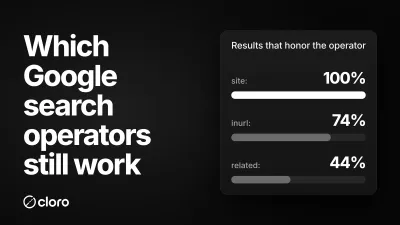
We tested which Google search operators still work in 2026: site, -site and intitle at 100%, inurl at 74%, related at 44%, cache returns nothing.
Every Google search URL parameter in one table (q, gl, hl, uule, udm, tbs, start), what each one does, and which ones still work when you send the URL through an API.
From sitemaps to Python crawlers. Learn every method to discover every single page on a website, including hidden endpoints and orphan pages.
Beyond the '10 blue links.' Learn the anatomy of a Search Engine Results Page, from organic rankings to AI Overviews, and how to dominate it.
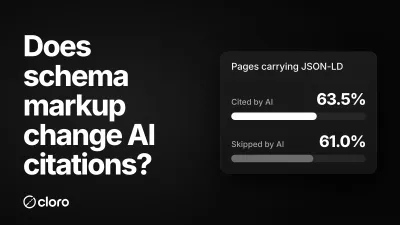
Schema markup for AI is plain JSON-LD. Five copy-ready examples, the types to ship first, and our 800-URL test of whether schema changes AI citations.
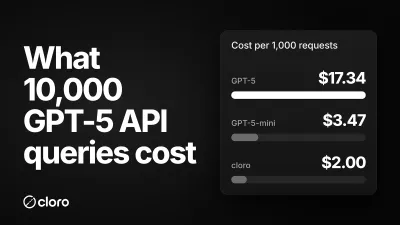
GPT-5 API pricing benchmarked on 10,000 structured queries. See real token counts, true per-thousand costs, and the system-prompt tax most teams miss.
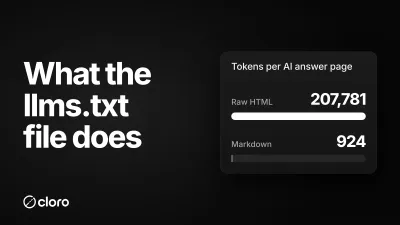
llms.txt is a Markdown file that gives AI agents a clean map of your site. Learn how the format works and how to create one in under an hour.