
Online Reputation Monitoring in 2026: Search & AI

On this page
Reputation used to be simple to locate. It lived in your reviews, your press, and the first page of Google. Watch those three, respond quickly, and you had a handle on how the market saw you.
That map is now incomplete. A growing share of first impressions form inside an AI answer, before anyone reaches a review page or a headline.
The shift is fast enough to see in search data. cloro’s machine search traffic study tracked machine-issued queries against its own Search Console and watched them climb from 3.1% of query impressions in March 2026 to 18.9% in July.
ChatGPT alone is used by 800 million people a week. Many of them ask it directly what to think about a company, a product, or a person, and they act on the answer.
Online reputation monitoring is the practice of tracking what is said about you across every surface where that perception forms. The old three-surface version of it is no longer enough. This guide maps the surfaces as they exist in 2026, compares the tools that watch them, and shows how to cover the one almost nobody monitors: the AI answer layer.
The modern reputation surface map
Reputation is not one thing in one place. It is an aggregate impression assembled from several distinct surfaces, each with its own audience, its own velocity, and its own monitoring requirement. Watching only the loudest one tells you very little, so the work starts by mapping where brand perception actually forms.
Five surfaces make up that map in 2026: reviews, search results, news, social, and AI answers. The first four are familiar territory with established tools. The fifth is new, largely unwatched, and, as this guide’s data shows further down, the one most likely to be wrong about you. Cover the first four and miss the fifth, and you are grading yourself on an old rubric.
Reviews
Reviews remain the highest-intent reputation surface. They reach buyers at the moment of decision, and they carry a rating that both search engines and AI models ingest.
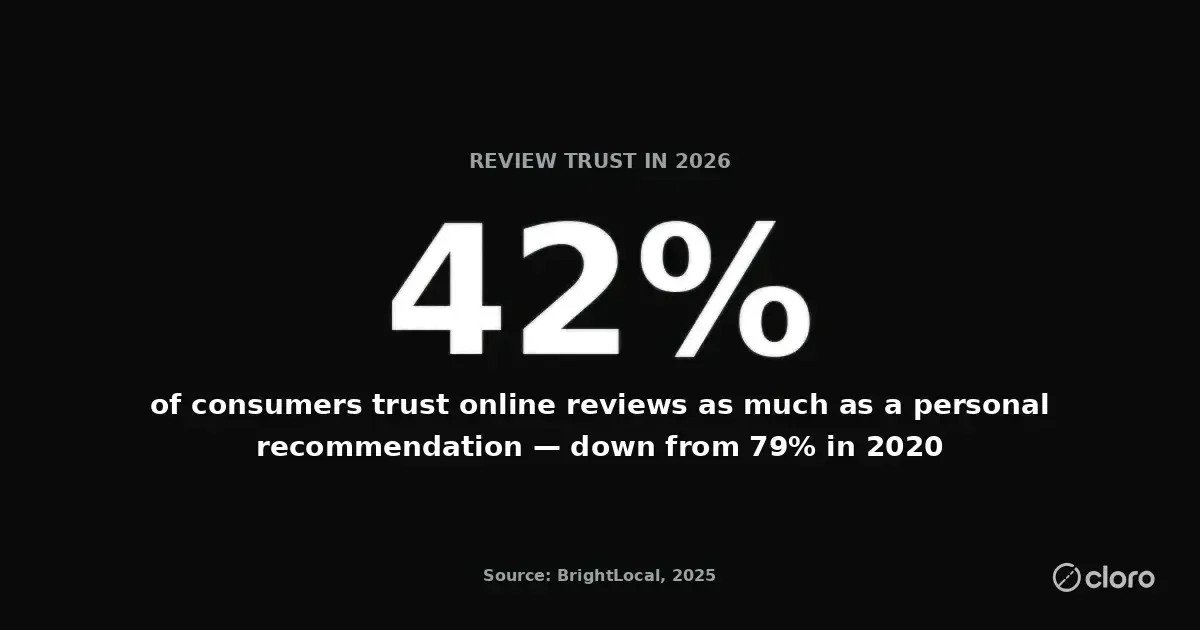
But the trust picture has shifted. Only 42% of consumers now trust reviews as much as a personal recommendation, down from 79% in 2020.
Buyers compensate by reading more widely. In the same survey, 74% now check two or more review sites before deciding.
Google dominates the reading surface, with 84% of US adults using Google to find and read local business reviews. Trustpilot, G2, Capterra, and category-specific platforms round out what to watch, weighted by where your buyers actually look.
Search results
The search engine results page is where reputation and discovery overlap. What ranks for your brand name, and what autocomplete suggests beside it, is the first framing most people see.
Watch the branded SERP for new pages entering the top results, negative autocomplete suggestions, and the “People also ask” box. A single complaint thread or a hostile comparison page can shape perception for everyone who searches your name.
Google’s own AI Overview now sits above those results on many queries. That folds the classic search surface into the AI answer layer discussed below.
News and social
News coverage sets the narrative that everything else references. Google News is the fastest way to catch a story before it spreads, and it feeds both search and AI.
Social adds velocity. A single post can move faster than any review or article, and it can reach an audience before your team has even seen it.
One structural shift matters for both surfaces, and the shape of it changed recently enough that most advice about it is out of date.
The widely-cited version says AI engines lean on user-generated content and Reddit is the single most-cited source across AI search, from an analysis of 30 million citations. That was true when it was measured. We track the same thing continuously, and on ChatGPT it stopped being true in August 2026: Reddit’s share of ChatGPT’s cited sources fell to 0.20%, and it now sits outside ChatGPT’s top eight domains entirely.
Here is what the engines actually reached for between 11 and 19 August 2026, across cloro’s monitoring corpus. Each figure is the domain’s share of all cited sources on that engine.
| Engine | Most-cited domain | Share | |
|---|---|---|---|
| Google AI Mode | youtube.com | 5.41% | 1.50% |
| Perplexity | youtube.com | 3.28% | 1.40% |
| Gemini | ikea.com | 1.60% | 1.09% |
| ChatGPT | shopify.com | 1.57% | outside top 8 |
| Copilot | ikea.com | 1.27% | outside top 8 |
Two things there are worth a reputation programme’s attention.
No single source dominates. The most-cited domain on any engine accounts for between 1.3% and 5.4% of citations. A strategy built on winning one platform is a strategy built on a couple of percent of the surface. The citation layer is flat and long-tailed, and a brand’s exposure is spread across hundreds of domains rather than concentrated in a forum you can monitor.
Which platform matters depends entirely on the engine. YouTube leads on AI Mode and Perplexity; ChatGPT and Copilot cite retail and brand domains first; Gemini and Copilot both put ikea.com on top. A monitoring setup pointed at one engine’s source mix is measuring that engine, not AI search.
One honest caveat on those numbers: they come from what cloro’s customers actually track, which skews toward retail and consumer brands. Read them as the shape of the citation layer rather than a census of the web. What is not sensitive to the prompt mix is the direction of travel: Reddit’s ChatGPT share fell by more than an order of magnitude in days, which is the real lesson. A thread about your brand is still grounding data for what AI says next. Which surfaces carry that weight is not stable enough to design a programme around.
AI answers
Buyers increasingly ask an AI engine what to think before they read a single review, which is what leaves the old map incomplete.
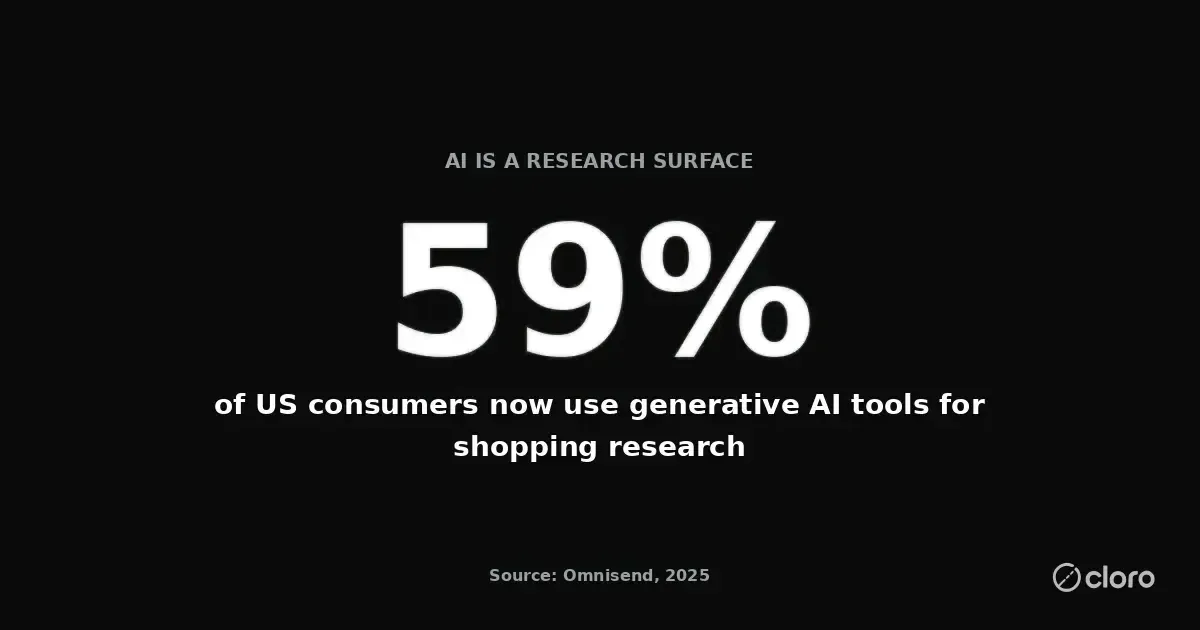
Adoption is already mainstream. 59% of US consumers now use generative AI tools for shopping tasks.
The trust is there too. One in four say ChatGPT’s product recommendations beat Google’s. When an engine describes your brand, that description is the impression, and it forms before any surface you already monitor.
Why AI answers are the new reputation frontier
Of the five surfaces, the AI answer layer is the one most likely to be wrong about you, and that is what makes it worth watching closely. It is also where reputation monitoring in 2026 breaks from the old playbook.
AI answers assemble on demand from whatever sources the engine retrieves. That process is far less reliable than it sounds.
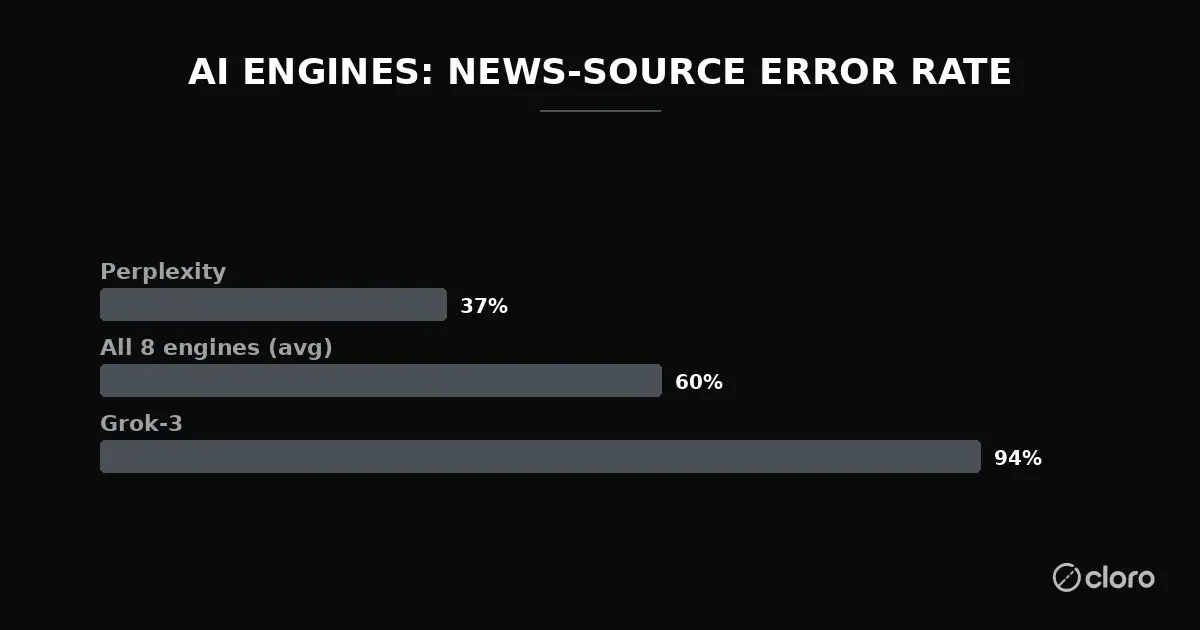
Columbia’s Tow Center found that eight major AI search tools collectively returned incorrect answers to more than 60% of source-attribution queries. Within that test, the same study measured Grok-3 wrong on 94% of them.
The pattern holds at larger scale. Evaluating thousands of answers, an EBU/BBC investigation found that 45% carried at least one significant issue.
The failures cluster around sourcing. Roughly 31% of answers had sourcing problems, meaning missing or misleading attribution, and Gemini fared worst, with a significant issue in 76% of its responses.
Read those numbers as a reputation risk, not a technical footnote. An engine that is confidently wrong about a news article is equally capable of describing a discontinued product as current, resurfacing a settled controversy, or repeating a competitor’s framing as fact about you.
The AI reputation audit
An AI reputation audit makes this concrete: a repeatable check that compares how AI engines frame your brand against what is actually true.
Picture the common case. A buyer asks an engine “is [your brand] any good?”, and it answers by summarizing a two-year-old Reddit complaint and a competitor’s comparison page, missing the release that resolved the complaint. Nothing in your reviews or press flags it, because the distortion only exists inside the answer. The divergences are where reputation risk lives: an engine might cite a three-year-old teardown as current, or assert a limitation you fixed last quarter.
The procedure for catching that is the same for any brand, and it is short.
- Assemble a fixed set of prompts a real buyer would ask: “is [brand] legit?”, “[brand] vs [competitor]”, “problems with [product]”.
- Run each prompt across ChatGPT, Perplexity, Gemini, and Google’s AI Overviews.
- Record three things per answer: the sentiment, the specific facts asserted, and the sources cited.
- Diff that against reality: your current product line, your latest news, your actual pricing.
Because AI answers are grounded in retrieved sources, an audit also tells you which pages to fix, often a stale forum thread or an outdated comparison. That turns online reputation monitoring from a passive watch into a punch list: correct the source, and the answer improves on the next crawl. This is the same measurement discipline behind LLM citation tracking and AI visibility tracking, aimed at perception rather than ranking.
Reputation monitoring tools compared: strong on reviews and social, blind to AI answers
The market for reputation monitoring tools is mature on the surfaces it was built for (reviews, mentions, and news) and almost entirely absent on AI answers. Each of the main categories is best judged by where it stops.
| Tool | Strong on | Watches AI answers? |
|---|---|---|
| Birdeye | Reviews, local listings, surveys | No |
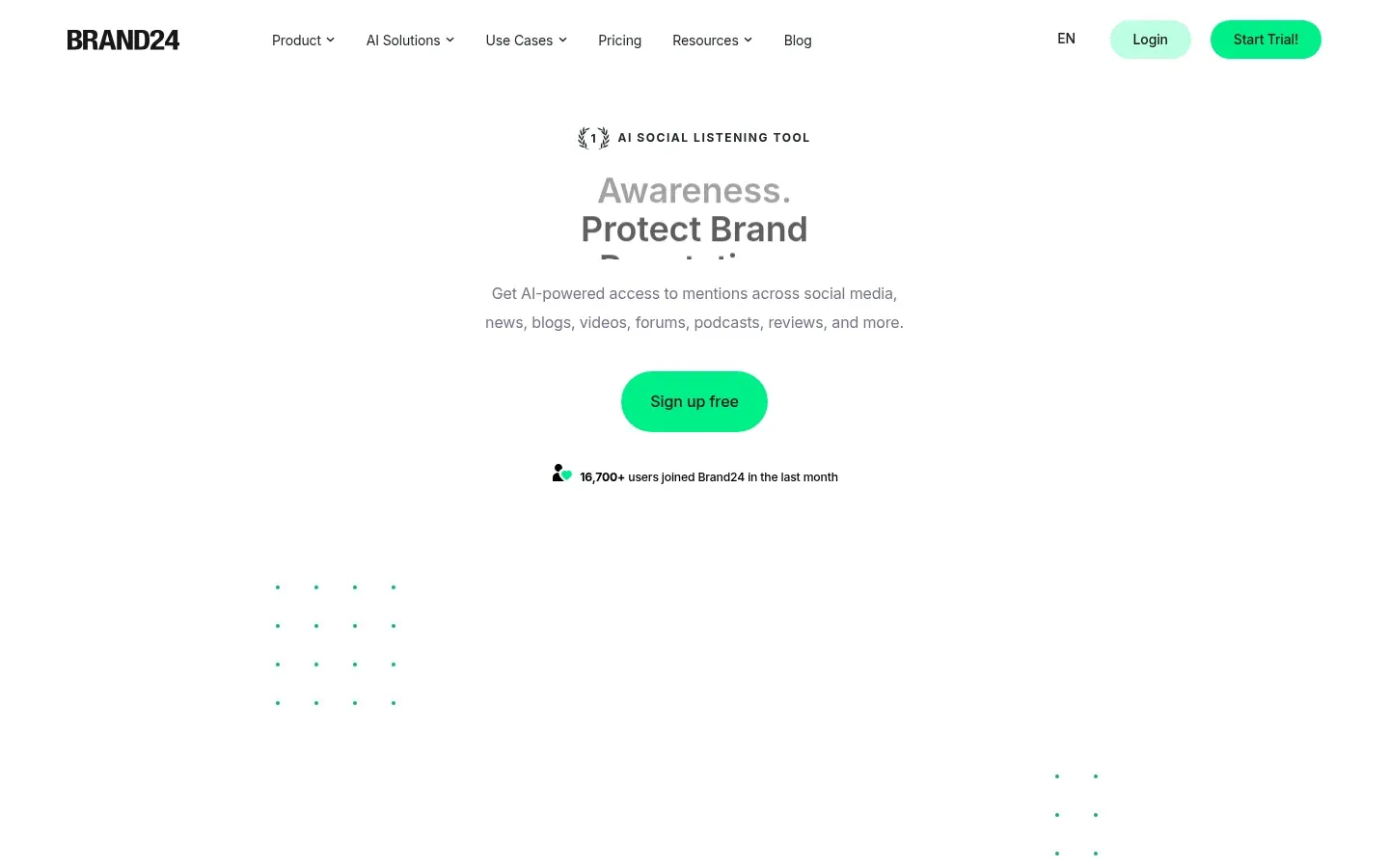
| Brand24 | Mentions, social, sentiment | No |
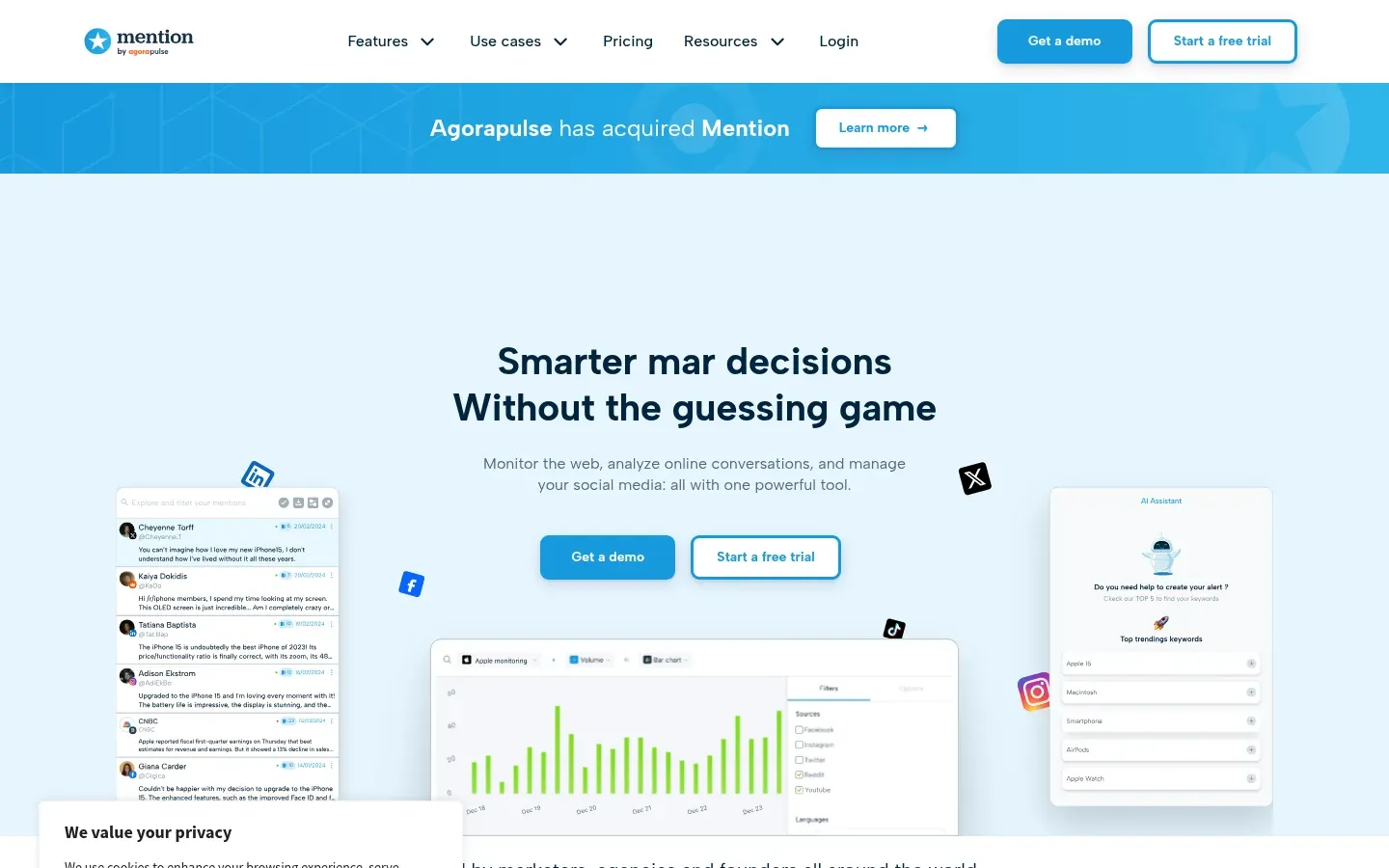
| Mention | Real-time social and web mentions | No |
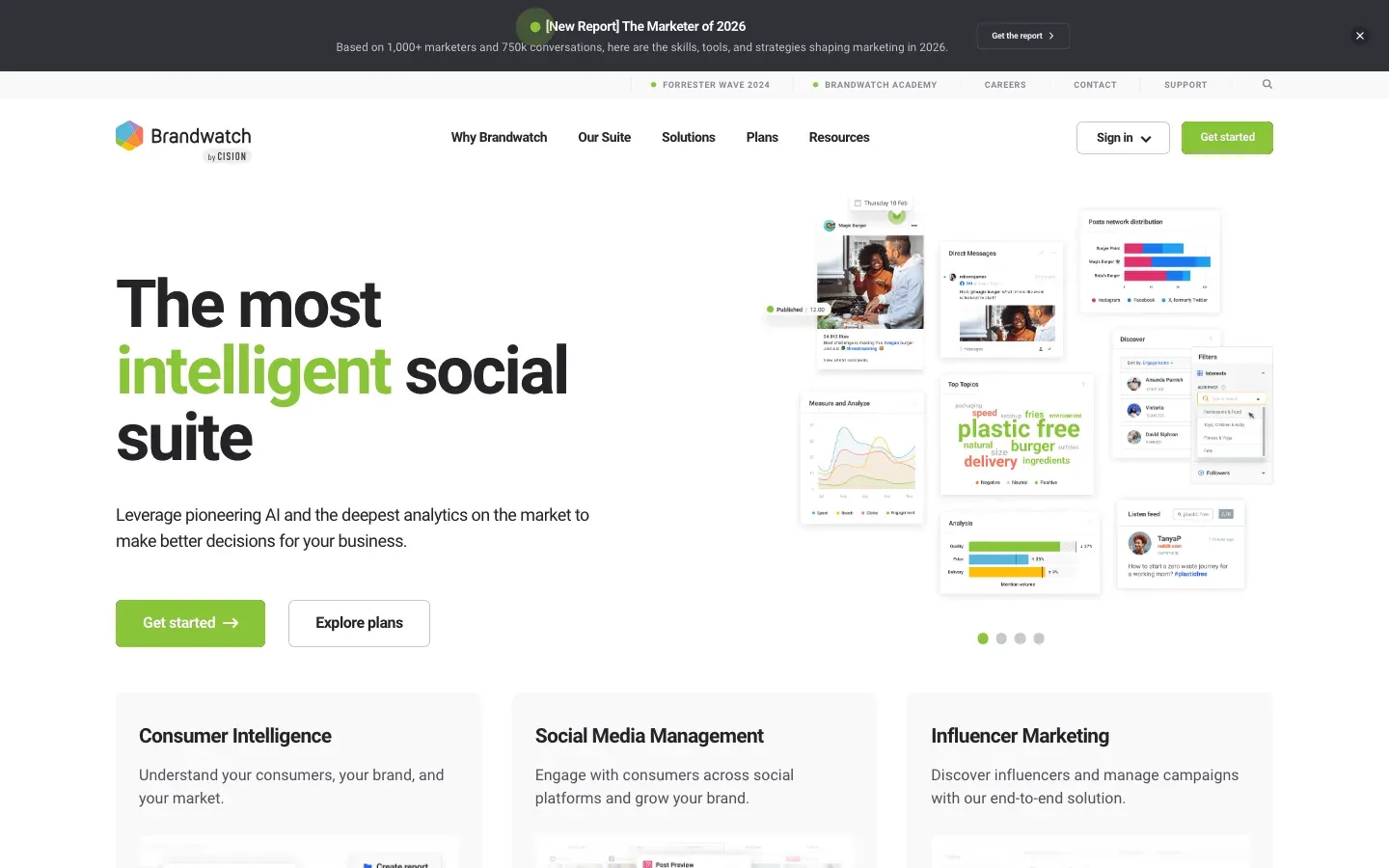
| Brandwatch | Enterprise social listening, analytics | No |
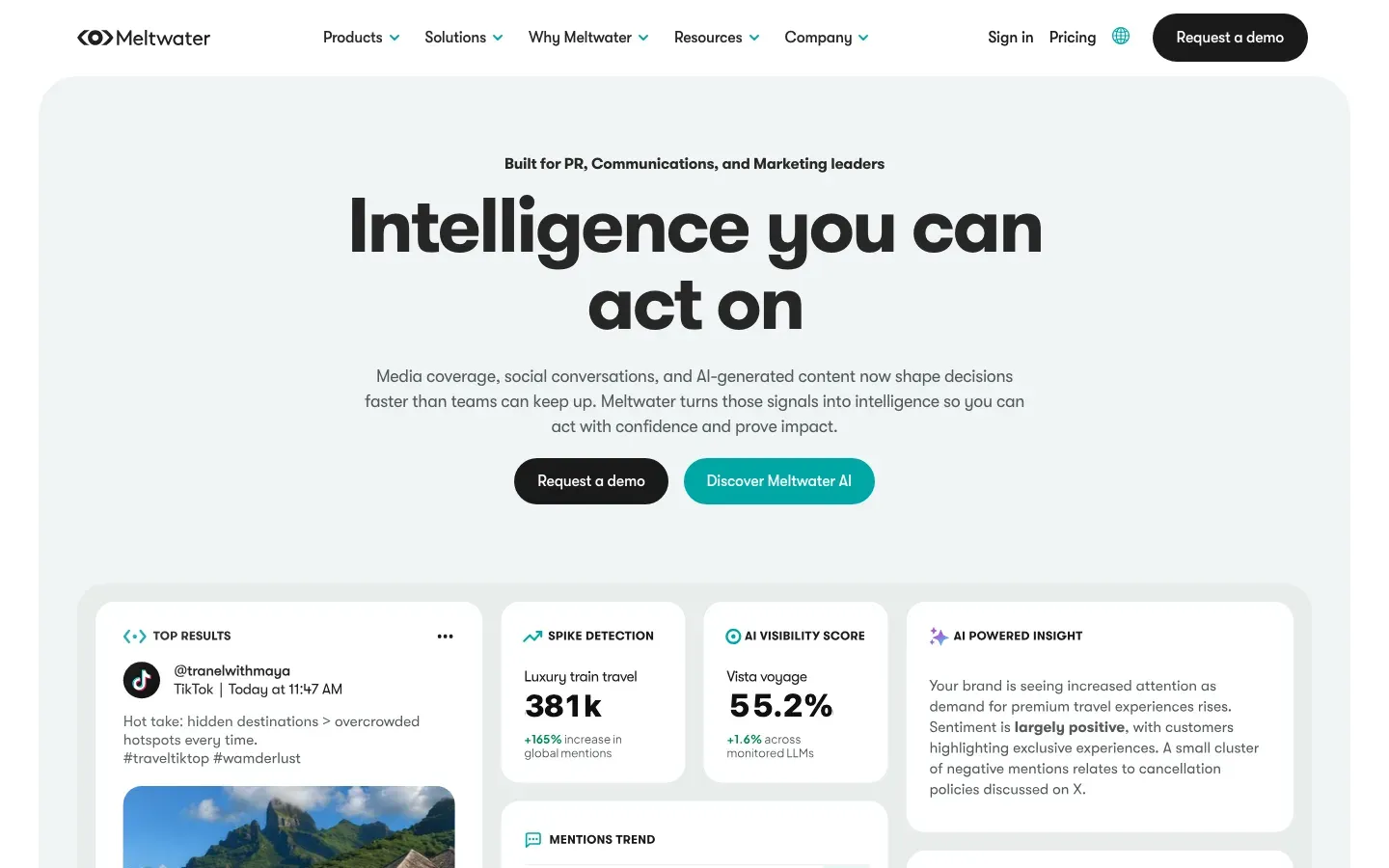
| Meltwater | Media monitoring, PR, news | No |
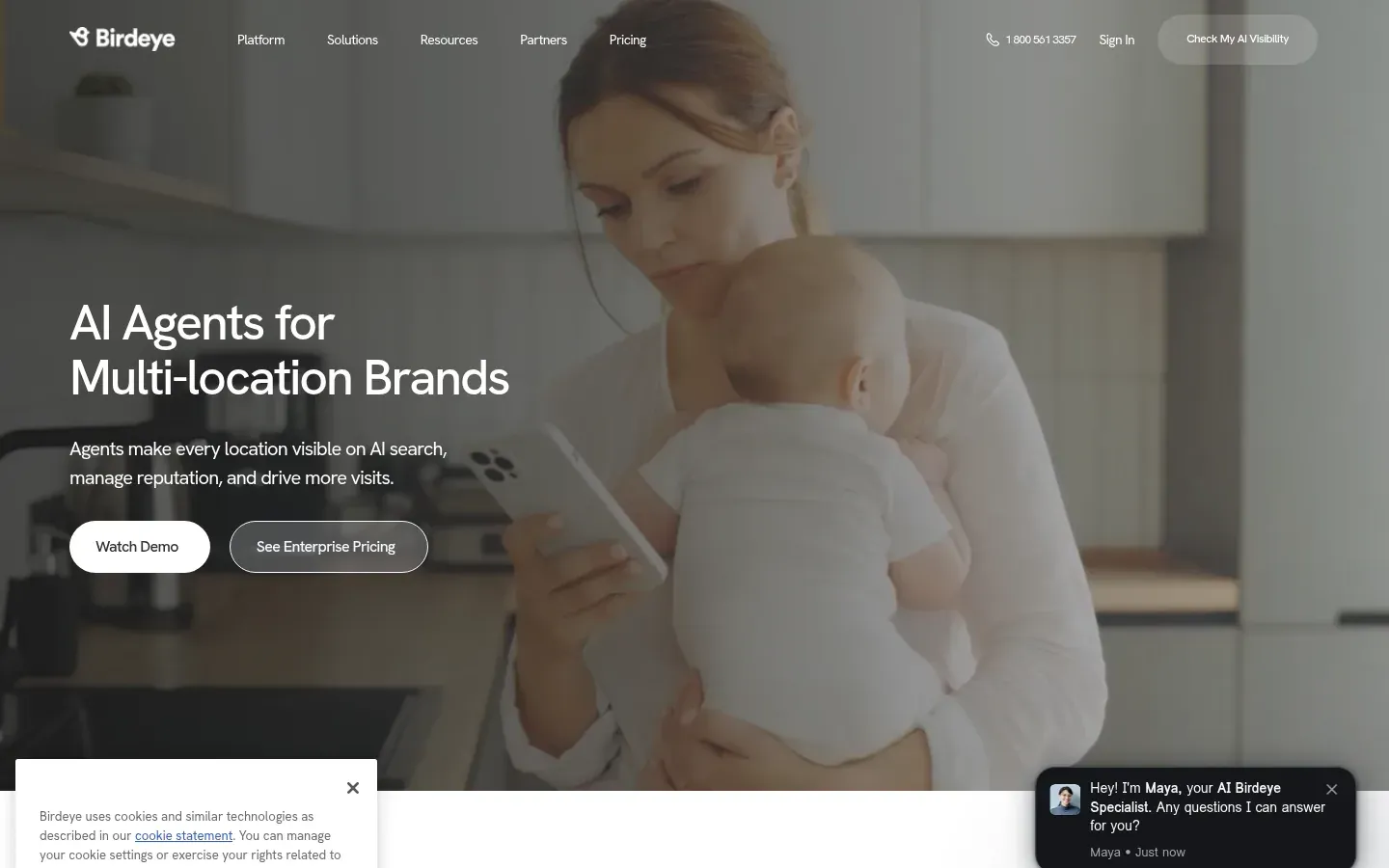
Birdeye and other review-first suites (ReviewTrackers, Yext) are the right pick if your reputation lives mostly in local reviews and listings. They excel at collecting, responding to, and analyzing reviews at scale. But their world ends at the review platform.
Brand24 and Mention are strong, affordable mention-trackers. They catch your brand name across social, blogs, and news in near real time, with solid sentiment scoring. Those are the fast-moving surfaces where speed matters most.
Pricing spans a wide range, from roughly $50 a month for a single-surface mention tracker to four figures for an enterprise listening suite. Match the spend to where your reputation actually lives: a local-services brand leans on review coverage, while a funded B2B startup usually needs social and news together. Whatever you pick, verify what the tool does not cover before you sign.
Brandwatch and Meltwater sit at the enterprise end: deep social listening, media monitoring, and analyst-grade reporting. If PR and comms are your center of gravity, they are the incumbents to beat.
Every one of them shares the same blind spot. None sample what ChatGPT, Perplexity, Gemini, or AI Overviews say about you. That is not a knock on their core job. It is a category-wide gap.
cloro is built to fill exactly that gap: it sits alongside your review and social stack as the data layer for the AI answer surface, so the same team already watching one-star reviews can watch AI drift too. If you are picking online reputation monitoring tools for the whole picture, treat AI answer coverage as a separate line item, because your incumbent almost certainly does not provide it.
How to build online reputation monitoring across AI engines
Covering the AI layer does not require a new platform. It takes a fixed prompt set, a scheduled run across engines, and a diff.
Start by defining the brand queries that matter, then run them across engines on a cadence. The shape of it: send a prompt, cloro queries the engine and parses the response, and you get sentiment and source data back to diff against the last run.
# A minimal AI reputation monitor: brand prompts -> per-engine answers -> diff
BRAND_PROMPTS = [
    "Is Acme Corp trustworthy?",
    "Acme Corp vs Globex - which is better?",
    "What are common complaints about Acme Corp?",
]
ENGINES = ["chatgpt", "perplexity", "gemini", "google_ai_overview"]

def run_audit(prompts, engines):
    results = []
    for prompt in prompts:
        for engine in engines:
            answer = query_engine(engine, prompt)   # returns text + cited URLs
            results.append({
                "prompt": prompt,
                "engine": engine,
                "sentiment": score_sentiment(answer.text),
                "claims": extract_claims(answer.text),
                "sources": answer.sources,
            })
    return results

# Compare this run against the last one and alert on drift
diff = compare(run_audit(BRAND_PROMPTS, ENGINES), previous_run)
alert_if_changed(diff)
The engine query is the only hard part, and it is what cloro provides. Brand prompts run across ChatGPT, Perplexity, Gemini, and AI Overviews, returning the answer text, a sentiment read, and the cited source URLs as structured data.
Feed that into the diff above and you have a reputation alert that fires on a shift in what AI says, not just on a new one-star review. Wire it into the channel your team already watches, and set a weekly cadence to keep query costs reasonable.
Set the cadence by how fast each surface moves. Reviews and social mentions deserve near-real-time alerting; the AI answer layer drifts slowly, so a weekly pass is usually enough to catch it. Treat a negative framing shift the way you treat a support escalation, with an owner and a response. Done consistently, reputation monitoring stops being a fire drill and becomes a standing signal your team reads every week.
For the broader workflow, covering news, alerts, and coverage across every surface, the news monitoring use case walks through the full setup. And LLM visibility tracking tools covers the adjacent question of whether you show up in AI answers at all.
Reputation in 2026 is decided across five surfaces, and the newest one is the least watched. Online reputation monitoring that stops at reviews and headlines is monitoring the past. Adding the AI answer layer now is how you catch the next narrative while it is still forming.

About the author
Ricardo Batista
Founder, cloro
Ricardo is one of the founders and engineers behind its SERP and AI-search scraping infrastructure. Before cloro he scaled a financial comparison site to $7M ARR and ran the full-country operations of a unicorn to $65M ARR, then went back to building. He writes about search engine scraping, generative-engine optimization, and turning live search and AI-answer data into something teams can act on.
Frequently asked questions
What is online reputation monitoring?
Online reputation monitoring is the ongoing practice of tracking what is said about a brand, product, or person across the public surfaces where perception forms: review platforms, search results, news, social media, and now AI answers from ChatGPT, Perplexity, Gemini, and Google's AI Overviews. The goal is to catch shifts in sentiment and factual framing early enough to respond before they harden into a narrative.
How is reputation monitoring different from social listening?
Social listening watches conversations on social platforms. Reputation monitoring is broader: it covers reviews, the search engine results page, news coverage, and AI-generated answers as well as social. In 2026 the distinguishing layer is AI answers. Most legacy social listening tools do not query ChatGPT or Perplexity, so they miss the surface that increasingly mediates how buyers first encounter a brand.
Do reputation monitoring tools track what AI says about my brand?
Almost none of the incumbents do. Review and social suites like Birdeye, Brand24, Mention, and Brandwatch monitor reviews, mentions, and news, but they do not sample how ChatGPT, Perplexity, Gemini, or AI Overviews describe your brand. That AI answer layer is a monitoring gap in 2026, and it is the layer buyers increasingly read first.
How do I monitor my brand's reputation on ChatGPT and other AI engines?
Build a fixed set of brand and category prompts, run them across each AI engine on a schedule, and diff the answers over time for sentiment, the facts each engine asserts, and which sources it cites. cloro runs those brand prompts across ChatGPT, Perplexity, Gemini, and Google AI Overviews and returns structured results (the answer text, the sentiment, and the cited source URLs) so you can alert on drift the way you would alert on a one-star review.
Why does AI get facts about brands wrong?
AI answers assemble from whatever sources the engine retrieves, and those sources are often stale, low-quality, or contradictory. Independent audits have measured significant error and sourcing rates across the major assistants, which means an engine can confidently describe a discontinued product, an old controversy, or a competitor's claim as current fact about your brand. Monitoring is how you find those errors before a customer does.
How often should I check my online reputation?
Reviews and social mentions warrant daily or near-real-time alerting because they move fast and demand a quick response. AI answers and search framing shift more slowly, so a weekly cadence is usually enough to catch drift while keeping query costs sane. The point is a standing cadence rather than a reactive scramble after something goes wrong.
Related reading
AI Share of Voice: How to Measure Brand Visibility
AI share of voice measures how often your brand appears in ChatGPT, Perplexity, Gemini, and AI Overviews versus competitors. Learn the formulas.
Best LLM & AI Visibility Tools 2026: 10 Tested
We tested 10 LLM visibility tools (also sold as AI visibility trackers and checkers) on real brand-monitoring workflows across ChatGPT, Perplexity, and Gemini. What works, what doesn't.
LLM Citations: How Each AI Engine Cites Sources (Study)
Across six AI engines and six verticals, citation depth varies ~20×: Google AI Mode averages 15–22 sources per answer, ChatGPT/Gemini/Copilot land around 4–8, and Perplexity ranges from ~4 down to literally zero depending on the topic. Reddit sits top-2 in every vertical. AI Overview decides whether to answer at all: it triggers on 98% of shopping queries and 3% of dining.