
OSINT•
OSINT Tools in 2026: The Reconnaissance Layer
A defensive map of the OSINT tools that matter in 2026 (Maltego, SpiderFoot, Shodan, theHarvester), plus the search-engine and AI-answer recon layer cloro adds.
Read more

Author
Ricardo is one of the founders and engineers behind its SERP and AI-search scraping infrastructure. Before cloro he scaled a financial comparison site to $7M ARR and ran the full-country operations of a unicorn to $65M ARR, then went back to building. He writes about search engine scraping, generative-engine optimization, and turning live search and AI-answer data into something teams can act on.
A defensive map of the OSINT tools that matter in 2026 (Maltego, SpiderFoot, Shodan, theHarvester), plus the search-engine and AI-answer recon layer cloro adds.
We tested the top SEO competitor analysis tools against live SERPs, comparing ranking freshness, keyword coverage, and price per insight. Here's what to buy.
Reverse-engineer any competitor's keyword footprint with free SERP scraping (query fan-out, PAA mining, and autocomplete), then validate the recovered terms against live results.
We measured how far Bing's page one drifts from Google's (about 40% overlap), then mapped how to track Bing, YouTube, and the Bing-grounded AI surfaces.
The best local SEO tools for 2026, scored on the geo-precision that actually decides local rank: geo-grid trackers, GBP and citation suites, and agency software.
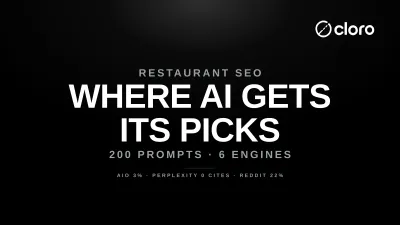
Across 200 dining prompts × 6 AI engines, Google's AI Overview triggered on just 3% of 'best restaurants' queries; it defers to the local pack. Perplexity answered 100% of them but returned zero citations. The picks come from Reddit (22%), Google/Maps (19%), OpenTable (13%), and local 'best-of' lists (TimeOut, The Infatuation, Eater), almost never the restaurant's own site.
Across 40 major brands and 6 AI engines (2,400 answers), 31%–72% of triggered answers cited only third-party domains, never the brand's own site. On Perplexity, the brand's own domain is cited in ~0% of answers. Trustpilot, BBB, ConsumerAffairs, and Reddit narrate your brand when you're absent.
Scrape Grok three ways: xAI's official API, DIY web-UI automation, or a managed endpoint. Compare X-grounded sources, anti-bot risk, and cost clearly.
Across six AI engines and six verticals, citation depth varies ~20×: Google AI Mode averages 15–22 sources per answer, ChatGPT/Gemini/Copilot land around 4–8, and Perplexity ranges from ~4 down to literally zero depending on the topic. Reddit sits top-2 in every vertical. AI Overview decides whether to answer at all: it triggers on 98% of shopping queries and 3% of dining.