
GEO•
GEO Metrics: Mention Rate, Citation Rate, What to Measure
Mention rate vs citation rate, per-engine reads, verification against real answers, and how fast AI answers actually change.
Read more
Topic
Generative engine optimization: how to earn citations in AI answers rather than blue-link rankings, and how to tell whether the work moved anything.
Mention rate vs citation rate, per-engine reads, verification against real answers, and how fast AI answers actually change.

How many prompts and daily runs AI visibility tracking needs before a trend is real, measured with paired same-model runs minutes apart.
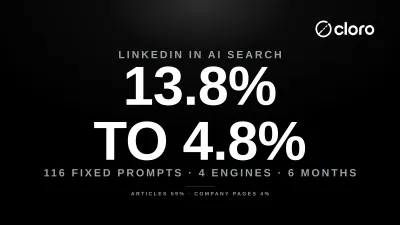
LinkedIn is widely described as the second most cited domain in AI search. On a fixed set of 116 prompts run monthly across four AI engines, its share of answers fell from 13.8% in February 2026 to 4.8% in July. Articles carry almost all of what remains, and company pages almost none of it.
The best GEO agencies for AI search visibility in 2026, compared. What each generative engine optimization agency does, who it fits, and how to choose one.
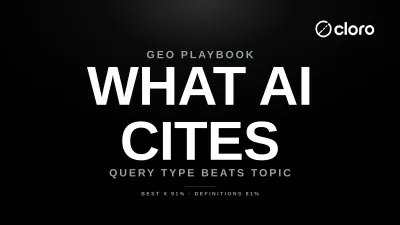
AI engines cite a source on 91% of 'best X' answers but only 81% of definitions. That 10-point swing is driven by query intent, not subject. Across eight verticals citation presence stays in a tight 82–88% band. If you want to be cited, the shape of the question you answer matters more than the industry you're in.
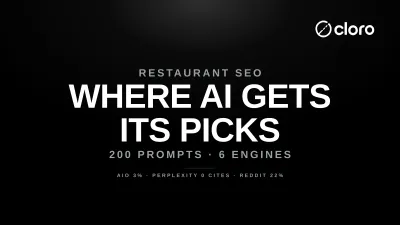
Across 200 dining prompts × 6 AI engines, Google's AI Overview triggered on just 3% of 'best restaurants' queries; it defers to the local pack. Perplexity answered 100% of them but returned zero citations. The picks come from Reddit (22%), Google/Maps (19%), OpenTable (13%), and local 'best-of' lists (TimeOut, The Infatuation, Eater), almost never the restaurant's own site.
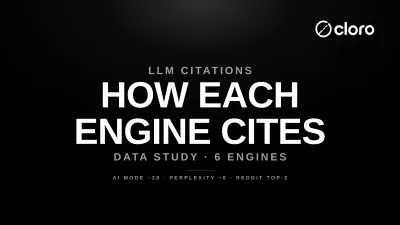
Across six AI engines and six verticals, citation depth varies ~20×: Google AI Mode averages 15–22 sources per answer, ChatGPT/Gemini/Copilot land around 4–8, and Perplexity ranges from ~4 down to literally zero depending on the topic. Reddit sits top-2 in every vertical. AI Overview decides whether to answer at all: it triggers on 98% of shopping queries and 3% of dining.
We compared 13 AEO tools on engine coverage, citation intelligence, API access, and price. See which answer engine optimization tool fits your team.
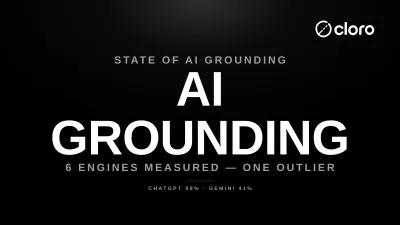
Grounding is when an AI engine answers from live web results instead of training memory. We measured it across six engines on ~2,500 prompts each. Five ground 91–98% of the time, and one, Gemini, grounds just 41%.