
GEO•
Best AEO Tools 2026: 15 Answer Engine Platforms Compared
We compared 15 AEO tools on engine coverage, citation intelligence, API access, and price. See which answer engine optimization tool fits your team.
Read more
Notes on SEO monitoring, AI SEO performance, and how to keep tabs on your brand.
We compared 15 AEO tools on engine coverage, citation intelligence, API access, and price. See which answer engine optimization tool fits your team.
Log-based threat hunting sees what touched your network. It can't see your credentials pasted to a public gist, a phishing domain registered against your brand, or a staging box Google indexed last week. This is the open-web hunting layer: four repeatable, own-scope hunts you can schedule and diff.
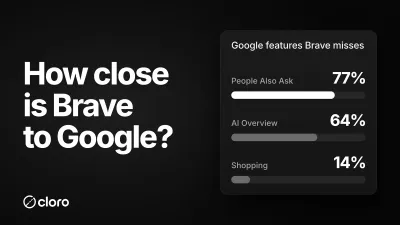
Anthropic's Claude searches the web with the Brave Search API, not Google. So how close is Brave to Google? We ran 500 identical queries through both indexes. The answer is "closer than the headline number suggests," with one real exception.
We tested 9 web search APIs for AI agents on public benchmark questions for accuracy, latency and cost, compared their MCP servers and their monthly cost at 100,000 searches, then ran 500 queries through Brave, Tavily, Exa and the Perplexity Search API to see how close each one gets to Google's live results.
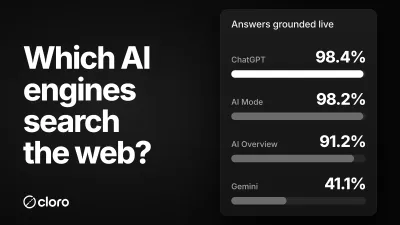
Grounding is when an AI engine answers from live web results instead of training memory. We measured it across six engines on ~2,500 prompts each. Five ground 91–98% of the time, and one, Gemini, grounds just 41%.
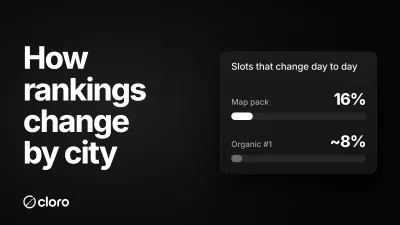
The same keyword ranks differently in every city. Here is how much local rankings vary by geography, why the map pack changes week to week, and how to check Google Maps rankings programmatically across a city grid.
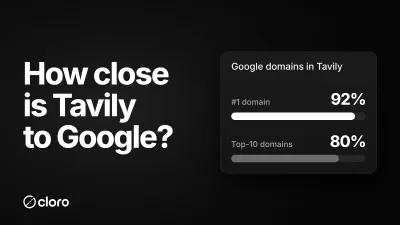
If your LangChain or LangGraph agent searches the web, it's probably searching with Tavily, not Google. So how close is Tavily to Google? We put the same 500 queries through both. It's the closest of any search API we've measured, but it reranks Google's sources into an order of its own.

Adverse media screening is the AML control of checking counterparties against negative news. Here's the definition, why regulators expect it, the pipeline, and the tools compared.

Reputation no longer lives only in reviews and headlines. It's what ChatGPT, Perplexity, and AI Overviews say about you, and no incumbent stack watches that layer.